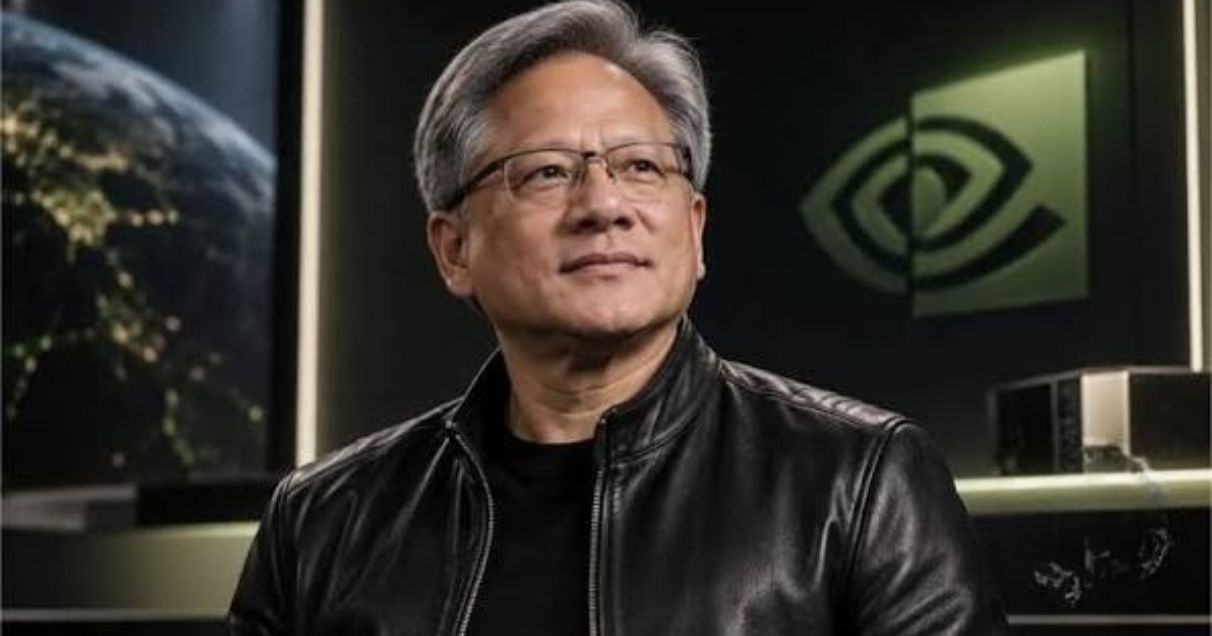
A growing campaign to bring Jensen Huang back to Nvidia has gathered momentum on social media, with the hashtag #BringBackJensen trending on X. The campaign has attracted support from technology executives, AI entrepreneurs and Nvidia employees, even as questions surrounding the former CEO's personal relationships and alleged links to a suspected Chinese intelligence asset continue to cast a shadow over his exit.
Huang's departure has become a subject of debate far beyond Nvidia's offices. For many in the technology industry, the issue is not limited to the allegations surrounding his private life. They believe his leadership has been central to America's position in the global artificial intelligence race and that losing him could have consequences for the wider industry.
The controversy is particularly sensitive because one of the reported relationships involved a woman suspected by US intelligence of having links to Chinese espionage. Two other alleged relationships reportedly involved Nvidia employees. The revelations have raised questions about corporate governance, workplace conduct and potential national-security risks.
Nvidia employees want their former boss back
Support for Huang has emerged from within the company itself. Several Nvidia employees have reportedly called for his return and sought greater clarity about the circumstances surrounding his exit.
According to Wired, messages submitted through an internal employee suggestion platform included appeals for the company to reconsider its decision. One employee reportedly urged Nvidia to bring back its leader, while another argued that Huang deserved another opportunity because of his contributions.
The internal reaction suggests that sections of the workforce remain strongly attached to the founder whose leadership helped transform Nvidia into a dominant force in the AI industry.
Trump, Musk and other tech leaders weigh in
The campaign has also received attention from some of America's most influential business and political figures.
US President Donald Trump publicly praised Huang on Truth Social, describing him as a technology legend. Trump also brought Apple CEO Tim Cook into the discussion, suggesting that Cook was the only person he considered suitable to take Huang's place.
Elon Musk, who heads the artificial intelligence company xAI, expressed admiration for Huang as well. Responding to a user on X, Musk said he would consider it an honour to have Huang work with him.
Musk also endorsed the broader argument that removing a founder from a company can be difficult to reverse. The discussion invoked the experiences of Steve Jobs and Travis Kalanick, whose departures illustrated the complicated relationship between founders and the organisations they build.
Epic Games chief says Nvidia's exit is a loss for the industry
Epic Games CEO Tim Sweeney described Huang's departure as a major setback, not just for Nvidia but also for developers, the United States and the wider technology community.
Sweeney credited Huang with building a company that achieved extraordinary scale without abandoning innovation or making its technology inaccessible to developers.
He also recalled an incident from the 2015 Game Developers Conference, when Huang personally delivered a graphics card to help rescue a presentation. Sweeney said the Nvidia founder had played a defining role in the evolution of graphics processors, CUDA computing and AI supercomputers.
Anduril founder Palmer Luckey, whose defence technology company operates at the intersection of AI and national security, had also voiced support for Huang before Nvidia confirmed his departure. Luckey suggested that if China wanted Huang out of the picture, he would be interested in bringing him into his own company.
Industry leaders question the circumstances
Several other technology executives have expressed concern about the developments.
Palantir CEO Alex Karp described Huang as a giant in the technology business and acknowledged that he was facing a difficult period.
Palantir chief technology officer Shyam Sankar, meanwhile, posted the question "Who benefits?" on X while responding to a discussion about the timing of the events and their possible geopolitical implications.
David Heinemeier Hansson, CTO of 37signals and creator of the Omarchy Linux distribution, criticised the decision to remove Huang over alleged marital indiscretions. He argued that private relationship issues should primarily concern the individuals involved and that any response from a company's board should be proportionate.
Automattic CEO Matt Mullenweg also revisited an earlier post about the challenges founders face when their leadership comes under pressure. He had previously written about the need for strong leadership within companies, sharing the post again amid the debate over Huang's departure.
AI community fears loss of a champion for open technology
The reaction has extended to companies working on artificial intelligence beyond Nvidia's immediate business ecosystem.
Clement Delangue, co-founder and CEO of Hugging Face, expressed disappointment over the developments and said his organisation would step up its support for open-source AI. He has previously associated Huang with efforts to make advanced AI technology more accessible to developers and smaller businesses.
Huang has been an advocate of open-weight AI models, which allow developers to use and adapt models rather than depending entirely on closed systems. Supporters see this approach as important for broadening participation in AI development.
Peter Steinberger, creator of OpenClaw and an OpenAI employee, also questioned the decision to remove Huang. He suggested that if the suspected intelligence operation had been intended to destabilise a major American technology company, the outcome would represent a significant success. Sweeney agreed with his assessment that the move appeared premature.
Perplexity CEO Aravind Srinivas paid tribute to Huang's 33 years of leadership, crediting him with turning a small start-up into one of the world's most valuable companies. Srinivas also praised Huang for supporting younger entrepreneurs and sharing his time and advice with founders.
Why Huang's exit matters beyond Nvidia
The intensity of the reaction reflects Nvidia's central position in the global AI economy. Its graphics processing units, computing platforms and software ecosystem underpin a substantial part of the infrastructure used to develop and operate artificial intelligence systems.
Huang's leadership has been closely associated with the company's transformation from a graphics-chip manufacturer into a major supplier of AI computing technology.
His departure therefore raises questions about more than corporate succession. Industry figures are concerned about the future direction of Nvidia, its commitment to developers and open technology, and the potential consequences for America's competitiveness against China.
While the calls for Huang's return continue to grow, the controversy also highlights the difficult questions surrounding corporate accountability, executive conduct and national security. For the technology industry, the challenge is to reconcile those concerns with the influence of a founder who helped shape the current AI era.