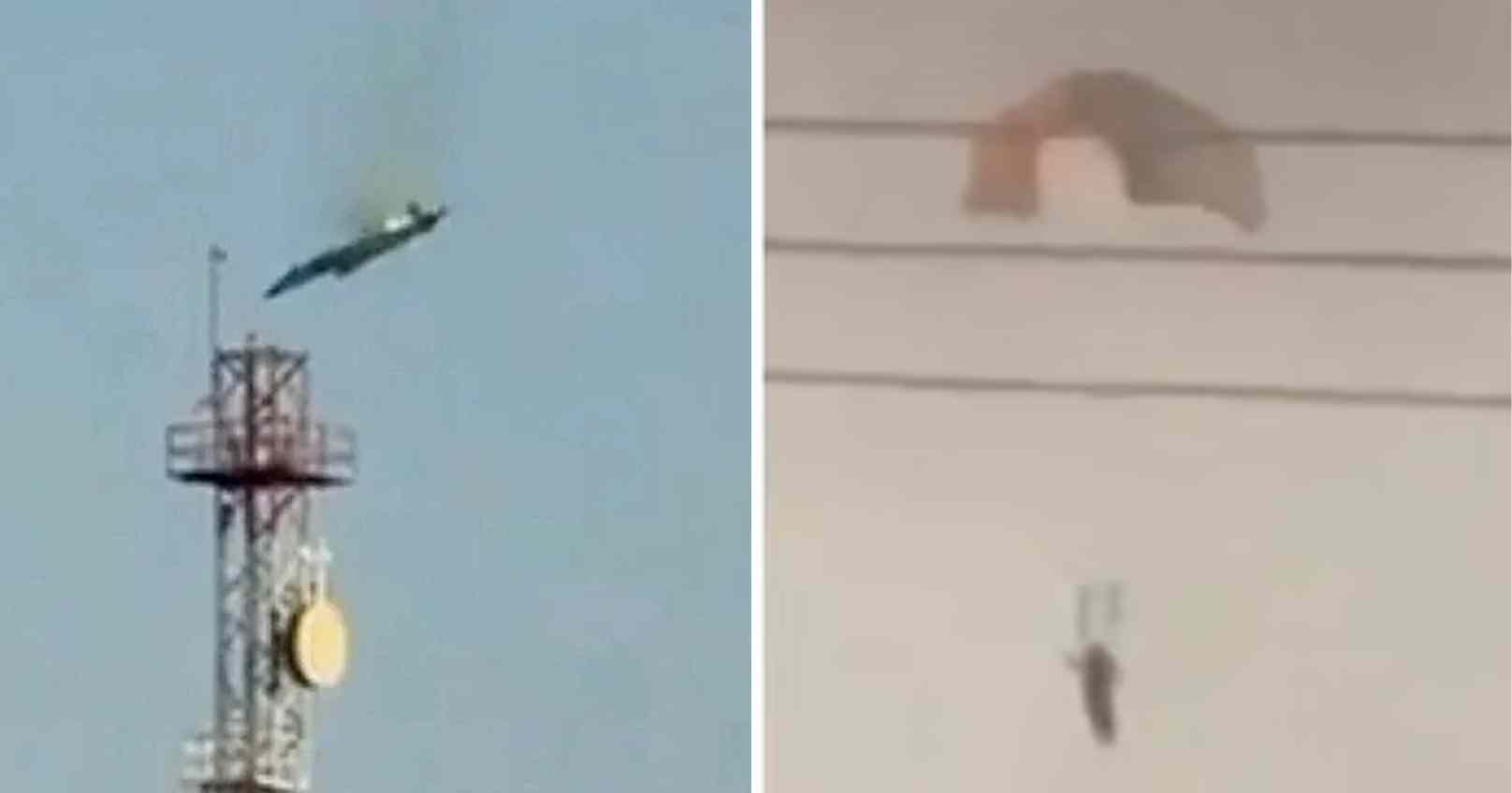
Three US fighter aircraft involved in the ongoing military campaign against Iran were mistakenly brought down by Kuwait’s air defence systems on Monday morning, the Pentagon confirmed, calling the incident a suspected case of friendly fire.
The jets — identified as F-15 Strike Eagle aircraft — were operating as part of the joint US-Israel military action against Iran. According to the United States Central Command, which is coordinating operations in the region, all six crew members aboard the three jets successfully ejected and are reported to be in stable condition.
The confirmation came hours after a video circulating online showed a fighter jet spiralling downward before crashing. The footage captured a pilot ejecting moments before the aircraft rapidly descended toward the ground.
Although US officials did not specify which defence system was responsible, analysts believe the aircraft may have been struck by a MIM-104 Patriot battery — a system used by the US and several allies, including Kuwait. Such systems rely on advanced radar and identification protocols designed to distinguish friendly aircraft from hostile targets before engaging.
Military experts note that friendly fire incidents can occur during intense combat operations when defence systems are placed on maximum alert and rapid decisions must be made.
India experienced a similar tragedy in 2019 following the Balakot Airstrike, when a Mil Mi-17 operated by the Indian Air Force was mistakenly shot down near Jammu and Kashmir, leading to the deaths of six personnel.
Jet Crash Near US Base
Earlier reports indicated that one of the aircraft crashed near Ali Al Salem Air Base, a key American military facility in Kuwait. Video footage verified by CNN showed a twin-engine fighter jet engulfed in flames before entering a tailspin.
According to analysis, the aircraft likely went down within roughly 10 kilometres of the base. The pilot was able to eject before the crash and survived the incident.
Debris from the aircraft reportedly fell inside the Mina Al Ahmadi Refinery, operated by the Kuwait Integrated Petroleum Industries Company, injuring two workers. Emergency teams quickly responded to the site.
Conflict Expands Across the Region
The incident occurred as the conflict between Israel and Iran continued to intensify. Israeli forces carried out fresh airstrikes targeting sites in Tehran, while also hitting positions linked to Hezbollah in Beirut.
The strikes followed missile and drone launches attributed to Hezbollah after the reported killing of Ayatollah Ali Khamenei, Iran’s long-time Supreme Leader.
Air-raid sirens were sounded across Israeli cities including Tel Aviv and Jerusalem, after Iranian state media reported another round of missile launches.
Kuwait also said its air defence systems intercepted hostile drones during the night as the conflict spread across the Gulf.
Elsewhere, a suspected drone strike caused limited damage at RAF Akrotiri, a British military base in Cyprus, though no casualties were reported.
Military Campaign Likely to Continue
A senior official from the White House said the joint US-Israeli operation — known as Operation Epic Fury — could continue for several weeks.
Meanwhile, Donald Trump indicated that Washington may eventually engage with potential new leadership in Iran, though military action is expected to continue in the near term.
Iranian President Masoud Pezeshkian said a temporary leadership council had taken charge following Khamenei’s death, signalling a major political transition in the country.
First US Losses and Global Impact
The United States has also confirmed its first fatalities since the start of the campaign, with three American service members killed at a military installation in Kuwait.
Meanwhile, Iran’s Islamic Revolutionary Guard Corps said it had targeted military facilities and oil tankers in the Gulf region, raising fears about disruptions to shipping through the Strait of Hormuz, one of the world’s most crucial energy routes.
The rapidly escalating conflict has also triggered major aviation disruptions across the Middle East, with several airports closing temporarily and global oil prices climbing amid concerns over prolonged instability.