AI’s Hidden Water Crisis: How Data Centres Are Draining a Scarce Resource
Behind the rapid rise of artificial intelligence lies an invisible environmental cost—massive water consumption that is quietly intensifying global water stress
18-12-2025

As artificial intelligence steadily integrates into everyday technologies—powering chatbots, predictive systems, and climate research—the physical backbone supporting this digital revolution is expanding at an unprecedented pace. But alongside this growth comes an often-ignored consequence: an escalating demand for freshwater.
Until now, most scrutiny of AI infrastructure has centred on its enormous electricity requirements. A new study, however, highlights that data centres are also becoming significant water consumers, at a time when freshwater supplies are under increasing pressure worldwide.
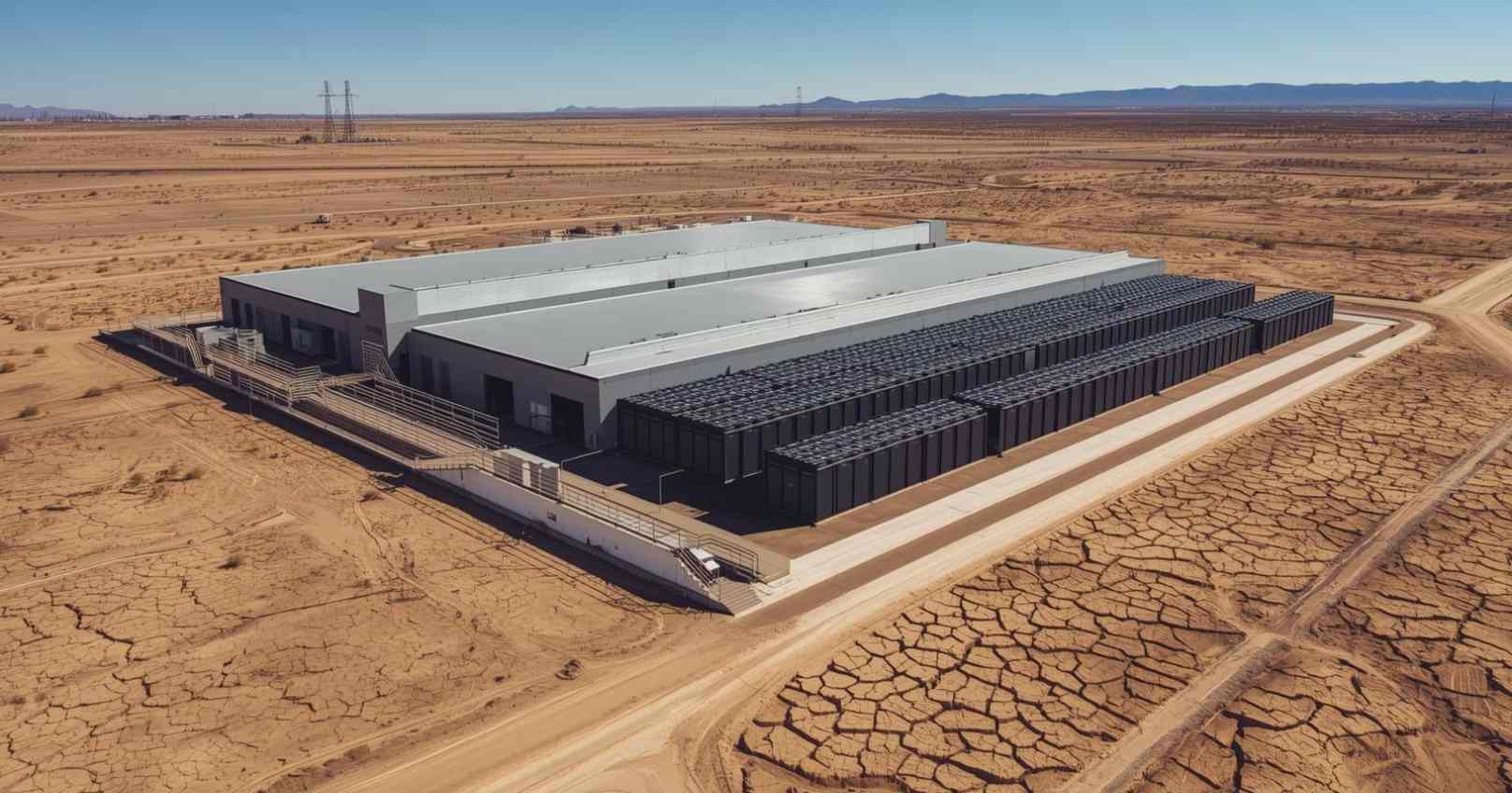
Water scarcity is already a pressing issue in many regions due to declining rainfall, prolonged droughts, and climate change. India, among several other countries, is facing acute water stress. The report reveals that many data centres powering advanced AI tools—such as large language models—are being built in areas where water resources are already strained.
This clustering, researchers warn, poses risks not only to nearby communities and natural ecosystems but also to the long-term stability of the AI industry itself.
Why AI Infrastructure Needs So Much Water
AI systems depend on large-scale data centres filled with servers that operate continuously. These machines produce enormous heat and require constant cooling to function efficiently.
Most cooling technologies still rely heavily on freshwater. A significant portion of this water is lost through evaporation, while the rest often becomes contaminated wastewater that is difficult to recycle.
The study estimates that nearly 45% of data centres worldwide are situated in river basins facing high levels of water stress. In the United States alone, data centres reportedly used roughly 66 billion litres of water in 2023.
Beyond direct usage, the water footprint grows even larger when accounting for electricity generation. Power production can contribute up to 75% of a data centre’s total water consumption, further compounding the issue.
Growing AI, Shrinking Water Supplies
As global investment in AI accelerates, more data centres are being constructed across Asia, Europe, and North America—often in regions already dealing with groundwater depletion, pollution, and frequent droughts.
Scientists estimate that generating a simple 100-word response from an AI system can require roughly the equivalent of a bottle of water. Countries including India, China, Spain, and Germany were identified as hotspots where expanding data centre capacity overlaps with limited water availability.
In India, rising AI adoption combined with existing water shortages raises serious concerns. Increased water use for digital infrastructure could intensify competition with agriculture, industry, and daily human needs.
A Major Transparency Gap
One of the study’s strongest critiques is the absence of clear reporting standards. At present, there are no global regulations forcing data centre operators or AI companies to disclose how much water they consume or how their operations affect local environments.
This lack of transparency makes it challenging for policymakers, investors, and communities to evaluate long-term environmental risks. Researchers argue that improving energy efficiency alone is no longer sufficient.
They recommend mandatory disclosure systems that account for local water availability, drought vulnerability, and ecosystem sensitivity when approving or expanding data centre projects.
Without such safeguards, the unchecked growth of AI infrastructure could undermine the very sustainability goals that technology often claims to support.
The study concludes that artificial intelligence can still contribute positively to a low-carbon and sustainable future—but only if its physical foundations are designed responsibly. Strategic site selection, water-saving cooling technologies, and clear accountability standards will be essential.
As AI continues to scale, the real challenge may not be how advanced these systems become, but whether the resources sustaining them can endure.
(Image used for representation only).


CJP leaders Saurav Das and Ashutosh Ranka were released by a Special Executive Magistrate after furn
Read More
CJP leaders Saurav Das and Ashutosh Ranka will remain in judicial custody until October 21 after a S
Read More
Former India cricketer Yusuf Pathan is reportedly set to receive half of a disputed 1,000-square-met
Read More