Large-scale unrest swept through Bangladesh late into the night following the death of Sharif Osman Hadi, a controversial political figure whose rise was closely linked to last year’s student-led movement that toppled former prime minister Sheikh Hasina.
Hadi, 32, was known for his hardline rhetoric and outspoken hostility toward India. A spokesperson of the Inquilab Mancha platform and an election candidate, he was shot in the head by unidentified assailants in Dhaka last week while beginning his campaign. He was later flown to Singapore for treatment, where he succumbed to his injuries.
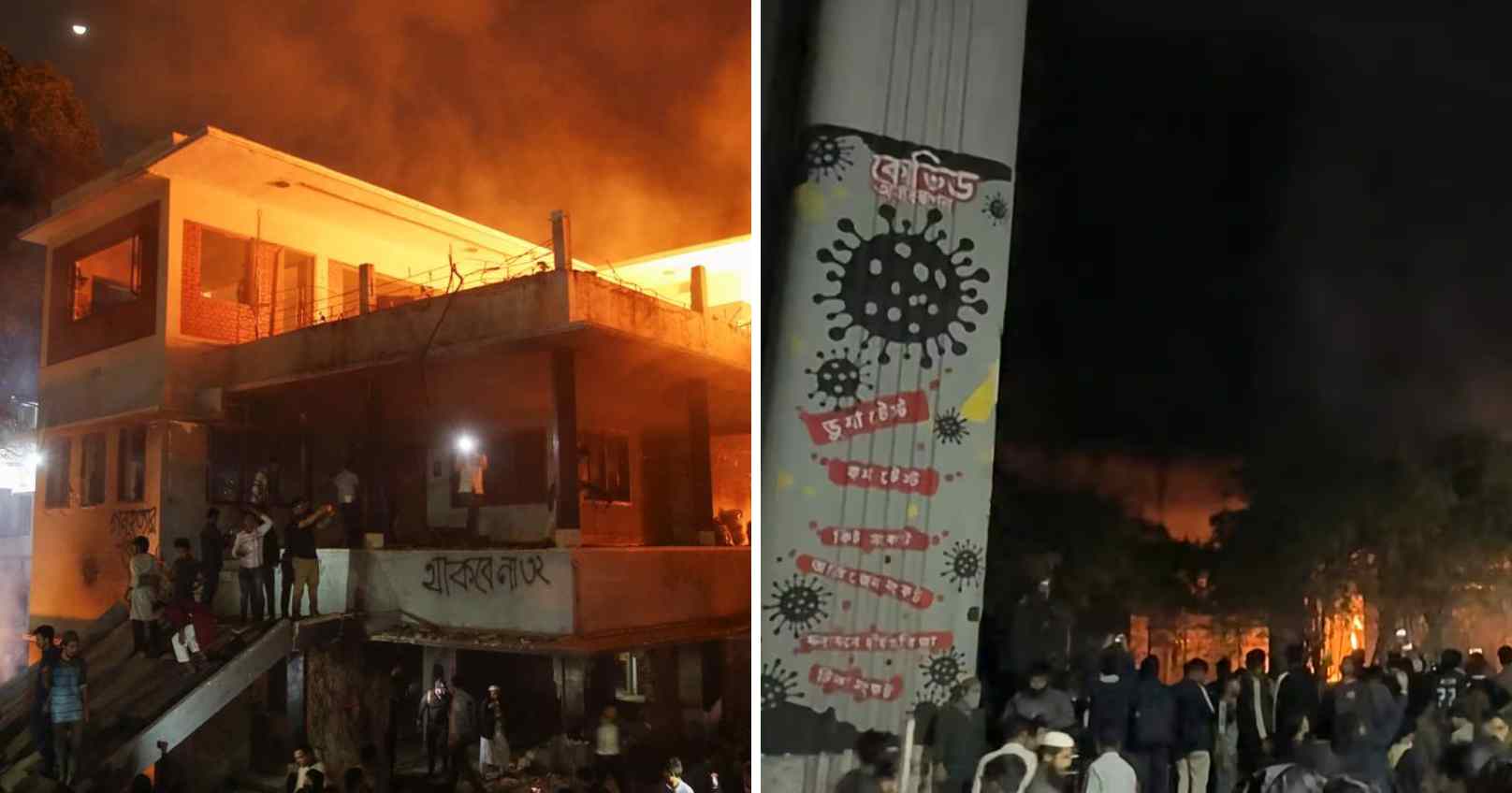
As news of his death spread, thousands poured onto the streets of Dhaka and other cities, demanding immediate arrests and justice. The protests quickly turned violent. Several buildings in the capital were torched, including offices housing two of Bangladesh’s most prominent newspapers, The Daily Star and Prothom Alo. Authorities confirmed that staff members were trapped inside during the fires, though emergency services later brought the blaze under control.
Demonstrators raised emotionally charged slogans invoking Hadi’s name and pledged to continue agitation until those responsible were punished. Security forces remained on high alert through the night, with police and paramilitary units deployed across flashpoint areas to prevent further escalation.
Unrest was not limited to the capital. In Chittagong, protesters gathered near the Indian Assistant High Commission, shouting anti-India slogans. In Rajshahi, mobs set fire to Bangabandhu Sheikh Mujibur Rahman’s residence and an Awami League office, causing significant destruction.
Rising Hostility Toward India
The violence comes amid growing anti-India sentiment in Bangladesh, which has intensified since Sheikh Hasina fled to New Delhi following last year’s uprising. Earlier in the week, demonstrators under the banner “July Oikya” marched toward the Indian High Commission in Dhaka, demanding Hasina’s return and voicing anger against India.
India had already raised concerns, summoning Bangladesh’s High Commissioner in New Delhi to protest threats made against Indian diplomatic premises and inflammatory remarks by Bangladeshi political figures. These included statements by National Citizen Party leaders suggesting support for forces hostile to India and claims about severing India’s northeastern states from the mainland.
New Delhi rejected allegations linking it to the attack on Hadi, calling them baseless and driven by extremist narratives.
Yunus Appeals for Calm
In a televised address after Hadi’s death, interim chief Muhammad Yunus described the killing as a major loss to Bangladesh’s political landscape. He urged citizens to avoid violence and assured the nation that a fair and transparent investigation was underway.
Yunus warned that continued unrest could derail the country’s path to credible elections. The interim government announced a day of state mourning, ordered flags to be flown at half-mast and scheduled nationwide prayers in Hadi’s memory.
Bangladesh has been governed by a caretaker administration led by Yunus since August 2024. National elections are scheduled for February 12.
India Issues Travel Advisory
In response to the deteriorating security situation, the Indian High Commission in Dhaka advised Indian nationals to restrict movement, avoid local travel and remain indoors unless necessary. Emergency contact details for diplomatic missions were shared.
About the Attack
Hadi was a prominent face of the movement that ended Hasina’s rule and was preparing to contest the next parliamentary elections. He was shot on December 12 outside a mosque in Dhaka by masked gunmen.
Bangladeshi police have launched a nationwide manhunt, released images of two suspects and announced a reward of five million taka for information leading to arrests.
Yunus has described the attack as a carefully planned operation by a powerful network aimed at destabilising the electoral process. Bangladesh, a nation of around 170 million people, is preparing for a high-stakes election that will determine its political future amid deepening unrest.