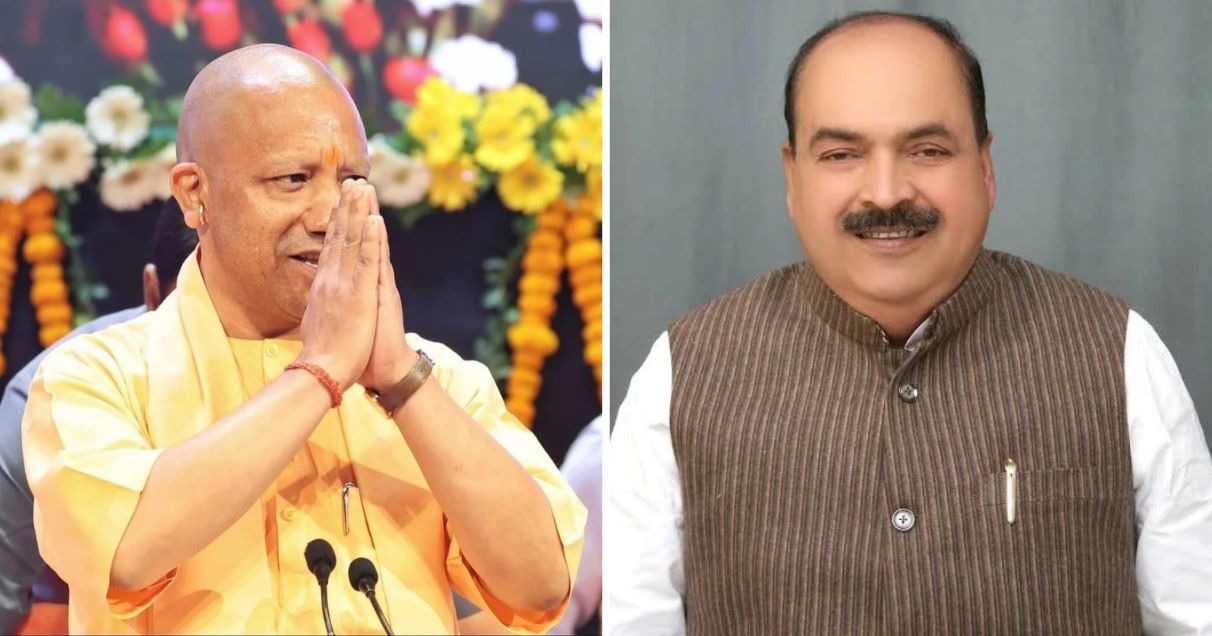
The BJP has retained the Gorakhpur-Faizabad Teachers’ constituency in the Uttar Pradesh Legislative Council elections after its candidate Dhruv Kumar Tripathi overturned an early deficit to defeat independent contender Rajeev Yadav by a margin of just over 300 votes. The result has drawn attention because Gorakhpur is a traditional BJP stronghold and the home turf of Chief Minister Yogi Adityanath.
The closely fought contest, however, ended amid allegations of irregularities, with both the Samajwadi Party (SP) and Yadav withdrawing from the counting process. The vote count stretched beyond 35 hours, prompting questions from the opposition and the independent candidate over the transparency of the proceedings.
The outcome comes as political parties prepare for the 2027 Uttar Pradesh Assembly elections. Although Legislative Council polls involve a restricted electorate and are not a direct measure of statewide voter sentiment, the narrow victory in Gorakhpur is likely to be closely examined.
How the BJP candidate overturned the early lead
The contest took several turns during the counting of first-preference votes. Tripathi received 11,881 votes, compared with Yadav’s 11,415, while the SP’s Dr Sanjayan Tripathi finished third with 8,301 votes.
The final result was decided after second-preference votes were counted, allowing the BJP’s three-term MLC to secure victory.
Yadav initially held a narrow advantage during the first two rounds. His lead widened to more than 370 votes by the end of the third round, putting the independent candidate in a strong position.
The fourth and final round of first-preference counting changed the trajectory of the contest, with Dhruv Kumar Tripathi moving ahead. The subsequent counting of preference votes confirmed his victory by a margin of just over 300 votes.
The turnaround triggered allegations from the opposition and the independent candidate, both of whom questioned how the counting had been conducted.
SP and independent candidate allege irregularities
The Samajwadi Party boycotted the counting process, alleging that the election observer was favouring the BJP candidate. The independent candidate also withdrew, claiming that the exercise lacked transparency.
Brijesh Gautam, the SP’s acting district president, alleged that the Returning Officer had refused to provide candidates with charts showing the results of each counting round.
Gautam said candidates had sought round-wise figures in accordance with counting procedures but were denied the information. He argued that the refusal raised doubts about the transparency of the process.
SP candidate Dr Sanjayan Tripathi also questioned the sudden change in the counting trend after the first three rounds, claiming that the developments gave the impression that the outcome had already been decided. He said the party opted to boycott the process in protest.
Yadav echoed the allegations, suggesting that the counting exercise had become a formality and alleging possible foul play.
These claims formed the basis of the objections raised by the two candidates during the final stages of the contest.
Candidate change comes under scrutiny
The result has also put the SP’s last-minute decision to change its nominee under the spotlight.
The party had initially selected Kamlesh Yadav for the Gorakhpur-Faizabad Teachers’ constituency before replacing him with Dr Sanjayan Tripathi on October 3. Sanjayan Tripathi had previously been associated with the BJP.
The change came shortly before the election and failed to deliver the seat for the SP, despite a competitive showing by its candidate.
Supporters of Kamlesh Yadav argued that he had spent years building a network among teachers and had travelled across 17 districts to canvass for support. They claimed his backing extended to voters associated with secondary education and madrasa boards, members of the Yadav community and CBSE teachers.
The candidate switch has therefore prompted questions about whether the SP weakened its own position by replacing a contender who had already established connections with sections of the electorate.
BJP and SP divide the Uttar Pradesh seats
The Gorakhpur result is part of a wider contest involving 11 Uttar Pradesh Legislative Council seats. The BJP has won six constituencies so far, while the SP has secured four, with the overall results highlighting a competitive battle between the ruling party and the principal opposition.
Among the SP’s victories is the Varanasi Teachers’ constituency, which falls within the parliamentary constituency represented by Prime Minister Narendra Modi.
The BJP’s win in Gorakhpur reinforces its hold over a politically significant region, but the narrow margin and the controversy surrounding the counting process have made the result more consequential than a routine victory in a party stronghold.
With the 2027 Assembly elections approaching, both parties will be assessing the organisational lessons from the MLC polls. For the BJP, the result offers a win in the Chief Minister’s home region. For the SP, the defeat raises questions about candidate selection and campaign strategy, while the allegations over counting have added a separate political dispute to an already closely watched contest.