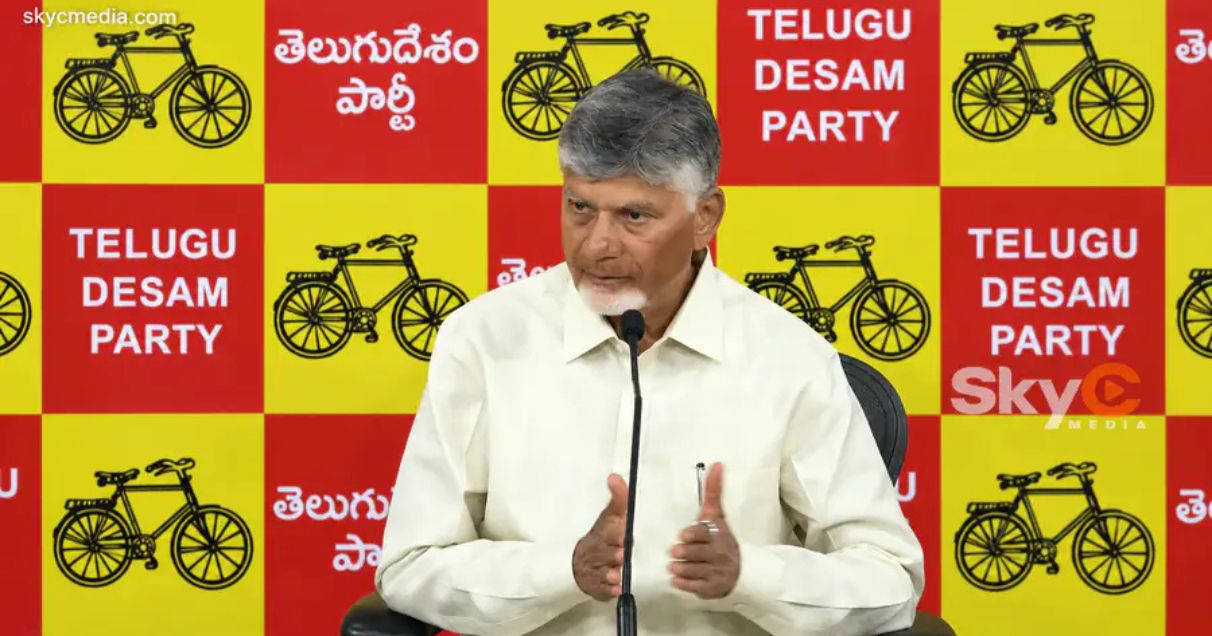
Andhra Pradesh Chief Minister N Chandrababu Naidu has called for the withdrawal of high-denomination currency notes, including Rs 500 and Rs 2,000, arguing that limiting cash transactions could help tackle corruption and strengthen India's move towards a digital economy.
Naidu said the country should retain only Rs 100 and Rs 200 notes, while greater adoption of digital currency and technology-based governance could address economic and administrative shortcomings.
The Telugu Desam Party (TDP) chief said he had previously contributed suggestions to a report on digital currency and had raised the proposal with Prime Minister Narendra Modi. He indicated that he would continue advocating the move.
“I was the one who gave inputs for the digital currency report. I had urged the Prime Minister to consider this earlier and I am demanding it again now,” Naidu said, calling for the Rs 500, Rs 1,000 and Rs 2,000 denominations to be scrapped.
His remarks came a day after the 10th anniversary of the November 8, 2016, demonetisation announcement, when the Centre withdrew the existing Rs 500 and Rs 1,000 notes from circulation. The government had then said the move was intended to combat black money, counterfeit currency and corruption.
NAIDU LINKS TECHNOLOGY TO POVERTY ERADICATION
Making the case for technology-led reforms, Naidu argued that efficient digital systems could help create wealth and improve the prospects of eliminating poverty.
He said weaknesses in institutional and administrative systems had allowed corruption to become entrenched, creating a cycle that was difficult to break. According to him, reforms backed by technology could help identify and address these gaps.
Naidu said he had previously attempted to introduce safeguards to prevent such systemic failures and would continue pushing for measures that improve governance.
CALL FOR POLITICS BASED ON PUBLIC SERVICE
The Chief Minister also turned his attention to electoral reforms, arguing that money should not determine political success and that elections must be guided by public service.
He said the National Democratic Alliance (NDA) had attempted to establish a different political culture by discouraging the distribution of cash to voters. Naidu described efforts to reduce election-related expenditure as an important step towards making politics more accountable.
According to him, candidates who invest heavily in election campaigns may feel compelled to recover that money after entering public office, creating incentives for corruption.
Reducing campaign spending, he argued, could weaken this mindset and encourage elected representatives to concentrate on their responsibilities rather than recouping their political investments.
“The spirit of service among leaders will increase. The thought of 'I spent money, so I must also collect it back this way' will go away,” he said.
Naidu added that he had been exploring ways to reform electoral practices for around 24 years. He maintained that curbing money power in politics, alongside wider adoption of digital systems, was essential to improving governance and creating conditions for economic growth.