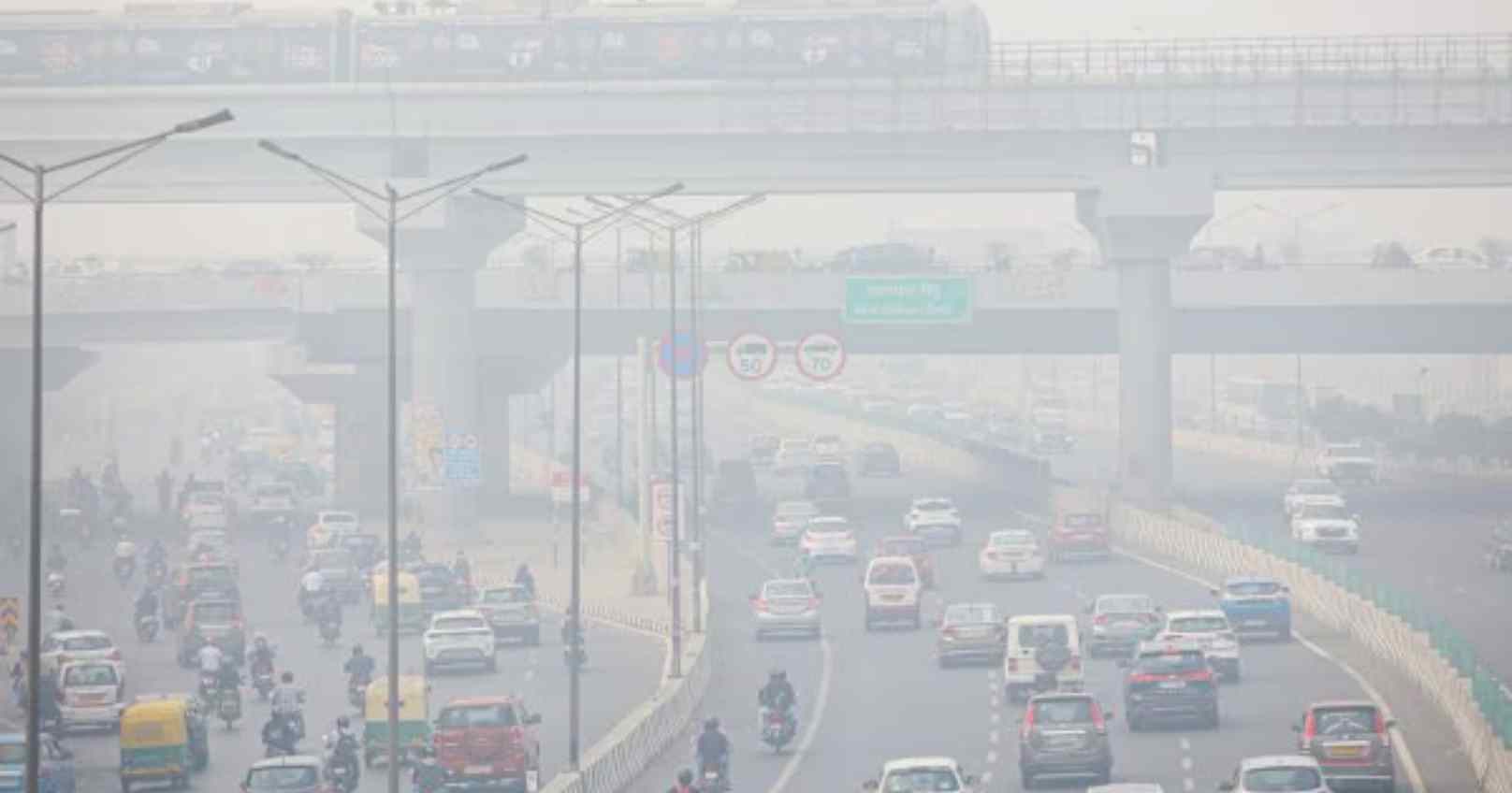
Amid deteriorating air quality in Delhi, both government and private offices have been instructed to function with only half their workforce present physically, while the remaining staff must operate remotely. The directive falls under Stage 3 of the Graded Response Action Plan (GRAP-3), triggered when pollution levels reach the “severe” category, according to the Commission for Air Quality Management (CAQM).
The Delhi government had earlier issued precautionary measures for schools, including restricting outdoor activities for students when the air quality dips to hazardous levels.
Attendance in government buildings was already expected to be lower due to a public holiday declared to observe the 350th Shaheedi Purab of Guru Tegh Bahadur.
Delhi relies on the GRAP framework to determine response strategies during the winter pollution spike, a recurring annual challenge. CAQM analyses pollution data from across the National Capital Region (NCR) and, based on the average Air Quality Index (AQI) and meteorological forecasts, coordinates actions with multiple agencies.
This past Saturday, authorities issued a similar advisory directing private institutions to limit in-person staff to 50% as part of the Stage 3 protocol.
Under GRAP classification:
-
Stage 1 applies when AQI scores between 201–300
-
Stage 2 is enforced between 301–400
-
Stage 3 kicks in at 401–450
-
Stage 4 takes effect when pollution levels exceed 451
Delhi Environment Minister Manjinder Singh Sirsa said all GRAP-3 measures are being implemented “strictly and continuously,” and urged citizens to cooperate.
Residents have been advised to avoid burning garbage or biomass, reduce dust-generating activities, and report violations through the Green Delhi mobile app.