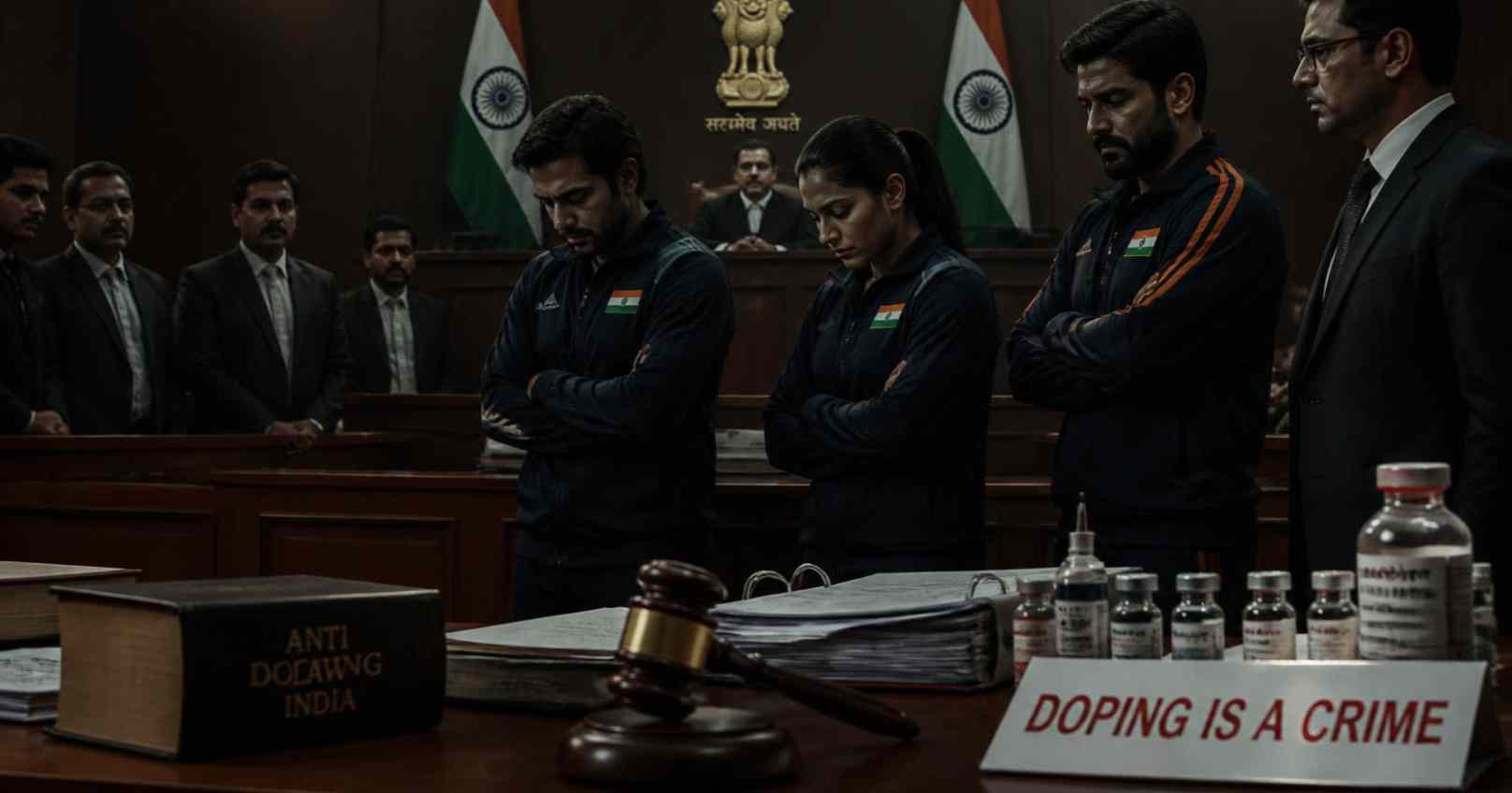
The Central government is preparing to strengthen India's anti-doping framework by introducing amendments to the National Anti-Doping Act that would make certain doping-related offences criminal in nature. The proposed changes are expected to expand accountability beyond athletes and target the individuals and networks that enable the use of prohibited performance-enhancing substances.
According to sources familiar with the development, the Sports Ministry is working on a draft that would allow criminal proceedings against coaches, trainers, support staff, suppliers and others who procure, distribute or administer banned substances to athletes. The proposal reflects the government's view that doping is often driven by organised support systems rather than isolated actions by individual competitors.
Currently, athletes who violate anti-doping regulations are primarily dealt with under the National Anti-Doping Agency (NADA) Code, which imposes sporting penalties such as suspensions, disqualifications and loss of results. The proposed amendments would introduce legal consequences for those found responsible for facilitating doping activities, significantly broadening the scope of enforcement.
The move comes as India continues to grapple with a high number of doping cases, particularly in athletics. Data released by the Athletics Integrity Unit (AIU) shows that the country has consistently ranked among the worst-performing nations in Anti-Doping Rule Violations (ADRVs) over the past four years. Between 2022 and 2025, Indian athletes were linked to 212 violations in athletics, with the country ranking among the top two globally each year and recording the highest number of cases in both 2024 and 2025.
The yearly figures include 48 violations in 2022, 63 in 2023, 71 in 2024 and 30 reported so far in 2025. Citing these trends, World Athletics earlier this year classified India as an "extremely high-risk" country for doping.
Following that assessment, the Athletics Integrity Unit upgraded the Athletics Federation of India (AFI) from Category B to the more closely monitored Category A under its anti-doping regulations. The decision placed Indian athletics under stricter international oversight and reflected concerns over the effectiveness of the country's existing anti-doping measures.
International agencies have also expressed concern about the situation. Officials have indicated that the prevalence of doping in India remains a significant issue requiring stronger enforcement and systemic reforms.
The scale of the challenge became evident during a domestic athletics competition in New Delhi earlier this year, where several sprinters reportedly left the venue after anti-doping officials arrived to conduct surprise in-competition tests.
Government officials believe that focusing only on athletes has not been sufficient to eliminate the problem. By extending criminal liability to coaches, support personnel, suppliers and others involved in doping operations, the proposed legislation aims to dismantle the wider networks that sustain the practice rather than addressing only its end users.
The draft legislation is currently being finalised, with more details expected once it is introduced for consideration.
Separately, Union Sports Minister Mansukh Mandaviya reiterated that selection for the 2026 Asian Games will be based strictly on medal potential. He stressed that the continental event should not be viewed as an opportunity for athletes to gain participation certificates or improve employment prospects.
The minister said the Games are meant for competitors capable of delivering strong performances for the country, adding that exposure opportunities can be provided through other tournaments. According to him, only athletes with a realistic chance of achieving success will be selected for the Indian contingent.
The 2026 Asian Games are scheduled to take place from September 19 to October 4. India heads into the competition after registering its best-ever performance at the previous edition, where the country secured a record haul of 107 medals.