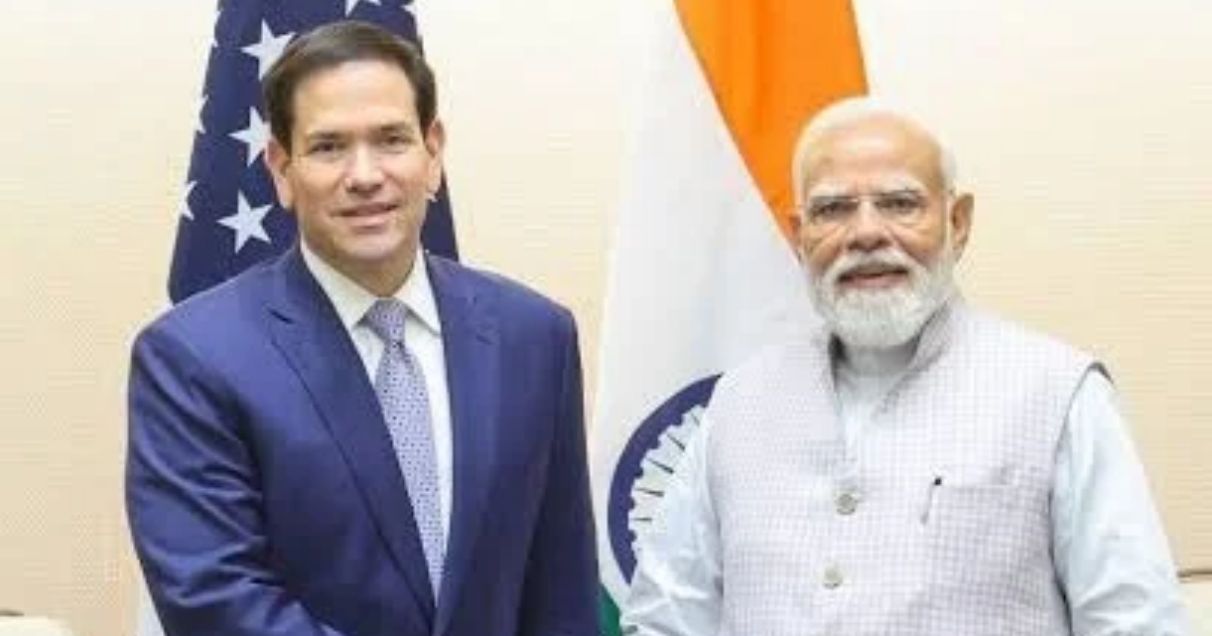
US Secretary of State Marco Rubio has defended the Trump administration's tightening of immigration rules, saying the measures are intended to overhaul America's immigration system rather than target Indian professionals. His remarks come amid growing concerns over the impact of stricter visa requirements on Indian workers and US companies that depend on skilled talent from abroad.
In an exclusive interview with India Today TV on Thursday, Rubio acknowledged that the changes were affecting Indians seeking employment in the United States, as well as American businesses hoping to recruit them. However, he maintained that the restrictions applied internationally and were not designed specifically for India.
The US administration's position is that immigration programmes must better protect domestic employment opportunities, address alleged fraud and abuse, and serve the country's economic interests.
“It's not one that's built on India. It's not one that's focused on India,” Rubio said, explaining that the policy changes affected applicants from countries around the world.
He described the American immigration system as fundamentally flawed and argued that business-related visa programmes had been misused. According to Rubio, Washington is now working to address those shortcomings and develop a framework that better serves the US economy and its workforce.
The comments come as changes to the H-1B visa programme, which allows US employers to recruit foreign professionals for specialised jobs, raise concerns among Indian technology workers and other highly skilled employees. Indian nationals make up a substantial proportion of H-1B recipients, leaving them particularly exposed to changes in eligibility requirements and application procedures.
Rubio says Washington will prioritise American workers
Asked whether the US should continue attracting highly skilled Indian professionals as it seeks to strengthen its industrial base, Rubio said the administration's focus was on correcting problems within its immigration system.
He argued that the effects of the new rules on particular countries should not be confused with an intention to single them out.
Rubio also drew a comparison between the national priorities of India and the United States, saying both governments were expected to put their citizens first.
“I expect that the government of India will always put the people of India first and that you will always put the national interest of India first,” he said.
He added that the Trump administration would follow the same principle.
“But I also hope everyone understands that the United States under President Trump is going to put our people first, our workers first and our country first,” Rubio said.
His remarks reflect the administration's broader argument that immigration decisions should be guided by domestic economic priorities, even when the resulting restrictions have significant consequences for international workers.
US envoy Sergio Gor defends immigration overhaul
US Ambassador to India Sergio Gor, who participated in the India Today TV interview, echoed Rubio's defence of the policy changes. He said the measures affecting Indian applicants were part of a wider reassessment of America's immigration framework.
Gor stressed that the changes extended beyond India and should be viewed in the context of Washington's approach to immigration worldwide.
“America First, it doesn't mean America alone,” the ambassador said, adding that India was equally entitled to prioritise its own national interests.
He argued that the United States needed to review its immigration policies after years of what he described as inadequate border controls and failures to prevent people from exploiting the system.
“The United States needed to take a look. For too long we had open borders. For too long people were coming into the United States and taking advantage of us,” Gor said.
The envoy maintained that India's experience of the new restrictions did not mean the country was being deliberately targeted. He also suggested that New Delhi should understand Washington's emphasis on protecting domestic interests, given India's own focus on national priorities.
Stricter H-1B rules raise stakes for Indian professionals
Despite Washington's assurances, a series of policy changes has created uncertainty for Indian professionals already employed in the US and those planning to move there for work.
One significant change is the removal of the previous deference policy for certain H-1B renewals. Under the revised approach, applications can face fresh scrutiny on their individual merits, even when an applicant has previously received approval. This could increase the risk of additional checks, delays or refusals for some workers.
Restrictions affecting certain new H-1B petitions filed from outside the US have also included a reported fee requirement of $100,000, with relevant measures extending through September 2027. The scope and applicability of the fee depend on the specific rules governing the petition.
Another proposed shift towards a wage-weighted selection system would give greater preference to applications associated with higher-paying jobs, potentially changing the prospects of applicants across different salary levels.
The administration has also intensified scrutiny of employers, including those that have recently carried out layoffs. These measures have prompted companies dependent on international recruitment to reassess their hiring strategies and new visa registrations.
The combined impact has raised questions about the future of US recruitment for Indian technology professionals, who have historically formed a major part of the skilled workforce entering the country through the H-1B programme.
While Rubio and Gor insist that the policies are part of a global immigration overhaul rather than an India-specific campaign, their practical consequences for Indian workers and employers remain a key concern.