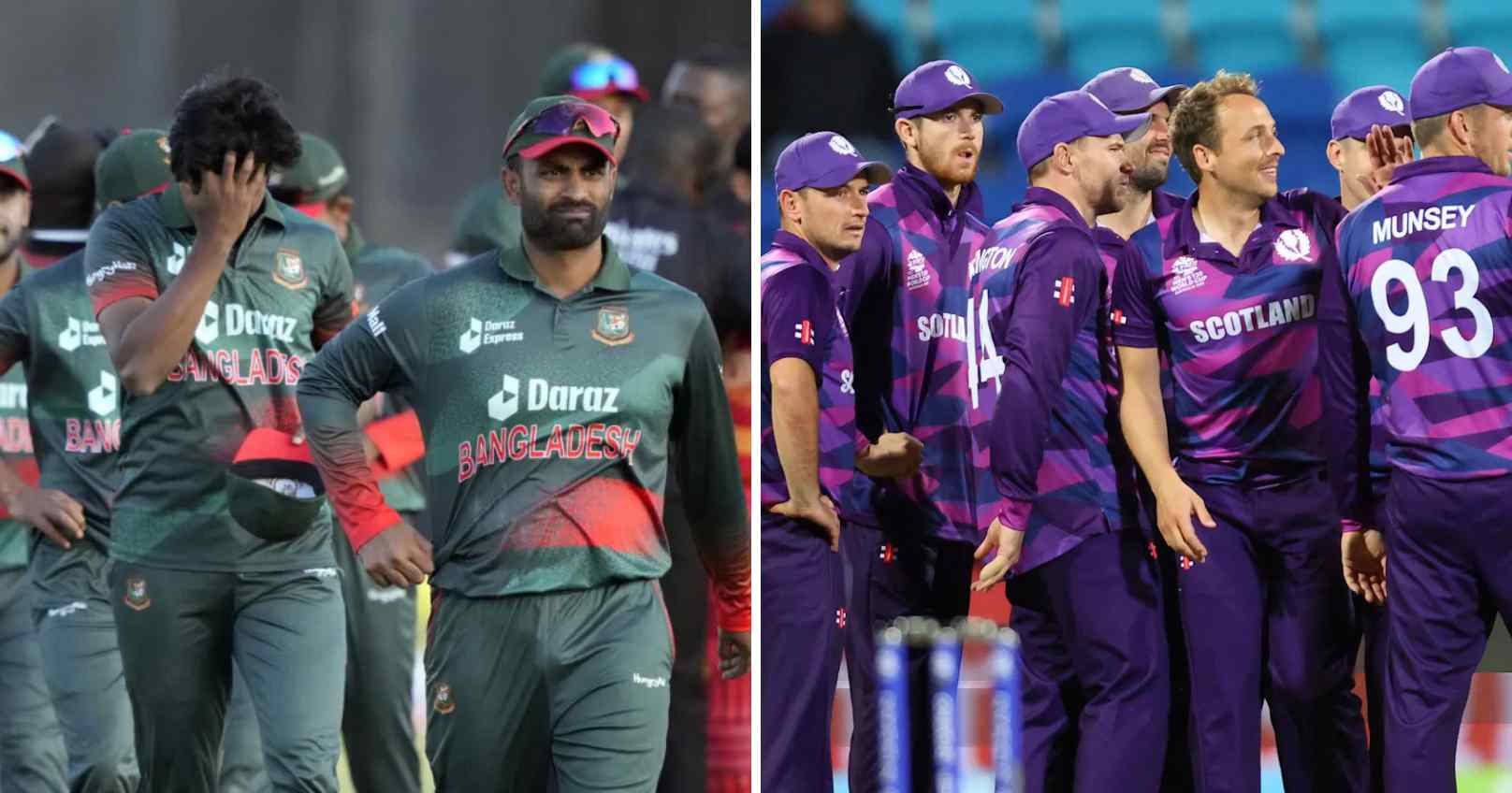
Scotland have officially been drafted into the ICC Men’s T20 World Cup 2026 as a replacement for Bangladesh following the latter’s decision to withdraw from the tournament. The International Cricket Council confirmed the move on January 23 after Bangladesh stood firm on its refusal to travel to India, the primary host nation.
According to sources, the ICC informed the Bangladesh Cricket Board (BCB) of its removal through a formal communication after a high-level meeting in Dubai chaired by ICC chief Jay Shah. The meeting was convened to take a final call on Bangladesh’s participation after weeks of uncertainty and repeated discussions.
In a final attempt to stall the decision, the BCB had sought intervention from the ICC’s Dispute Resolution Committee. However, the committee clarified that it could not function as an appellate body in this matter, leaving the ICC’s earlier ultimatum unchanged. With Bangladesh failing to reverse its stance by the deadline, the ICC proceeded with enforcing the replacement clause.
The BCB publicly confirmed its boycott after holding consultations with players and government representatives, reiterating that its concerns over player safety had not been adequately addressed despite assurances from the ICC.
Scotland, who narrowly missed direct qualification through the European qualifiers, were next in line based on ICC rankings. The team has featured in five T20 World Cups previously and made notable impressions in the last two editions, including competitive outings against top teams such as Australia and England.
With their inclusion, Scotland move into Group C alongside England, West Indies, Italy and Nepal. Their campaign will begin on February 7 against West Indies in Kolkata, followed by matches against Italy and England at Eden Gardens, before concluding the group stage against Nepal in Mumbai on February 17.
Bangladesh’s withdrawal is widely believed to stem from escalating diplomatic tensions, intensified after an IPL-related controversy involving Mustafizur Rahman. While the ICC maintained that comprehensive security assessments found no credible threat, the standoff ultimately led to Bangladesh’s exit from the marquee event.