India launched a sharp criticism of Pakistan's military establishment at a United Nations discussion on natural resources, alleging that the country's armed forces have a direct stake in exploiting mineral wealth that should benefit ordinary Pakistanis.
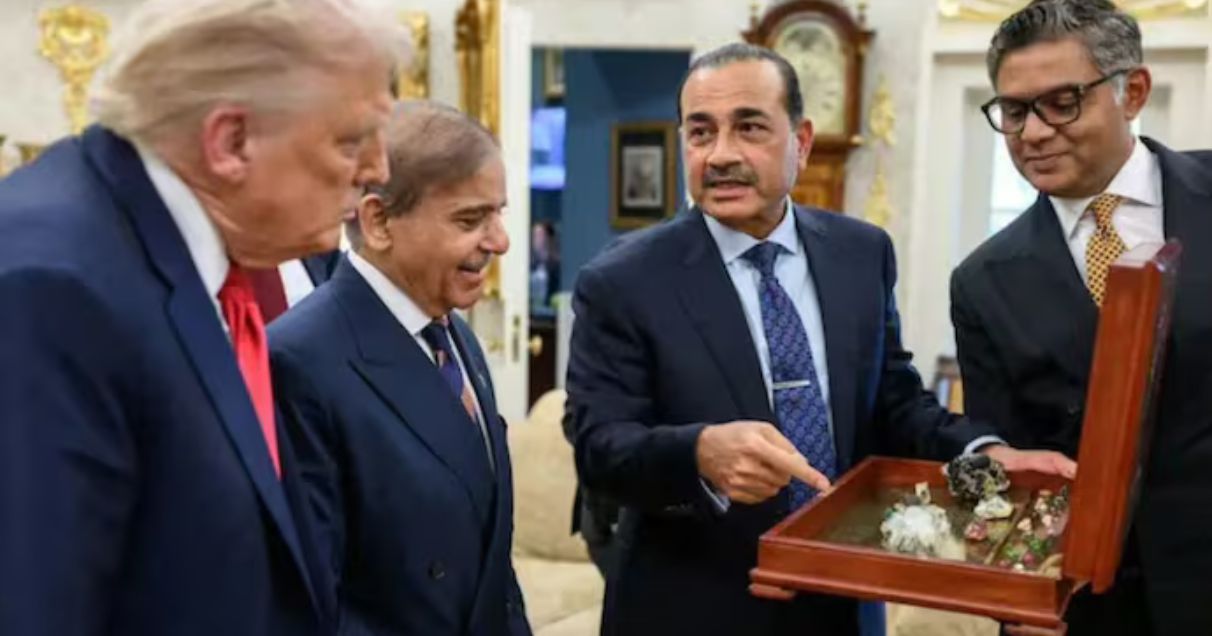
Addressing the session, Indian envoy Parvathaneni Harish referred to an earlier meeting involving Pakistan Army chief Asim Munir and foreign leaders. Without naming US President Donald Trump, Harish recalled an occasion last September when Munir displayed a wooden box containing mineral samples to visiting dignitaries.
The Indian diplomat described the episode as evidence of the military's involvement in the country's natural resource sector. He argued that Pakistan's population would gain more if its military leadership directed the proceeds from mineral extraction towards public welfare rather than personal or institutional advancement.
“Pakistanis would be served well if its real rulers, its military, used the country's natural resources for the benefit of their population rather than self-aggrandisement,” Harish said.
Mineral presentation at White House meeting draws scrutiny
Harish's remarks referred to a photograph released by the White House following a meeting between Trump, Munir and Pakistan Prime Minister Shehbaz Sharif. The image showed Munir presenting the US president with a wooden box of mineral samples, while Sharif appeared in the background.
The meeting took place as Islamabad sought to strengthen ties with Washington and attract American investment into Pakistan's largely unexplored reserves of critical and rare earth minerals.
The photograph also became a subject of mockery in Pakistan. A senator compared Munir's presentation to a shopkeeper displaying products to a prospective buyer, while social media users ridiculed the army chief's apparent role in promoting the country's mineral resources.
Pakistan's efforts to secure American investment subsequently included a reported USD 500 million agreement between the military-linked Frontier Works Organisation and US Strategic Metals. The arrangement was aimed at exploring strategic minerals with potential applications in defence and technology.
In October 2025, Pakistan also sent its first shipment of rare earth and critical minerals to the United States. The development prompted questions from opposition figures over the terms and transparency of the arrangement.
India's intervention at the UN sought to place these developments within a wider criticism of the military's influence over Pakistan's economic and political affairs.
Khyber Pakhtunkhwa's mineral wealth enters the debate
Harish also raised concerns over developments in Khyber Pakhtunkhwa (KP), suggesting that competition over natural resources could be connected to the province's political turmoil.
The Pakistani government recently imposed governor's rule in the province, where Imran Khan's Pakistan Tehreek-e-Insaf (PTI) had been in power. Authorities cited worsening security conditions and an increase in terrorist incidents as the reason for the move.
However, KP is also known for its mineral deposits, including gold, and disagreements over ownership and control of these resources have contributed to tensions in the region.
The issue has gained further attention after the provincial governor suspended gold mining leases across KP amid allegations of illegal extraction.
Referring to the political developments, Harish suggested that the military's involvement in resource exploitation could also be a factor behind the removal of the provincial government and the imposition of emergency measures.
He said the involvement of the army in exploiting natural wealth was believed to be linked to the recent political changes in the province.
India contrasts its mining framework with Pakistan
The Indian envoy contrasted Pakistan's situation with India's approach to mining and local development. He pointed to provisions in Indian mining laws that require companies to contribute towards the development of communities affected by extraction activities.
Harish argued that resource-rich regions can achieve lasting stability only when people living there receive a meaningful share of the economic benefits generated from their land.
His comments came as Pakistan's delegation raised the Indus Waters Treaty during the UN proceedings. India suspended the treaty last year following the Pahalgam terror attack.
New Delhi, however, made clear that it did not intend to use the session to engage in discussions on bilateral disputes.
Concluding his remarks, Harish accused Pakistan's military of fuelling tensions beyond its borders, warning that such policies were ultimately damaging Pakistan itself.
He said the country would be better served if its army stopped fomenting conflict with neighbouring states, as the consequences were increasingly returning to hurt Pakistan.