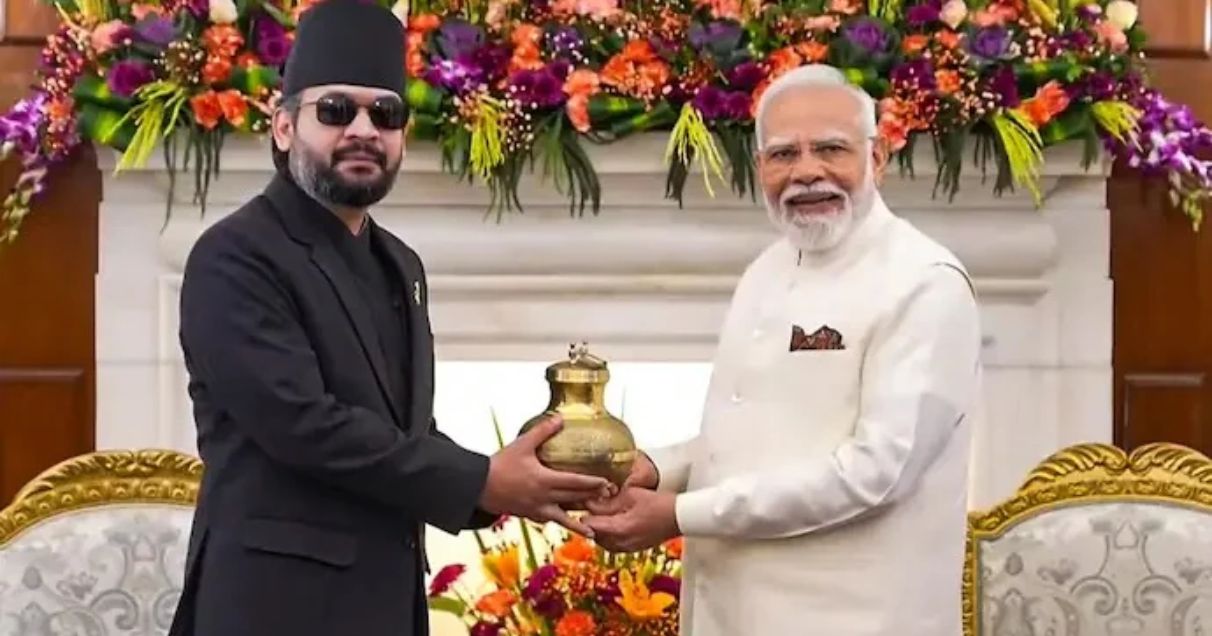
India has unveiled a wide-ranging cooperation package for Nepal, covering education, sports, infrastructure, energy and trade, following Prime Minister Balendra Shah's first bilateral visit to the country. The announcements include an offshore IIT campus in Nepal, assistance for cricket development and reconstruction support worth 24,000 crore Nepali rupees, equivalent to more than Rs 15,000 crore.
Prime Minister Narendra Modi announced the initiatives after holding bilateral discussions with Shah at Hyderabad House on Monday. The visit, which marks Shah's first overseas bilateral engagement as Nepal's prime minister, has given fresh momentum to ties between the two neighbouring countries.
The discussions focused on Nepal's development priorities, with New Delhi committing support across several sectors. The two leaders also unveiled a joint vision document setting out a long-term framework for cooperation in trade, connectivity, energy, digital infrastructure, education, healthcare and water resources.
India commits Rs 15,000 crore for Nepal's development
A major outcome of the visit was India's announcement of a Development Cooperation Package worth 24,000 crore Nepali rupees. The assistance is expected to support reconstruction in areas affected by the devastating Bhotekoshi floods in August, besides addressing Nepal's wider infrastructure and development requirements.
The package will focus on helping displaced and affected communities rebuild their lives, restoring damaged infrastructure and improving the country's preparedness for future natural disasters.
Reconstruction of infrastructure along the Rasuwa-Bhotekoshi corridor had emerged as a key priority in Nepal's discussions with Indian officials ahead of the visit.
IIT campus, innovation hub to strengthen education ties
Education and technology emerged as another important component of the bilateral agenda. India has agreed to establish an offshore campus of an Indian Institute of Technology (IIT) in Nepal, alongside a Startup Incubator and an Innovation Hub.
The initiatives are aimed at expanding access to advanced technical education, encouraging entrepreneurship and creating opportunities for young Nepalis.
India will also increase scholarship opportunities for Nepalese students pursuing courses in law and technology at Indian institutions. Cooperation will extend to the development of an Agro Industrial Park, with an emphasis on food processing and value addition.
India to assist Nepal in developing cricket infrastructure
Responding to Nepal's interest in strengthening its sporting ecosystem, India has announced additional assistance for sports infrastructure and player training, with cricket receiving particular attention.
The cooperation is expected to support the development of facilities and training opportunities for Nepali players, as the country seeks to expand its presence in international cricket.
Hydropower projects and fuel infrastructure get a boost
Energy cooperation featured prominently in the discussions, with both countries advancing major hydropower and petroleum infrastructure projects.
The two prime ministers marked the foundation stone laying of the Lower Arun Hydroelectric Project and reiterated their commitment to completing the Arun-III hydropower project within its scheduled timeline.
Nepal's considerable hydropower potential and India's demand for clean electricity are central to the energy partnership. The projects are expected to contribute to Nepal's domestic power requirements while creating opportunities for electricity exports to India.
On the petroleum front, the second phase of the Motihari-Amlekhganj pipeline was inaugurated, while the foundation stone for the Jhapa Petroleum Terminal was laid. The expansion is expected to strengthen fuel supply infrastructure and improve the reliability of petroleum deliveries to Nepal.
New bridges, check posts to improve cross-border movement
Connectivity and trade facilitation also featured among the key outcomes of the visit.
The leaders inaugurated the Dharchula Road Bridge, connecting Uttarakhand with Nepal, and laid the foundation stone for the Banbasa Integrated Check Post. India also committed to accelerating work on the Dodhara Chandani Integrated Check Post in Nepal.
The projects are expected to improve cross-border movement, facilitate trade and strengthen links between Nepal and neighbouring Indian states, including Bihar and Uttar Pradesh.
In a significant move for Nepal's transit trade, India will also provide access to the ports of Kandla in Gujarat and Paradip in Odisha.
Ayodhya-Janakpur train service launched
Religious and cultural links between the two countries received attention with the launch of the Sarayu Kamala Express, connecting Ayodhya in Uttar Pradesh with Janakpur in Nepal.
The railway service is expected to make travel easier for pilgrims visiting Ayodhya's Ram temple and Janakpur, which is closely associated with the life of Goddess Sita.
The two countries also agreed to strengthen connectivity and cooperation involving important Buddhist and Hindu pilgrimage destinations, including Lumbini and Bodh Gaya.
Joint vision document sets out long-term roadmap
Beyond individual project announcements, India and Nepal released a joint vision document outlining their priorities for the coming years. The framework covers economic cooperation, infrastructure, digital connectivity, energy, water resources, trade, education, healthcare and sports.
The outcomes of Shah's visit signal an effort by both governments to translate their longstanding bilateral relationship into practical development partnerships.
For Kathmandu, the announcements address several immediate priorities, ranging from disaster recovery and energy security to education and sporting infrastructure. For New Delhi, the commitments reinforce its engagement with Nepal through infrastructure investment, economic cooperation and closer people-to-people ties.