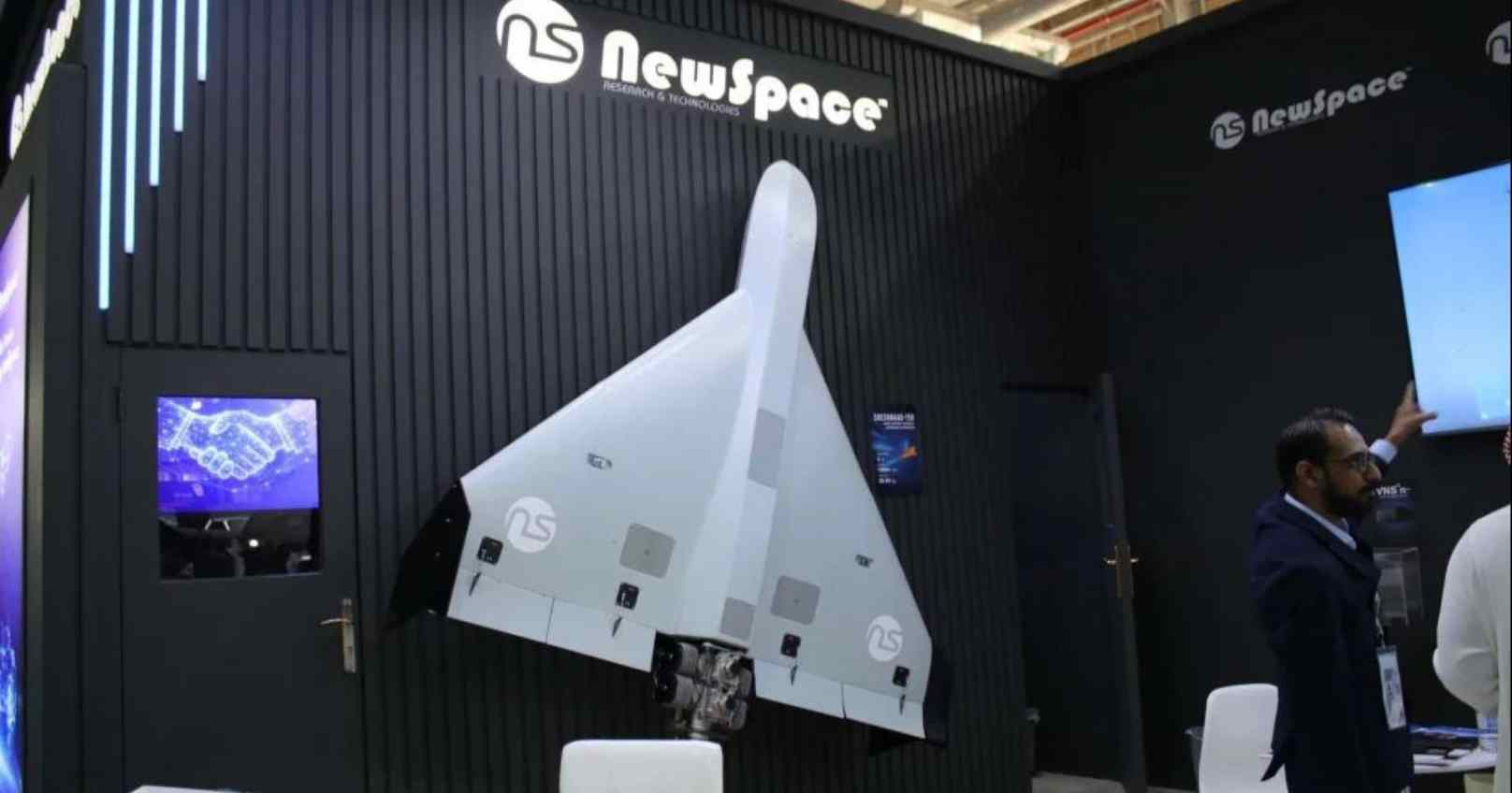
India’s Sheshnaag-150 Swarm Drone Emerges as New Answer to Low-Cost Drone Warfare
India is developing the long-range Sheshnaag-150 swarm attack drone as global conflicts highlight the growing power of inexpensive autonomous weapons
03-03-2026

As modern conflicts increasingly showcase the impact of inexpensive autonomous weapons, India is quietly advancing its own long-range swarm drone program, the Sheshnaag-150. The system is being developed by Bengaluru-based defence startup Newspace Research Technologies and is designed to counter the growing influence of low-cost combat drones on today’s battlefields.
The program gained attention after its initial test flight about a year ago. However, urgency around the project increased following India’s military deployment of some of the company’s other drone technologies during Operation Sindoor. The experience has reinforced the need for a domestically built, long-range swarm-attack capability.
Recent conflicts have demonstrated how relatively inexpensive drones can cause outsized damage. Iran’s Shahed‑136 loitering munition, widely used in modern battlefields, has proven capable of overwhelming sophisticated air-defence systems through sheer numbers and coordinated strikes.
The United States has experimented with a similar concept through the LUCAS drone, which adopts a comparable low-cost design philosophy. These developments highlight a growing military lesson: large numbers of inexpensive autonomous systems can challenge or defeat more expensive traditional weapons.
This shift has strengthened the case for systems like the Sheshnaag-150 within India’s armed forces.
The Sheshnaag-150 has been designed specifically for swarm operations, allowing multiple drones to coordinate attacks and overwhelm defensive systems. According to developers, the platform can travel distances exceeding 1,000 kilometres and remain airborne for more than five hours.
During missions, the drone can hover near a target area, collect intelligence, and strike when required. It is also designed to independently detect, track and engage targets with minimal human intervention. With a payload capacity estimated between 25 and 40 kilograms, it can target infrastructure, military vehicles or other strategic assets.
While the aircraft itself is significant, developers say the real strength of the program lies in the software architecture controlling the drone swarm. Advanced algorithms will allow multiple drones to communicate with each other, coordinate attacks and dynamically adapt their mission plans.
Such “mother-code” systems enable autonomous coordination, meaning the drones can collectively determine the most efficient way to approach and strike targets while maintaining resilience against electronic interference.
Unlike systems that rely heavily on satellite navigation, the Sheshnaag-150 is expected to incorporate visual navigation technology. This would allow the drone to operate even in environments where GPS or other satellite signals are blocked or jammed.
The importance of such capabilities became evident during Operation Sindoor, when Pakistan deployed large numbers of inexpensive drones to overwhelm air-defence networks and identify Indian positions. Although many of those drones were intercepted, the tactic demonstrated how swarms could be used to exhaust defensive systems.
India, in contrast, used a smaller number of more advanced attack drones and loitering munitions that successfully targeted enemy air-defence infrastructure. The strikes helped weaken Pakistan’s radar and defensive coverage, creating operational advantages for the Indian Air Force.
Developments in conflicts such as the war in Ukraine and ongoing tensions in the Middle East have underscored the growing importance of drones in modern combat.
For India, systems like the Sheshnaag-150 represent a step toward adapting military doctrine to this changing battlefield reality. Cheap, expendable and autonomous weapons are increasingly seen as crucial tools for future warfare.
With testing progressing steadily, India’s swarm drone program could soon become a key element in the country’s evolving defence strategy.


CJP leaders Saurav Das and Ashutosh Ranka were released by a Special Executive Magistrate after furn
Read More
CJP leaders Saurav Das and Ashutosh Ranka will remain in judicial custody until October 21 after a S
Read More
Former India cricketer Yusuf Pathan is reportedly set to receive half of a disputed 1,000-square-met
Read More