India has further consolidated its position as Asia's third-most powerful country, with improving economic prospects, expanding defence partnerships and growing cultural influence narrowing the gap between its available resources and actual geopolitical strength, according to the 2026 Asia Power Index released by Australia's Lowy Institute.
The report also places Prime Minister Narendra Modi among the region's most effective political leaders, ranking him second behind Chinese President Xi Jinping. India's overall power score has risen to 40.5, strengthening its standing among major Asian powers despite a decline in some economic indicators.
One of the key findings is that India's power gap with China has reached its narrowest level since the index was first introduced in 2018. However, Beijing continues to maintain a considerable advantage, with China's overall power assessed to be approximately 80 per cent higher than India's.
The concept of 'power yield' measures how effectively a country converts its economic, military and strategic resources into actual influence and comprehensive power. A narrower gap indicates that a country is making more effective use of its available capabilities.
Defence partnerships and cultural influence strengthen India's position
India registered improvements in five of the eight categories assessed by the Lowy Institute, while the remaining three recorded marginal declines.
Diplomatic influence continued to be one of India's strongest areas, demonstrating relative resilience even as several other countries experienced setbacks in this category.
Growing defence engagement has also contributed to India's regional standing. The country's expanding military partnerships and BrahMos missile exports to Southeast Asian nations have strengthened its defence networks, helping India secure ninth position in this category.
Cultural influence emerged as another area of progress. India's score increased to 43.8 points, supported by improvements in cultural projection, information flows and people-to-people exchanges.
These developments underline India's expanding engagement with Asian countries beyond traditional diplomatic and economic partnerships.
Modi ranks behind Xi Jinping in regional leadership effectiveness
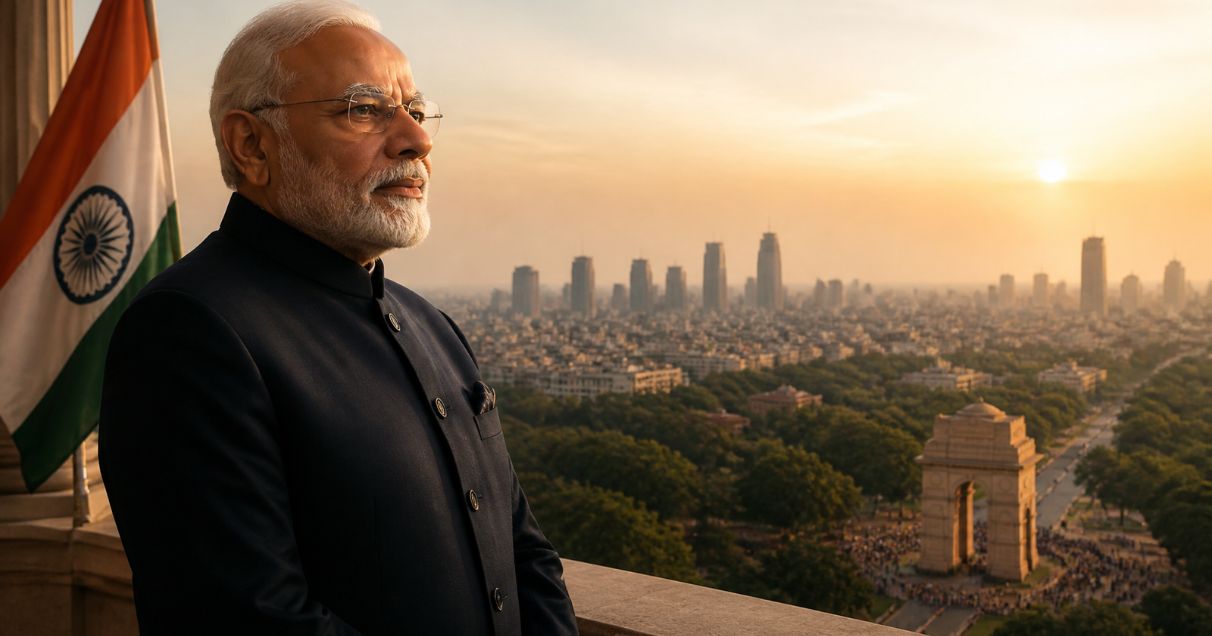
The report identified Modi as Asia's second-most effective regional leader, placing him immediately behind Chinese President Xi Jinping.
Dr Hunter Marston, Director of the Southeast Asia Program at the Lowy Institute and project lead for the Asia Power Index, highlighted India's improved standing in a post on X.
He noted that India's score had climbed to 40.5, reinforcing its position as a major power. He also pointed to the narrowing gap with China and Modi's leadership ranking as significant findings of the latest assessment.
However, the report also noted a decline in perceptions of Modi's leadership and strategic ambitions. It attributed this partly to India's comparatively reduced diplomatic visibility during the conflict in the Gulf region.
Economic challenges weigh on India's overall performance
Despite the broader improvement, the assessment identified several economic vulnerabilities that could affect India's future rise.
A weakening rupee, changes in the International Monetary Fund's methodology for measuring national economies and a decline of nearly $20 billion in outbound investment were among the factors highlighted.
India's economic capability recorded a dip, even as the country's overall power score improved.
Nevertheless, the Lowy Institute observed that India's long-term opportunities remain substantial compared with those available to several other Asian countries, suggesting considerable scope for further growth in its regional influence.
The 2026 edition assesses 27 countries and territories through 131 indicators grouped into eight categories: economic capability, military capability, resilience, future resources, economic relationships, defence networks, diplomatic influence and cultural influence.
China closes in on US in military power rankings
The report also highlights a significant shift in the balance of power between Washington and Beijing, with China continuing to reduce the gap with the United States.
According to the index, the United States scored 78.9 in comprehensive power, compared with China's 73.6, leaving a difference of just 5.3 points.
Washington's position has weakened across several important parameters, including economic and military capability, defence partnerships and diplomatic influence. China, meanwhile, has maintained relatively strong performance across most of these areas.
The report links the changing regional balance partly to the United States' extensive involvement in the Middle East, which has diverted attention and strategic resources away from Asia.
China's military modernisation and expanding maritime capabilities have further strengthened its position. Its growing naval presence is also reinforcing Beijing's ability to assert its territorial claims involving Taiwan and the Philippines.
China's financial reserves add to its strategic advantage
Beyond its military expansion, China has continued to strengthen its economic position.
The report points to Beijing's growing official foreign exchange reserves, which are now approximately three times those of the United States, as another indicator of its financial strength.
While the US continues to benefit from the dollar's global dominance and substantial financial resources, China's economic expansion and military modernisation are increasingly challenging Washington's traditional advantage in Asia.
The latest Asia Power Index therefore points to two parallel developments: India's gradual emergence as a stronger regional power and China's continued rise towards the United States in the broader Asian balance of power.