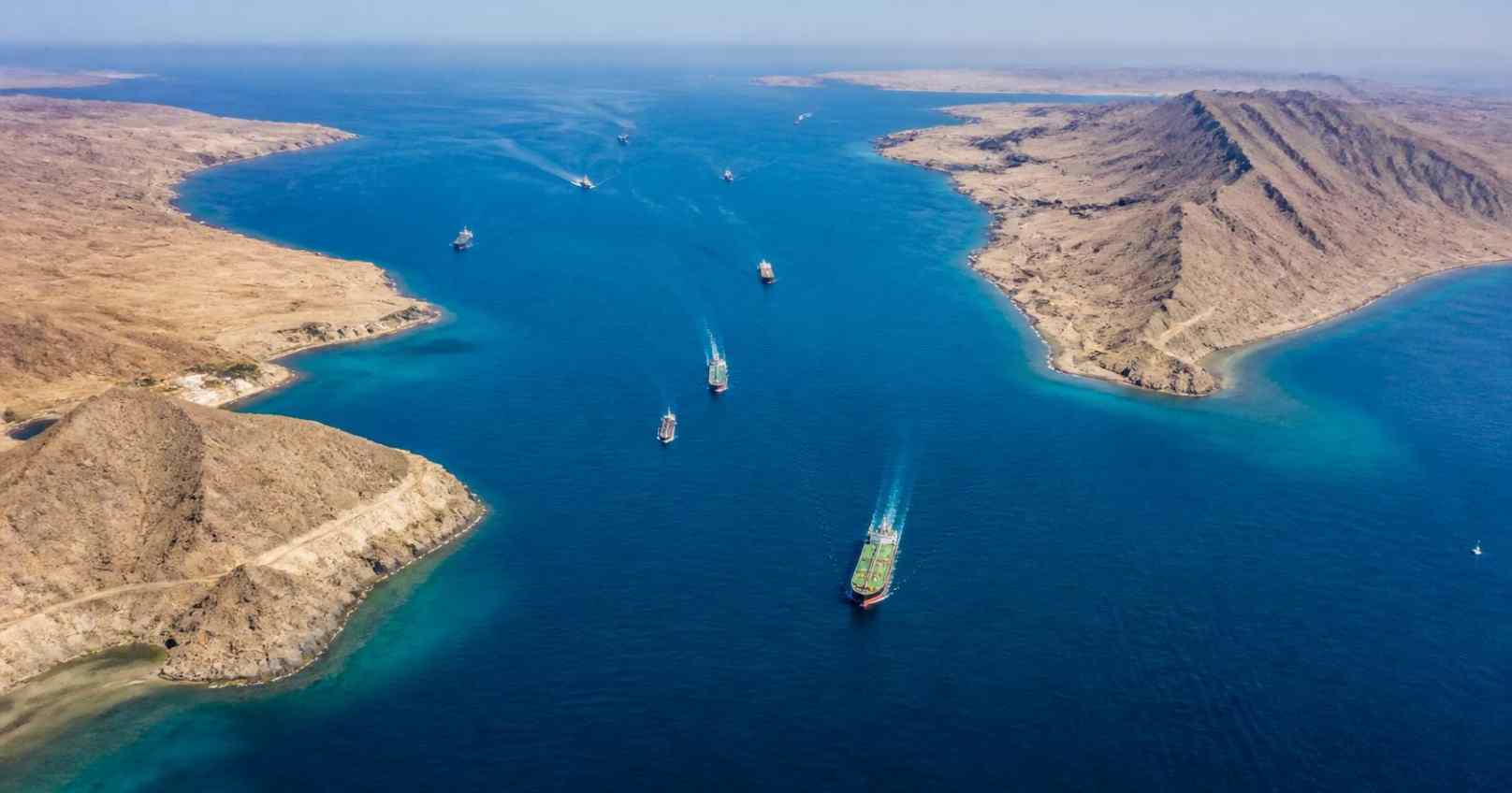
A fresh dispute has emerged between Iran and the United States over the status of the Strait of Hormuz, with Tehran announcing that shipping through the key maritime corridor has been suspended, while Washington maintains that the route remains fully operational.
Iran's Persian Gulf Strait Authority (PGSA) said the decision was taken in response to what it described as unlawful military activity by US forces in the region. In a statement, the agency said vessel movement through the strait would remain restricted until security conditions improve, after which transit requests would be reviewed and permissions issued.
The announcement came shortly after Iran launched missiles and drones targeting locations in Jordan, Kuwait, Oman and Qatar, describing the attacks as retaliation for recent US military operations.
The United States rejected Iran's claim, asserting that Tehran has no authority to block an international shipping lane. US Central Command said commercial vessels continue to move through the Strait of Hormuz and stressed that American forces remain deployed to safeguard freedom of navigation.
In separate statements, the US military dismissed comments from Iran's Islamic Revolutionary Guard Corps (IRGC)-Navy suggesting that foreign vessels require Iranian approval before crossing the waterway. Washington reiterated that the strait is an international passage and that shipping traffic remains unaffected despite repeated threats.
US President Donald Trump also sought to reassure global markets, saying commercial vessels are continuing to transit the route despite heightened regional tensions.
Meanwhile, Mohsen Rezaee, a senior adviser to Iran's leadership and a former commander of the IRGC, described the Strait of Hormuz as one of the country's most important strategic assets. According to Iranian media, he said the waterway plays a vital role in Iran's national security and would be protected.
The latest disagreement comes amid an escalating exchange of military strikes across the Gulf. Iran recently launched missiles and drones at US-linked facilities in several neighbouring countries, including Jordan, Kuwait, Oman, Qatar and the United Arab Emirates. Authorities in Qatar reported injuries caused by falling debris after air defence systems intercepted incoming missiles, while Oman and Bahrain also reported security incidents linked to the attacks.
In response to the deteriorating security environment, the US Embassy in Oman advised American citizens in certain areas to remain indoors, and several Gulf nations issued alerts to vessels operating in regional waters.
Although Iran has repeatedly sought tighter control over shipping in the Strait of Hormuz since the conflict intensified, maritime authorities led by the US say alternative navigation routes remain available and commercial traffic continues to move through the region.
The Strait of Hormuz is one of the world's most critical energy corridors, carrying a significant share of global crude oil and liquefied natural gas exports. Any disruption to shipping through the narrow passage has the potential to affect international energy markets, freight movement and fuel prices worldwide.