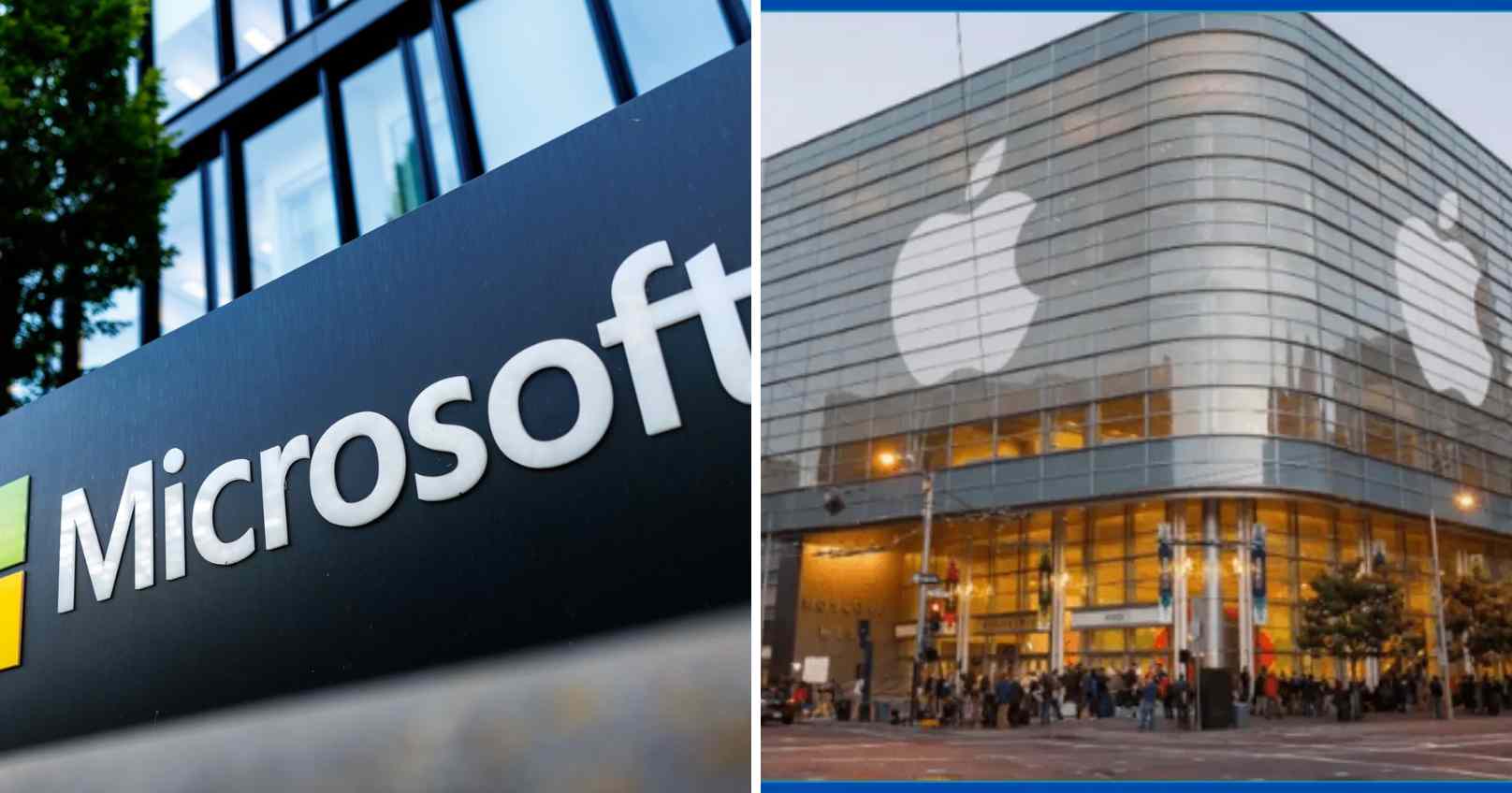
Iran’s Revolutionary Guards Warn They Could Target US Tech and Industrial Firms from April 1
IRGC lists major American companies in region as potential targets in escalating retaliation amid the Middle East conflict
31-03-2026

Iran’s Islamic Revolutionary Guard Corps (IRGC) has issued a warning that several prominent US-based technology and manufacturing companies could face consequences beginning April 1, according to reports carried by state media.
In its statement, the IRGC identified 18 firms — including Microsoft, Google, Apple, Intel, IBM, Tesla and Boeing — alleging that their operations in the region may be targeted. The group described the move as a response to what it called hostile actions carried out against Iran.
The statement declared that starting at 8 PM Tehran time on April 1 (10 PM IST), facilities linked to these companies could be attacked. It further cautioned employees associated with these organisations to vacate their workplaces, claiming such steps were necessary for their safety.
The Guards argued that American information technology, artificial intelligence and communications companies play a central role in identifying and monitoring targets in modern conflicts. As a result, they claimed these entities now fall within what they described as “legitimate” retaliation targets.
The remarks were circulated through Iran’s semi-official Tasnim news agency and come amid heightened tensions between Tehran and Washington.
The United States increasingly incorporates digital infrastructure and artificial intelligence into defence strategy. Rather than operating independently, AI tools function within a broader intelligence ecosystem that includes satellite surveillance, drone reconnaissance, signal interception and advanced data analytics.
Large volumes of intelligence are collected from satellites, aircraft and intercepted communications. AI-driven systems then analyse this information rapidly, detecting behavioural patterns, unusual activity or movement that might otherwise go unnoticed. This assists military planners in identifying strategic sites, weapons facilities or mobile targets.
Technology firms often contribute indirectly by supplying cloud computing platforms, mapping systems or AI software that can be adapted for national security use.
Another major advantage of AI-supported systems is speed. By automating aspects of analysis, the time between identifying a potential threat and executing a response can be significantly reduced. In certain cases, algorithmic tools help prioritise targets based on location data, communication patterns or activity clusters.
Reports have also indicated that AI-assisted tools have been used in various overseas operations, including efforts linked to tracking political figures such as Venezuelan leader Nicolás Maduro.
The IRGC’s latest statement underscores how emerging technologies are becoming central not only to warfare but also to geopolitical tensions.

Donald Trump has again claimed that threats of 250 per cent tariffs helped stop the 2025 India-Pakis
Read More
The BJP has alleged a rift between Rahul Gandhi and Priyanka Gandhi Vadra over the removal of photog
Read More
Sonia Gandhi has joined X with a memory of meeting Rajiv Gandhi in Cambridge, introducing her upcomi
Read More