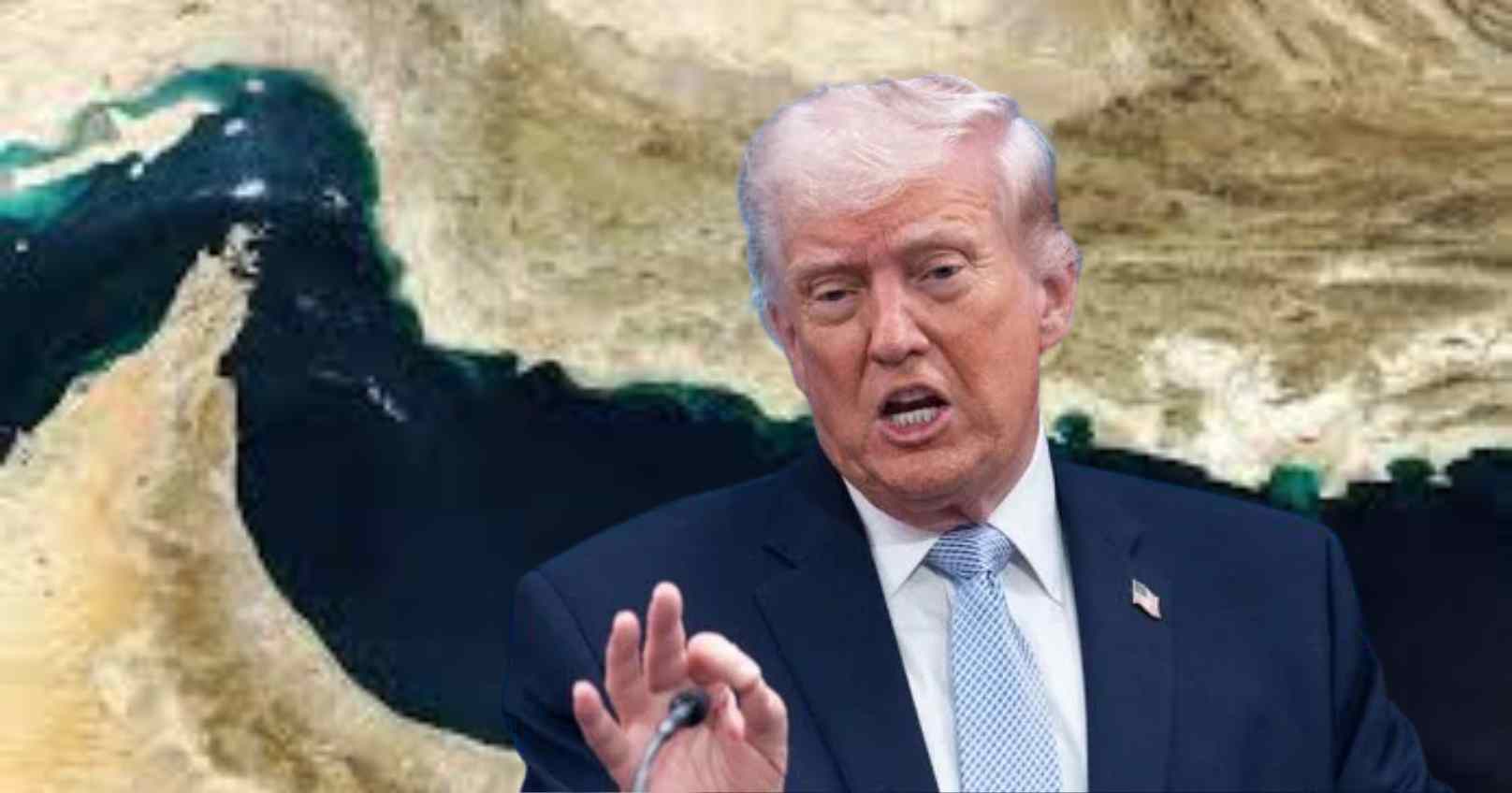
Iran Says It Can Withstand US Naval Blockade for Three Months, Cites Oil Stored at Sea
Tehran signals resilience after Donald Trump’s Hormuz threat, claiming floating crude reserves could cushion export disruptions
13-04-2026

Iran has asserted that it could manage the impact of a potential US naval blockade for up to three months by relying on crude oil already stored aboard tankers at sea. The statement came amid escalating tensions following US President Donald Trump’s warning that American naval forces would restrict vessels linked to Iranian ports in the Strait of Hormuz.
In a post shared on X by the Iranian Embassy in Bulgaria, Tehran suggested that it holds sufficient oil in floating storage to continue sales for several months. The message appeared to challenge Trump’s recent remarks about cutting off Iran’s export routes through the strategically vital waterway.
Trump had earlier announced that the US Navy would move to prevent ships connected to Iranian ports from transiting the Strait of Hormuz, accusing Tehran of exploiting the situation. The initial declaration, which implied sweeping restrictions, was later clarified by US Central Command (CENTCOM), stating that enforcement would apply specifically to vessels operating to or from Iranian ports.
Since the outbreak of hostilities in late February, traffic through the Strait of Hormuz has been severely disrupted due to security threats, including missiles, drones, and reported sea mines. The narrow passage is one of the world’s most critical energy corridors, with a significant share of global oil and gas shipments passing through it. For India alone, nearly 90% of LPG imports move via this route.
Supply constraints have pushed up global energy prices, affecting economies worldwide, including the United States. Despite previously downplaying the consequences of disruptions, Trump has shifted to advocating for open navigation, while warning that Washington would act against vessels engaging with Iranian ports.
Meanwhile, US allies such as the United Kingdom and France are said to be working toward assembling a multinational initiative aimed at ensuring safe maritime passage in the Gulf region.
Without directly naming Trump, the Iranian diplomatic account claimed that the country has enough crude stored on tankers offshore to sustain exports for three months. The post also questioned whether the US and its partners could tolerate the economic strain of a prolonged standoff.
Iranian diplomatic channels in several countries have echoed similar messaging, maintaining that Tehran retains influence over developments in the Strait of Hormuz.
While exact figures remain uncertain, analysts suggest that Iran does have a considerable volume of crude in floating storage. According to Samir Madani, co-founder of TankerTrackers.com, satellite imagery from the European Space Agency indicates the presence of multiple Iranian tankers in the Gulf of Oman. These reportedly include around ten Very Large Crude Carriers (VLCCs), each capable of holding approximately two million barrels, along with a Suezmax tanker carrying roughly one million barrels — totaling about 21 million barrels.
Such reserves would equate to roughly four days of India’s total crude consumption, offering Tehran short-term flexibility in managing exports during market volatility.
Earlier reports from Iranian media suggested that oil exports had surpassed 1.5 million barrels per day during Ramadan, marking a notable increase. While export volumes fluctuate, the timing of Iran’s public claims appears intended to project confidence and shape market sentiment.
Iran’s statement is widely viewed as strategic signalling rather than a purely economic disclosure. By highlighting its floating reserves, Tehran appears to be reinforcing the message that it can endure temporary trade restrictions. At the same time, the rhetoric adds to uncertainty among global importers and shipping firms.
Oil markets have already shown sensitivity to developments in the Gulf, with prices reacting sharply to even minor indications of disruption. As tensions persist, concerns remain that further escalation could intensify volatility in global energy supplies and deepen geopolitical friction.

Donald Trump has again claimed that threats of 250 per cent tariffs helped stop the 2025 India-Pakis
Read More
The BJP has alleged a rift between Rahul Gandhi and Priyanka Gandhi Vadra over the removal of photog
Read More
Sonia Gandhi has joined X with a memory of meeting Rajiv Gandhi in Cambridge, introducing her upcomi
Read More