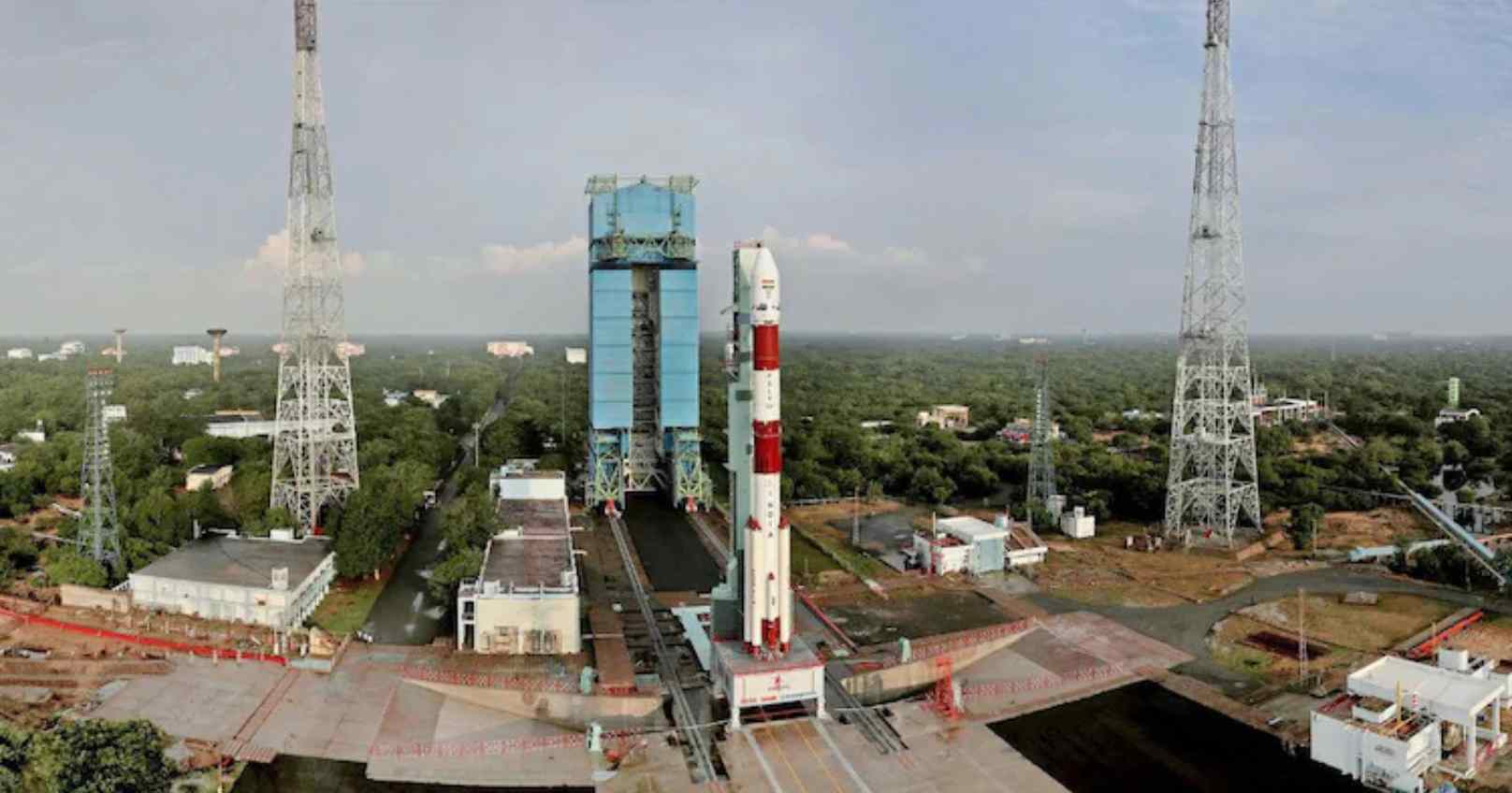
India’s opening space launch of 2026 ended unsuccessfully on Monday after the Polar Satellite Launch Vehicle (PSLV-C62) developed a serious malfunction minutes after takeoff. The rocket lifted off from the Satish Dhawan Space Centre in Sriharikota at 10:18 am IST, but the mission began to unravel around eight minutes into flight.
According to ISRO Chairman V. Narayanan, the launch progressed normally through its initial phases before encountering trouble in the third propulsion stage. He said an unexpected reduction in chamber pressure during the PS3 phase caused the vehicle to veer off its planned trajectory, ultimately preventing satellite deployment.
“Up to the second stage, the mission performance was as expected. However, the third stage did not generate adequate thrust, leading to a deviation from the flight path,” Narayanan explained, confirming that the payloads could not be injected into orbit.
Space experts noted that while launch failures are an inherent risk in spaceflight, the priority now is rapid diagnosis and recovery. Former ISRO scientist Manish Purohit said the Failure Analysis Committee would closely study telemetry data and test components such as the flex nozzle under simulated conditions to pinpoint the cause.
WHAT WENT WRONG MID-FLIGHT
The launch initially appeared flawless. The rocket ascended smoothly, shedding boosters and transitioning stages on schedule. But as the third stage ignited, mission controllers noticed abnormal readings. The vehicle began to rotate unexpectedly, a sign that it was losing stability at extremely high speed.
Even minor instability can have catastrophic consequences in spaceflight. With insufficient thrust to maintain the required velocity and direction, the rocket drifted away from its designated path, sealing the mission’s fate.
A REPEAT OF PAST TROUBLES
Early assessments suggest that the anomaly may be linked to a pressure-related failure similar to the one that caused the PSLV-C61 mission to fail in May 2025. Engineers believe that without optimal chamber pressure, the engine could not deliver the energy needed for orbital insertion.
The loss is particularly significant due to the nature of the payloads. The primary satellite, Anvesha, developed for strategic surveillance by the Defence Research and Development Organisation (DRDO), was designed to detect concealed military assets from low Earth orbit. Also onboard was AayulSAT, an experimental satellite intended to test in-orbit refuelling technology for the first time in India.
Both are now believed to have disintegrated during atmospheric re-entry.
UNCERTAINTY FOR UPCOMING LAUNCHES
ISRO has initiated a comprehensive technical review to identify the precise cause of the failure and implement corrective measures. Similar investigations after earlier missions examined issues ranging from propulsion system defects to structural weaknesses.
This back-to-back setback involving the PSLV’s third stage has cast doubt over India’s near-term launch schedule for 2026. While the PSLV has long been regarded as ISRO’s most reliable launcher, it will remain grounded until engineers are confident the issue has been fully resolved.
For now, India’s space programme pauses, awaiting answers—and a path forward—before the next countdown begins.