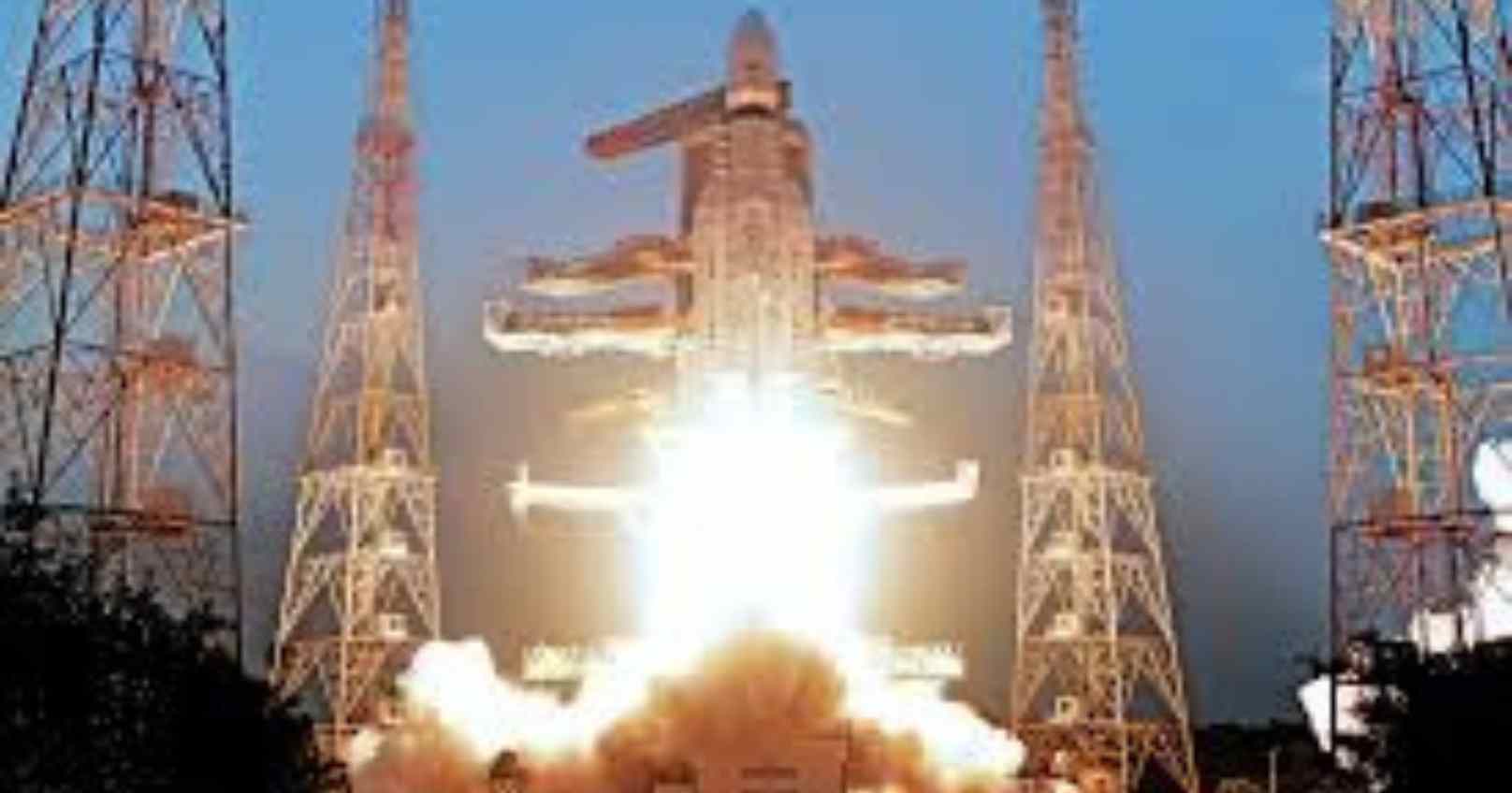
India’s space programme achieved a major milestone on Christmas Eve as the Indian Space Research Organisation (ISRO) flawlessly executed the LVM3-M6 mission, sending the heaviest foreign satellite ever launched from Indian territory into low-Earth orbit.
The launch vehicle, nicknamed “Bahubali” for its enormous 640-tonne lift-off weight, blasted off from the Second Launch Pad at the Satish Dhawan Space Centre in Sriharikota at exactly 8:54 am IST on December 24, 2025. The mission carried AST SpaceMobile’s BlueBird Block-2 satellite, weighing approximately 6.5 tonnes, into a targeted orbit of 520–600 kilometres.
This flight marked the sixth operational mission of the LVM3 rocket and ISRO’s 101st successful orbital launch overall. It was also a major commercial achievement conducted through NewSpace India Limited (NSIL), reinforcing India’s growing role in the global launch services market.
Watched live by millions, the three-stage heavy-lift rocket—powered by twin S200 solid boosters, the L110 liquid core stage, and the C25 cryogenic upper stage—performed with high precision, placing the satellite into orbit with minimal deviation.
ISRO Chairman, addressing the nation after the mission, described it as a historic achievement, noting that the launch demonstrated world-class accuracy and reliability. He highlighted that the orbital insertion error was under two kilometres, placing the mission among the most precise globally.
The BlueBird Block-2 satellite represents a breakthrough in communications technology. Equipped with a massive 223-square-metre phased-array antenna, it is designed to deliver direct 4G and 5G connectivity to standard smartphones without the need for ground-based towers. The technology aims to provide coverage in remote regions such as mountainous terrain, oceans, and deserts.
AST SpaceMobile stated that the successful deployment is a crucial step toward building its low-Earth orbit constellation, positioning it as a competitor to existing satellite broadband providers by offering direct-to-device connectivity. The system is expected to work in collaboration with more than 50 mobile operators worldwide.
The mission capped off a strong year for ISRO, following high-profile successes such as Chandrayaan-3 and multiple OneWeb launches. The successful commercial use of LVM3 further strengthens confidence in the rocket ahead of India’s upcoming Gaganyaan human spaceflight programme.
With this achievement, India continues to solidify its standing in the international space market, attracting more foreign payloads while advancing self-reliance in advanced space technologies.