Actor Kriti Sanon has responded to the criticism surrounding her recent Raksha Bandhan jewellery advertisement, rejecting objections to both her outfit and the campaign’s inclusion of a pet dog in the celebrations.
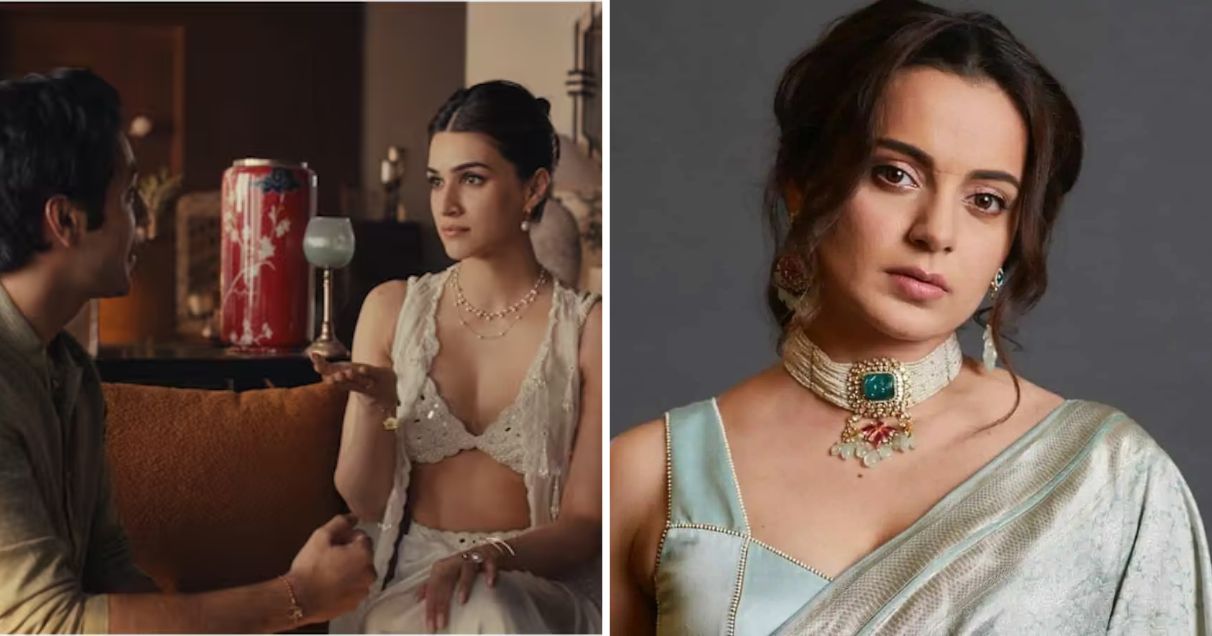
The ad presents the festival through a contemporary lens, showing Kriti in an off-white bralette-style ensemble with a cape and draped skirt. While some social media users criticised the choice of clothing and questioned the decision to include a dog in the Raksha Bandhan ritual, Kriti said the meaning of a festival should not be judged by appearances.
Sharing her response on social media, the actor said traditions are defined by the emotions and values behind them rather than by what a person chooses to wear.
For Kriti, Raksha Bandhan represents a promise of protection that goes beyond the conventional brother-sister equation. She revealed that she and her sister also tie rakhi to each other, believing that both women are equally capable of protecting and supporting one another. She added that their prayers for each other’s health, happiness and long life extend to their dogs as well, whom they consider part of the family.
Addressing the criticism over her attire, Kriti questioned why women continue to face scrutiny over their clothing, particularly when it comes to demonstrating respect for Indian traditions. While fashion has changed and evolved over time, she argued that a woman’s cultural values cannot be measured by how much or how little she wears.
“Culture & Traditions are in her heart, not in her neckline,” Kriti wrote.
The campaign also drew a reaction from BJP MP and actor Kangana Ranaut, who criticised Kriti’s styling and described the advertisement as “intentionally creepy”. Kangana questioned the choice of outfit for a Raksha Bandhan celebration, arguing that there were several other clothing options available.
The debate has since sparked wider discussion online, with supporters backing Kriti’s view that traditions can evolve while retaining their emotional significance, and critics continuing to question the campaign's interpretation of the festival.