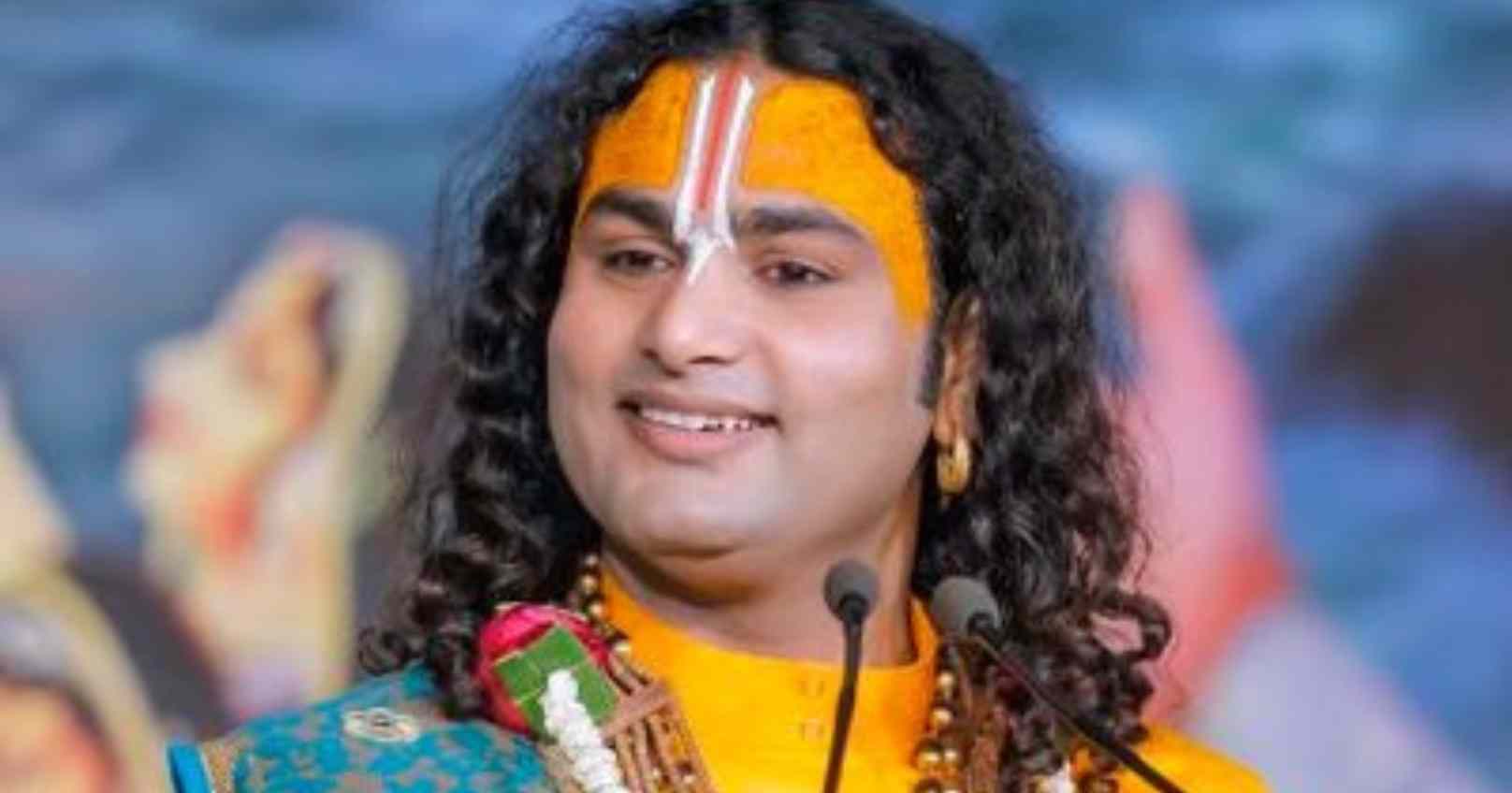
A legal case has been initiated against spiritual preacher Aniruddhacharya, who is facing allegations of making insulting remarks about women. The complaint was submitted by Meera Rathore, the Agra district president of the All India Hindu Mahasabha, and has now been admitted by the Chief Judicial Magistrate (CJM) court. The court has scheduled January 1 to record Rathore’s statement.
The dispute stems from a video circulated widely in October, in which Aniruddhacharya made comments about young women and marriage. The clip sparked intense debate online, with women’s organisations and social media users accusing him of reinforcing harmful stereotypes and speaking disrespectfully about women.
Rathore, who strongly condemned the remarks, said no religious leader should make such statements. She first approached the Vrindavan police station with her complaint, but when no FIR was filed, she took the matter directly to court.
She added that she had taken a symbolic pledge while pursuing the case. “Since the day I submitted the petition, I have kept my hair untied,” she said. “I had vowed not to braid it again until the court acknowledged my complaint. Now that the case has been registered, perhaps I can tie it again.”
Rathore is demanding that the police file a proper case and arrest the preacher for what she calls “offensive and demeaning comments about women.”
Her lawyer, Manish Gupta, said that the police at Vrindavan Kotwali did not act on the initial complaint, which prompted the move to seek relief from the CJM court.
After the backlash, Aniruddhacharya released a clarification stating that his words had been misrepresented. He insisted that his comments referred to both genders and were taken out of context. “A woman involved with several men cannot be seen as having good character, and similarly, a man involved with multiple women is viewed as immoral,” he said. “Only a small part of my talk was shared online, which distorted its meaning.”
He maintains that the viral video shows an incomplete version of his discourse and that the criticism arose from selective editing.