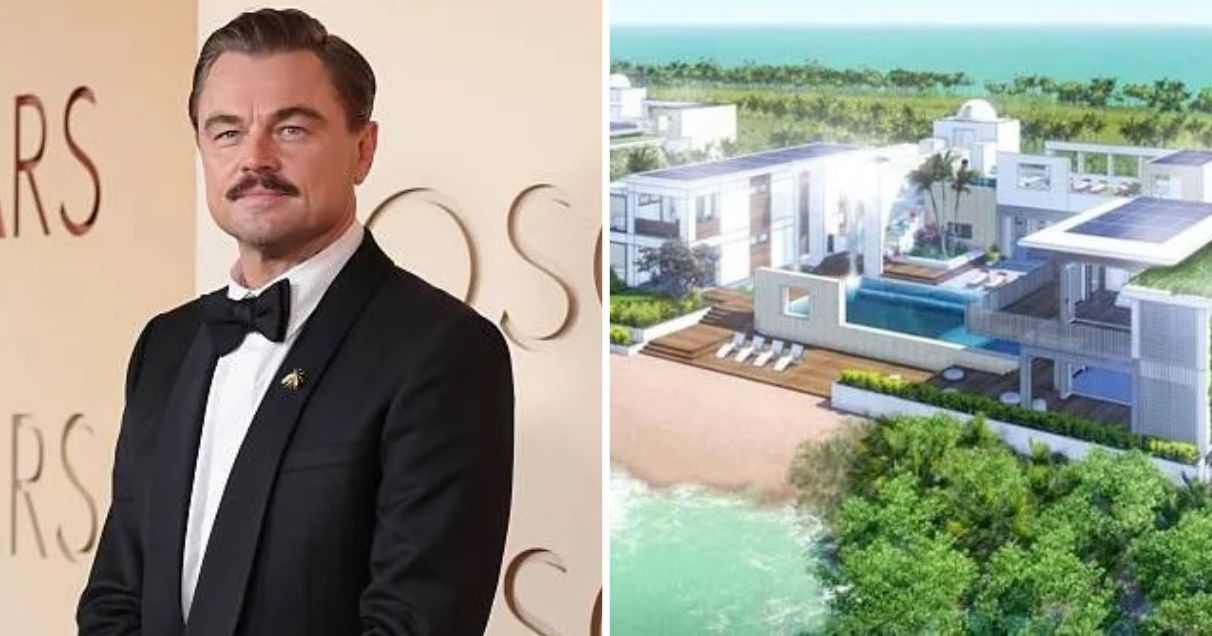
A private island in Belize that Hollywood star Leonardo DiCaprio acquired for a reported $1.75 million has remained at the centre of an unfinished luxury tourism venture, despite plans to turn it into an eco-conscious holiday destination.
DiCaprio purchased the 104-acre Blackadore Caye in 2005, intending to develop a resort that would combine high-end accommodation with efforts to repair the island's fragile natural environment. The project, originally expected to welcome visitors in 2018, has yet to become operational.
The delay has kept the spotlight on an unusual development proposal that sought to make environmental restoration as important as luxury tourism.
The Caribbean island that caught DiCaprio's attention
Blackadore Caye lies off Belize's coast, west of Ambergris Caye, in the Caribbean Sea. Its location places it close to the Belize Barrier Reef, one of the world's major marine ecosystems.
DiCaprio reportedly discovered the island during a visit to Belize in 2004. He was staying at Cayo Espanto, an exclusive resort owned by hotelier Jeff Gram, who later became his business partner in the island purchase.
The actor was drawn to the region's marine biodiversity, coral reefs and cultural attractions, including its Mayan heritage. Belize is also known for its clear Caribbean waters and wildlife, with manatees and a wide variety of fish found in its coastal habitats.
However, Blackadore Caye was not an entirely pristine stretch of land. Overfishing, erosion along the coastline and the loss of vegetation had affected parts of the island. Rather than developing it as a conventional holiday destination, DiCaprio wanted the project to address some of this environmental damage.
A resort built around environmental restoration
The proposed development was named Blackadore Caye, A Restorative Island. Its central idea was to combine an exclusive resort experience with measures aimed at improving the island's ecosystem.
Plans included 36 luxury resort bungalows alongside 36 private beachfront villas that buyers could own. The development was also designed to incorporate renewable energy and resource-conservation measures.
Solar power, rainwater collection and a zero-waste approach featured among the proposed sustainability initiatives. The broader ambition was to create a tourism model in which the natural surroundings would be restored rather than further depleted.
Its proximity to the Belize Barrier Reef was central to the project's appeal. The reef draws visitors interested in diving, snorkelling and exploring marine life, making the surrounding waters both an environmental priority and a major tourism attraction.
Why the project missed its 2018 opening
Despite the ambitious plans, the resort did not open as scheduled in 2018. Design challenges and concerns about the environmental consequences of certain proposed structures contributed to delays.
Some elements, particularly the plans for overwater developments, attracted criticism over the possible impact on sensitive marine habitats. The debate raised questions about whether a luxury construction project could genuinely deliver on its promise of ecological restoration.
Building on a low-lying island also presents practical difficulties, adding another layer of complexity to the development.
For now, the resort remains an unrealised vision. What began as DiCaprio's plan to combine luxury travel with environmental recovery has become a long-running project whose proposed opening has slipped well beyond its original deadline.