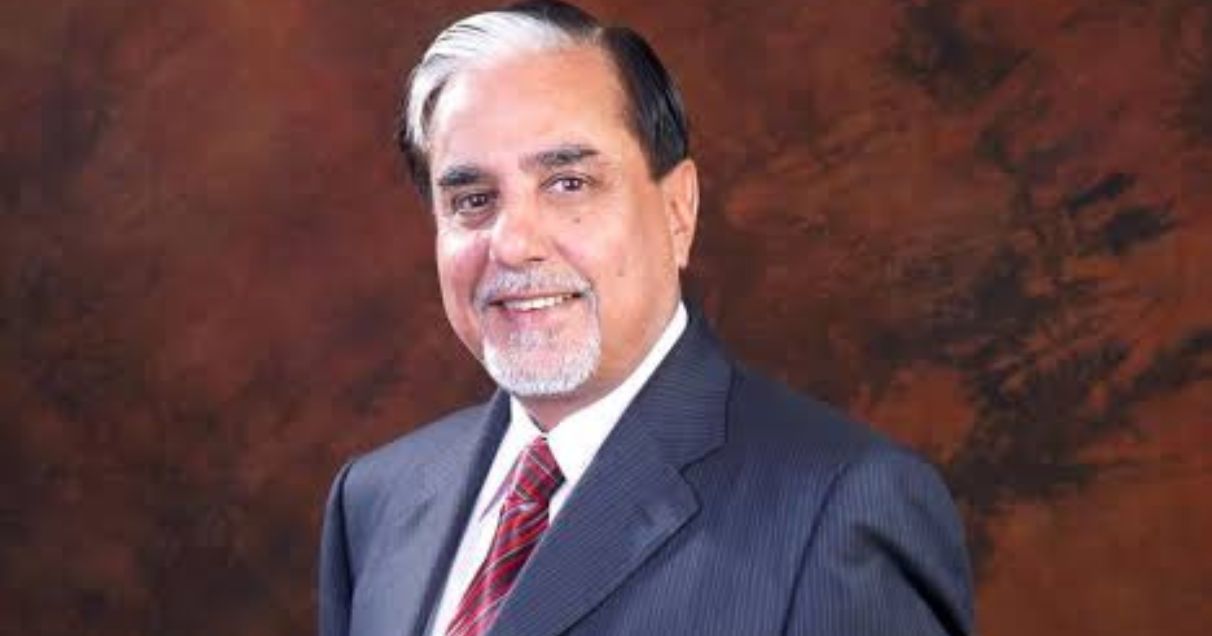
In a significant ruling in the personal insolvency proceedings involving media entrepreneur Dr Subhash Chandra, the National Company Law Tribunal (NCLT) has, through its Third Member, backed the approval of Chandra’s repayment plan under the Insolvency and Bankruptcy Code, 2016, despite strong objections from several banks and financial creditors.
Judicial Member Nilesh Sharma, acting as the Third Member following a difference of opinion in the original Division Bench, concluded that the repayment plan satisfies the requirements for approval under Section 114 of the IBC.
The Third Member found that the objections raised by creditors did not disclose a statutory infirmity or material irregularity serious enough to justify rejection of a plan that had secured approval from creditors representing 80.814% in value.
The matter will now go back before the Original Division Bench for appropriate orders in accordance with the majority opinion under Section 419(5) of the Companies Act, 2013.
Repayment proposal and the dramatic net-worth question
One of the most closely watched aspects of the proceedings was the contrast between Chandra’s historical net-worth figures and the financial position underlying the present repayment proposal.
The order records total market value of assets of the Personal Guarantor at approximately ₹31.79 crore. After taking into account the ₹25 crore value attributed to the Jolly Maker residential property, Chandra’s offer towards creditors was ₹6.50 crore, including ₹25 lakh towards insolvency-resolution-process costs.
Objecting creditors had, however, pointed to historical net-worth certificates furnished to banks. The Third Member’s opinion records certificates given to RBL Bank in 2017 reflecting net worth of approximately ₹45,888 crore and Canara Bank in 2018 reflecting approximately ₹40,562 crore, compared with the present figure of around ₹31.79 crore.
The Tribunal acknowledged that the extraordinary difference justified seeking an explanation. It nevertheless held that the old net-worth certificates, standing alone, did not establish that Chandra had concealed or diverted assets. The Tribunal also found that the IBC does not make appointment of an independent forensic auditor or asset-tracing agency a mandatory prerequisite for consideration of a repayment plan.
In the absence of independent material establishing fraud or concealment, failure by the Resolution Professional to initiate such an investigation could not, by itself, invalidate the process.
Plan received 80.814% support
The strength of the creditor vote became crucial to the Third Member’s conclusions. The repayment plan was approved by 80.814% in value of creditors, above the statutory three-fourths threshold. The Tribunal held that while majority approval does not automatically immunise a repayment plan from judicial scrutiny, there was nothing on record in this case demonstrating violations so material as to nullify the 80.814% approval.
The voting record showed opposition from several financial institutions, including Axis Bank, Canara Bank, HDFC Bank, IDBI Trusteeship for Franklin Templeton, LIC Housing Finance, RBL Bank and Union Bank of India (UK) Ltd.
World Crest Advisors LLP, Lemonade Capital Advisors LLP and Corpcall Capital Advisors LLP were among entities supporting the plan. The voting shares recorded for them included 28.49% for World Crest, 16.85% for Lemonade Capital and 10.30% for Corpcall.
Alleged associate-creditor argument rejected
Objecting creditors had also questioned participation in voting by entities alleged to be associated with the Personal Guarantor. The controversy involved entities including Veena Investments Pvt Ltd, Direct Media Distribution Ventures Pvt Ltd, World Crest Advisors LLP, Lemonade Capital Advisors LLP and Corpcall Capital Advisors LLP.
The Third Member declined to treat these entities as “associates” merely because of alleged family, business or commercial connections. The Tribunal held that the statutory requirements under Section 79(2)(g) have to be satisfied. Mere influence, family connection, business relationship, commercial proximity or alleged indirect influence does not by itself satisfy the test.
Where the debtor, alone or together with relevant persons, does not hold more than 50% of the share capital or exercise the form of control contemplated by the provision, an entity cannot be treated as an associate merely on allegations of relationship or influence.
India Bulls v. Dr. Subhash Chandra order.pdf Consequently, the Third Member found that the approving vote could not be invalidated on this ground.
Tribunal finds lapse involving claims of 1,260 individuals
The Third Member did, however, identify a significant irregularity concerning claims submitted through two individuals. Claims had been filed through Anil Kumar on behalf of 960 individuals and Sunil Jain on behalf of 300 individuals.
The Tribunal found that these claims had been admitted despite the absence of supporting documentary material and held that their admission was inconsistent with the Resolution Professional’s obligation to undertake appropriate verification.
But rather than invalidate the entire repayment process, the Third Member directed that the claims be excluded from the final list of creditors. The amount allocated to those claims will instead be redistributed among the remaining eligible creditors in accordance with the methodology of the repayment plan.
The Tribunal found that the effect of this correction on the voting outcome was minuscule and that support for the plan would continue to remain comfortably above the statutory threshold.
Dissenting creditors cannot opt out
One of the ruling’s most important legal conclusions concerns the position of creditors who voted against the repayment plan. The Third Member rejected the proposition that the NCLT could make the plan binding only upon creditors who supported it while allowing dissenting creditors to pursue their original debts separately.
According to the Tribunal, the binding effect of an approved repayment plan flows from Section 115 of the IBC and cannot be selectively applied. Once approved, the plan is binding upon all creditors, assenting as well as dissenting.
The Third Member further observed that the claims of both assenting and dissenting creditors would be diluted because the Personal Guarantor had insufficient assets to repay all claims, and their rights would consequently have to be governed by the approved plan and the statutory framework.
The finding could have wider significance for the developing jurisprudence surrounding personal-guarantor insolvency under Part III of the IBC.
NCLT’s role is supervisory, but approval isn’t automatic
The Third Member also addressed the larger question of the extent to which the NCLT can scrutinise a repayment plan already approved by the requisite creditor majority. The Tribunal held that creditor approval is an important consideration but is not necessarily conclusive where the process through which approval was obtained is itself legally defective.
Section 114 requires the Adjudicating Authority to apply its judicial mind, and where serious statutory violations affect the process, the Tribunal can intervene and even require reconsideration by creditors. At the same time, this jurisdiction does not permit the NCLT to sit in appeal over the commercial wisdom of creditors merely because it considers another arrangement preferable.
In Chandra’s case, the Third Member found no defect sufficiently material to justify rejection or reconsideration of the plan.
Shorter voting timeline caused no actual prejudice
Creditors had also attacked the procedure on the ground that the statutory timelines for convening the creditors’ meeting and issuing notice were not strictly followed. The Third Member acknowledged that Sections 106(4)(a) and 107(1) had not been strictly complied with.
However, creditors had unanimously agreed to the shorter notice mechanism, the voting period was extended until October 31, 2024, and there was no material showing that any creditor had been prevented from examining the plan or exercising its vote. The Tribunal consequently found no actual prejudice sufficient to invalidate the outcome.
STCI Finance retains mortgage rights
The Tribunal separately considered objections raised by STCI Finance Limited, which held an equitable mortgage over certain immovable properties of Chandra. It found that Chandra had not furnished a personal guarantee for the financial facilities extended by STCI to the principal borrowers.
More importantly, the repayment plan did not extinguish or impair STCI’s security interest. The Tribunal therefore held that STCI’s concurrence under Section 110(5) was not necessary and rejected its objection to approval of the plan, while expressly preserving its right to enforce its mortgage and recover dues in accordance with law.
Canara Bank’s Bhagwan Das Road plea fails
Canara Bank had separately approached the Tribunal concerning the reported sale of a property at 4, Bhagwan Das Road, New Delhi. Chandra’s position was that the property belonged to Greatway Estates Private Limited, was mortgaged to JC Flowers Asset Reconstruction Company Limited, and that he had neither sold it nor received the sale consideration.
The Third Member held that a newspaper or media report, without independent documentary or reliable evidence connecting an asset with the Personal Guarantor, cannot by itself provide sufficient foundation for an insolvency enquiry or adverse inference. Finding no material establishing suppression or concealment, the Tribunal concluded that Canara Bank’s application deserved dismissal.
Lawyers who appeared
The proceedings saw appearances by a substantial number of lawyers representing the Personal Guarantor, Resolution Professional and competing financial creditors. Advocates G.P. Madaan, Aditya Madaan and Rahul Narula appeared for Dr Subhash Chandra, while Advocate Sajeve Deora appeared for the Resolution Professional, Shiv Nandan Sharma.
Senior Advocate Ritin Rai, along with Advocates Anju Jain, Bhawna Prajapati and Viney Pradhan, among others, appeared for Canara Bank. RBL Bank was represented by a team including Advocates Mani Bhushan Sinha, Pranav Mittal and Chitranshul A. Sinha.
For STCI Finance, the appearances included Advocates Surekha Raman, Ferzana Behramkamdin, Kalyani Deshmukh and Sidharth Nair. Union Bank of India, IndusInd Bank, IDBI, Corpcall Capital Advisors and HDFC Bank were also separately represented.
The record additionally notes that at an earlier stage Senior Advocate P. Nagesh pressed IDBI Trusteeship Services Limited’s application, while Senior Advocate Abhinav Vashishth appeared in Canara Bank’s application opposing the repayment plan.
What happens next
The Third Member’s operative opinion requires Chandra’s repayment plan to be approved under Section 114, subject to removal of the claims submitted through Anil Kumar and Sunil Jain for the 1,260 individuals they represented.
The Resolution Professional will have to prepare a revised final list of creditors and redistribute the amount attributable to those excluded claims among eligible creditors. The Third Member has further held that the repayment plan will bind all creditors, irrespective of whether they voted for or against it.
The matter will now return to the Original Division Bench, which is to pass appropriate orders in accordance with the majority opinion.