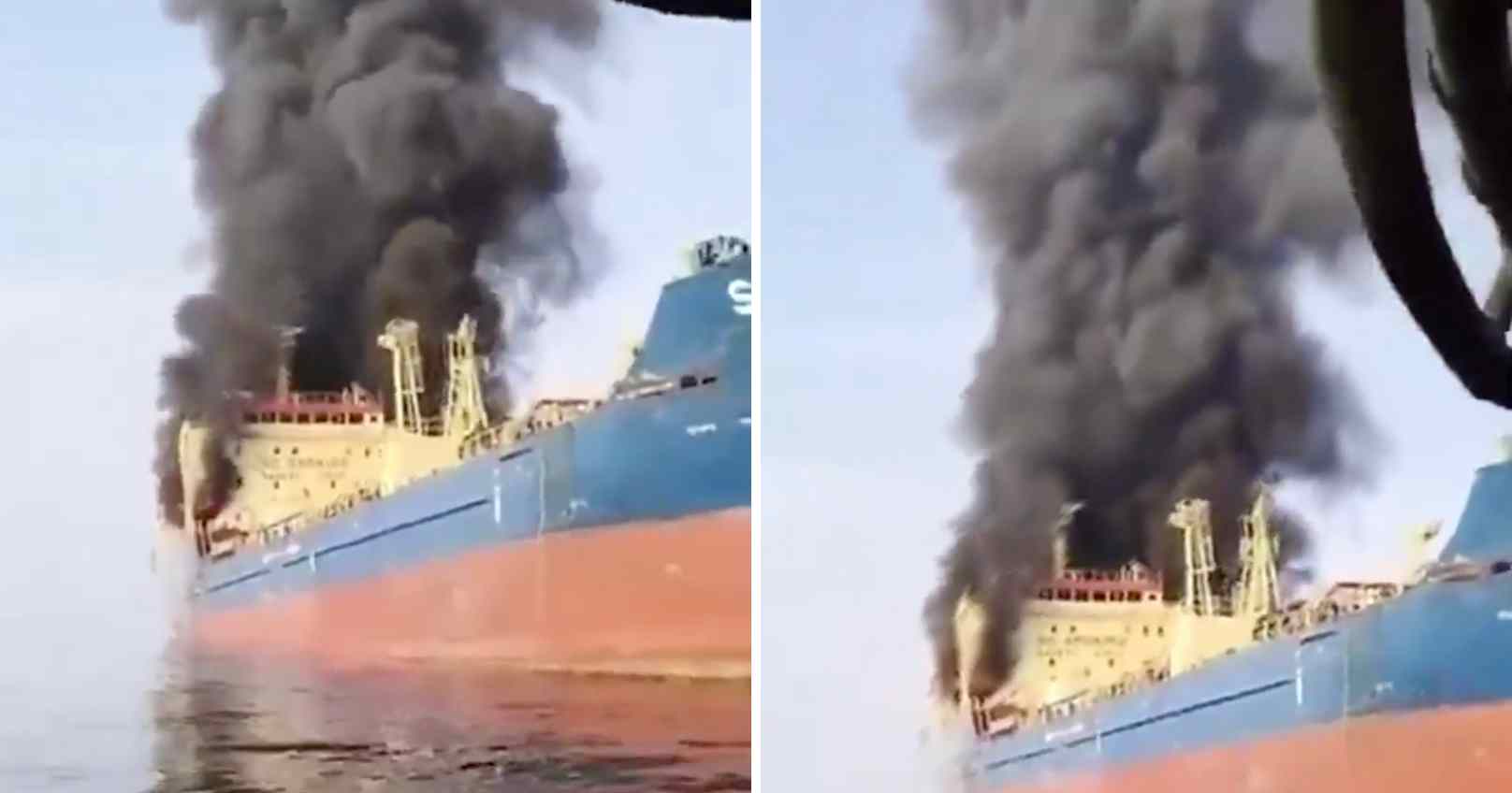
An oil tanker with 15 Indian nationals among its crew was struck near the coast of Oman on Sunday, leaving four sailors injured as tensions tied to the ongoing confrontation between Iran and Israel intensified across the Middle East.
According to reports, the vessel — a Palau-flagged tanker named Skylight — was hit close to the Musandam Peninsula, roughly five nautical miles north of Khasab Port. Authorities described the incident as the first attack in or near Omani waters since the latest regional escalation began.
The Oman Maritime Security Centre confirmed that all 20 crew members on board were evacuated following the strike. The crew included 15 Indian nationals and five Iranian citizens. Four sailors sustained injuries of varying severity.
Officials have not yet confirmed what type of weapon hit the vessel.
Reports indicate that the tanker is owned by Sea Force Inc and managed by Red Sea Ship Management LLC. Both the company and the vessel were placed under sanctions by the United States Government in December 2025 over allegations that they were part of a so-called “shadow fleet” transporting Iranian oil.
Ship-tracking service TankerTrackers.com said the vessel had been anchored in Musandam since February 22 and was commonly used to refuel other ships.
Iranian media also reported that the tanker was targeted while attempting to pass through the strategic Strait of Hormuz, a vital maritime corridor between Iran and Oman. Tehran had earlier declared the waterway unsafe after the recent military strikes.
The Strait of Hormuz is one of the world’s most crucial oil transit routes, carrying roughly one-fifth of global petroleum shipments every day from major producers such as Saudi Arabia, Iraq, United Arab Emirates, Kuwait and Qatar.
Separately, Oman’s state media reported that two drones struck the commercial port of Duqm earlier on Sunday, injuring one expatriate worker. Authorities said debris from another drone landed close to fuel storage facilities but did not cause further casualties or damage.
The incident comes as the Middle East faces a sharp escalation after coordinated strikes by the United States and Israel targeted Iranian sites. Those attacks reportedly killed Iran’s Supreme Leader Ali Khamenei, triggering retaliatory missile and drone strikes by Tehran across the region.
Iran has vowed to respond strongly to the attacks, while US President Donald Trump warned Tehran against further escalation, saying Washington would retaliate with overwhelming force if provoked.
The growing conflict has already disrupted aviation routes, shipping lanes and regional security across the Gulf, raising fears that the confrontation could expand into a wider regional war.