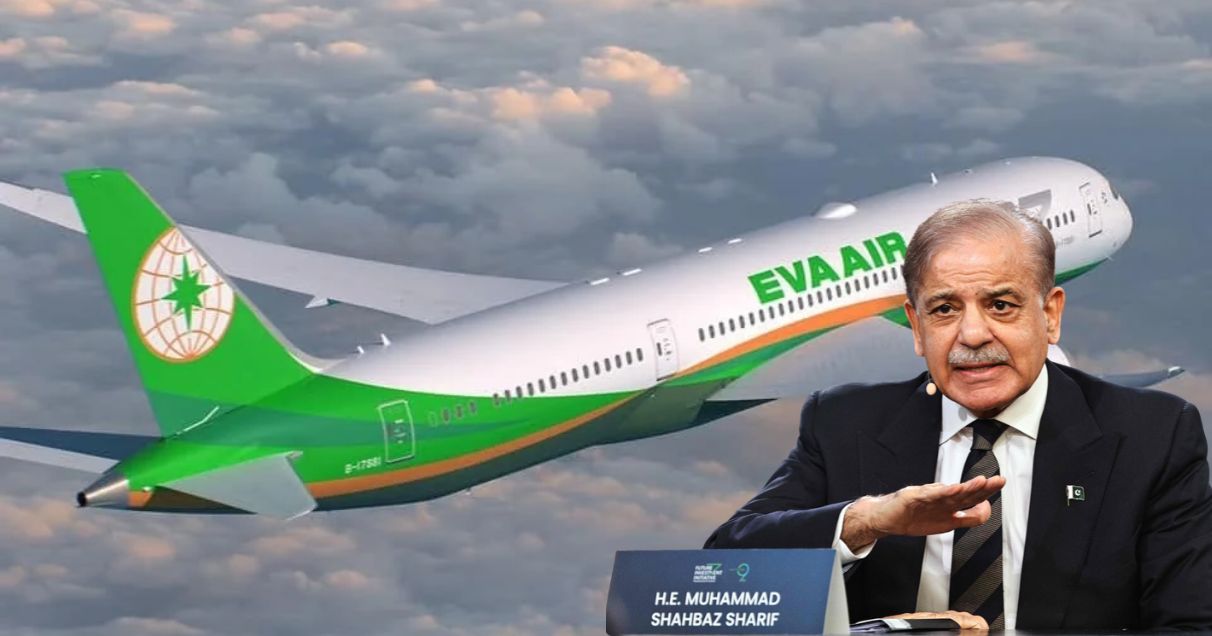
Pakistan has barred Taiwanese airlines from using its airspace, forcing two major carriers to divert flights between Asia and Europe and adding fresh pressure to the aviation sector. The decision, confirmed by Pakistan’s defence minister, reflects Islamabad’s support for Beijing’s One-China policy and marks a significant escalation in measures affecting Taiwan’s international connectivity.
Defence Minister Khawaja Asif confirmed the restriction in an interview with Bloomberg News on Wednesday, saying Pakistan’s aviation policy allowed only mainland Chinese airlines to fly over its territory.
“We have permitted only Chinese airlines to fly over Pakistan,” Asif told Bloomberg, explaining that the aviation division follows the One-China policy.
According to Bloomberg, flight-tracking data showed that China Airlines Ltd and EVA Airways Corp had stopped using Pakistani airspace from the morning of October 25. The report described Pakistan as the first country to impose such a restriction on Taiwanese airlines, noting that even mainland China allows carriers from Taiwan to fly over its territory.
The move comes as Beijing continues its efforts to reinforce its claim over Taiwan, which governs itself and rejects China’s assertion of sovereignty. It also highlights the close strategic relationship between Islamabad and Beijing, even as Pakistan seeks stronger ties with the United States, a longstanding supporter of Taiwan’s defence.
Taiwanese carriers divert flights through Russia
The airspace restriction has disrupted established routes connecting Taiwan with European destinations. At least a dozen flights operated by China Airlines and EVA Air between Asia and Europe have taken longer routes over Russia since October 25, Bloomberg reported, citing Flightradar24 data.
The airlines and Taiwan’s Civil Aviation Administration had not issued official responses at the time of reporting. Bloomberg also sought comment from China’s foreign ministry.
The diversion presents a challenge for Taiwanese carriers because they have largely avoided Russian airspace since Russia launched its invasion of Ukraine in February 2022. Airlines from Asia, Europe and North America changed their routes following the invasion amid concerns about flying over an active conflict zone and the potential risks posed by missiles and air defence systems.
With Pakistani airspace no longer available to them, Taiwanese carriers have been adjusting their routes through other parts of South Asia and the Middle East, as well as over Russia, according to the report.
Longer journeys can increase fuel consumption, crew-related expenses and other operating costs. These pressures come at a time when benchmark crude prices were above $115 a barrel, adding to concerns about the financial impact of rerouting.
How the decision advances Beijing’s Taiwan policy
China regards Taiwan as part of its territory and has sought to restrict the island’s diplomatic engagement and international recognition. Taiwan, however, operates under its own government and maintains that Beijing’s sovereignty claim is unacceptable.
Pakistan’s decision extends the dispute beyond diplomatic recognition and travel documentation into commercial aviation, directly affecting the routes available to Taiwanese carriers.
Other countries have taken steps affecting Taiwan’s international travel and diplomatic activities. In April 2026, Seychelles, Mauritius and Madagascar withdrew overflight permissions for a planned trip by Taiwan President Lai Ching-te to Eswatini, forcing the visit to be postponed.
Somalia stopped accepting Taiwanese passports from April 30, 2025. Kenya also denied Taiwanese scholars access to a pre-conference event in Mombasa in June 2026, citing its One-China position.
Those measures differ from Pakistan’s reported restriction. Somalia’s directive concerned the use of Taiwanese travel documents for entry, exit and transit through its airports, rather than a blanket prohibition on Taiwanese aircraft crossing its airspace.
Pakistan-China ties underpin the move
Islamabad and Beijing have maintained close military, economic and diplomatic relations for decades. Their partnership has been reinforced by China’s Belt and Road Initiative, under which billions of dollars have been directed towards infrastructure and other projects in Pakistan.
China is Pakistan’s largest lender, with Islamabad owing Beijing more than $25 billion. The two governments describe their relationship as an “all-weather comprehensive strategic partnership”, while Chinese officials have repeatedly referred to Pakistan as an “iron-clad friend”.
Pakistan severed official relations with Taiwan in 1951 and aligned itself with Beijing. The latest aviation restriction underscores that position, while going further than mainland China’s own practice of permitting Taiwanese airlines to cross its airspace.
The development could complicate long-haul operations for Taiwan’s carriers, with the eventual impact depending on the routes available, fuel prices and whether the restriction remains in place.