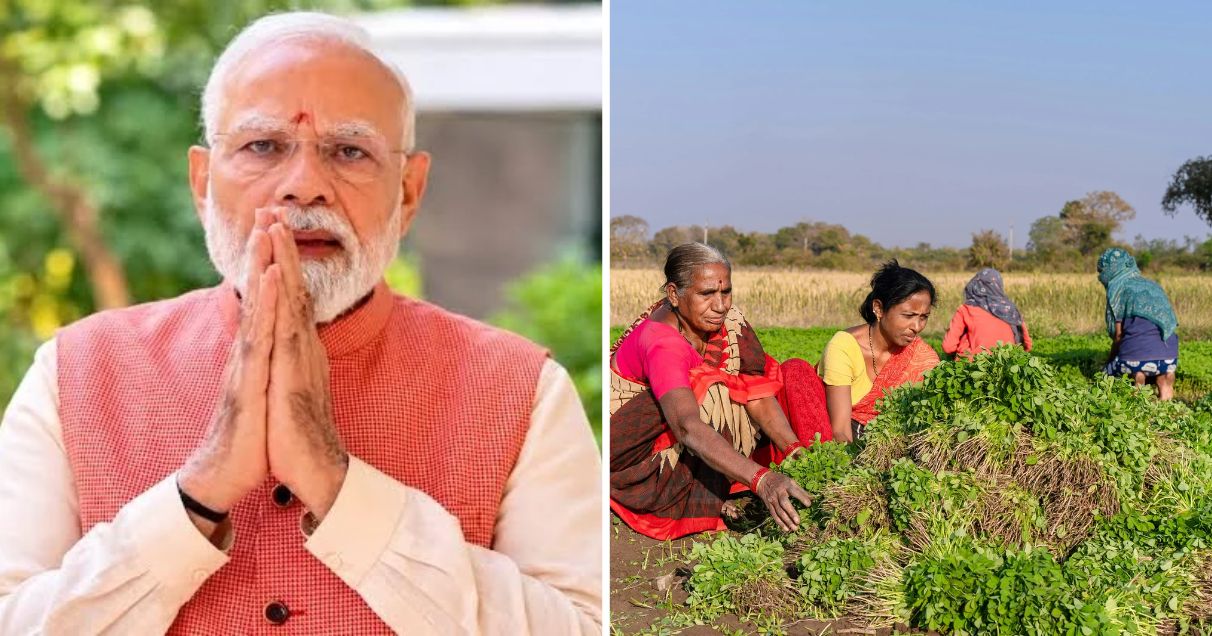
The Union Cabinet, chaired by Prime Minister Narendra Modi, on Wednesday cleared the Nutrient Based Subsidy (NBS) rates for phosphatic and potassic (P&K) fertilisers for the upcoming Rabi season.
The approved expenditure for the six-month period between October 1, 2026, and March 31, 2027, stands at Rs 62,370.02 crore. This represents an increase of Rs 24,417.73 crore over the Rs 37,952.29 crore allocated for the corresponding Rabi season in 2025-26.
The decision is intended to maintain the supply of essential agricultural nutrients, particularly Di-Ammonium Phosphate (DAP) and various NPKS fertiliser grades, at affordable prices despite volatility in international markets.
Reacting to the Cabinet decision, Prime Minister Narendra Modi said the government remained committed to supporting farmers against challenging global economic conditions. In a post on X, he said the move would help reduce the financial burden on cultivators while ensuring fertilisers remained available at reasonable prices.
DAP, NPKS fertilisers to remain under subsidy cover
Under the revised arrangement, fertiliser manufacturers and importers will receive subsidies at government-notified rates for supplying P&K fertilisers during the Rabi 2026-27 period.
The subsidy mechanism is designed to prevent fluctuations in international fertiliser prices and raw material costs from translating directly into higher retail prices for farmers.
DAP and different grades of NPKS fertilisers are particularly important during the Rabi cropping cycle. The government's latest approval seeks to ensure their uninterrupted availability during the season when farmers prepare and sow winter crops.
The revised subsidy rates also take into account changes in the global prices of fertilisers and key manufacturing inputs.
What is the Nutrient Based Subsidy scheme?
Introduced on April 1, 2010, the Nutrient Based Subsidy scheme determines the financial assistance provided to fertiliser companies based on the nutrient content of their products.
Under the programme, the Centre fixes subsidy rates for four major nutrients — nitrogen, phosphorus, potash and sulphur. Companies receive financial support according to the applicable rates, allowing fertilisers to be sold to farmers at subsidised prices.
At present, 28 grades of P&K fertilisers, including DAP, are covered under the scheme. These products are distributed through fertiliser manufacturers and importers.
Unlike a uniform subsidy on every fertiliser product, the NBS framework links government assistance to the quantity of individual nutrients contained in the fertiliser.
Higher allocation amid global fertiliser price fluctuations
The substantial increase in the Rabi subsidy budget comes against a backdrop of changing international prices of fertilisers and essential inputs.
Global price movements involving urea, DAP, muriate of potash (MOP) and sulphur can influence fertiliser production and import costs in India.
By approving the latest subsidy rates, the government aims to balance these cost pressures while maintaining supplies for the agricultural sector.
The decision is expected to provide greater price stability for farmers during the Rabi 2026-27 season, while allowing fertiliser companies to continue supplying essential nutrients at government-supported rates.