RBI Raises Repo Rate To 5.50%, Signals No Near-Term Rate Cuts
The RBI raised the repo rate by 25 basis points to 5.50%, its first hike since February 2023, and signalled that rate cuts are off the table for now
07-10-2026

The Reserve Bank of India (RBI) on Wednesday raised its benchmark repo rate by 25 basis points to 5.50%, marking its first rate increase since February 2023 as policymakers responded to renewed inflation risks and an uncertain global economic environment.
The decision was taken unanimously by the six-member Monetary Policy Committee (MPC) after its three-day meeting held from October 5 to 7.
Alongside the rate hike, the MPC shifted its policy stance to “calibrated tightening”, indicating that the central bank is no longer considering a reduction in interest rates in the immediate future.
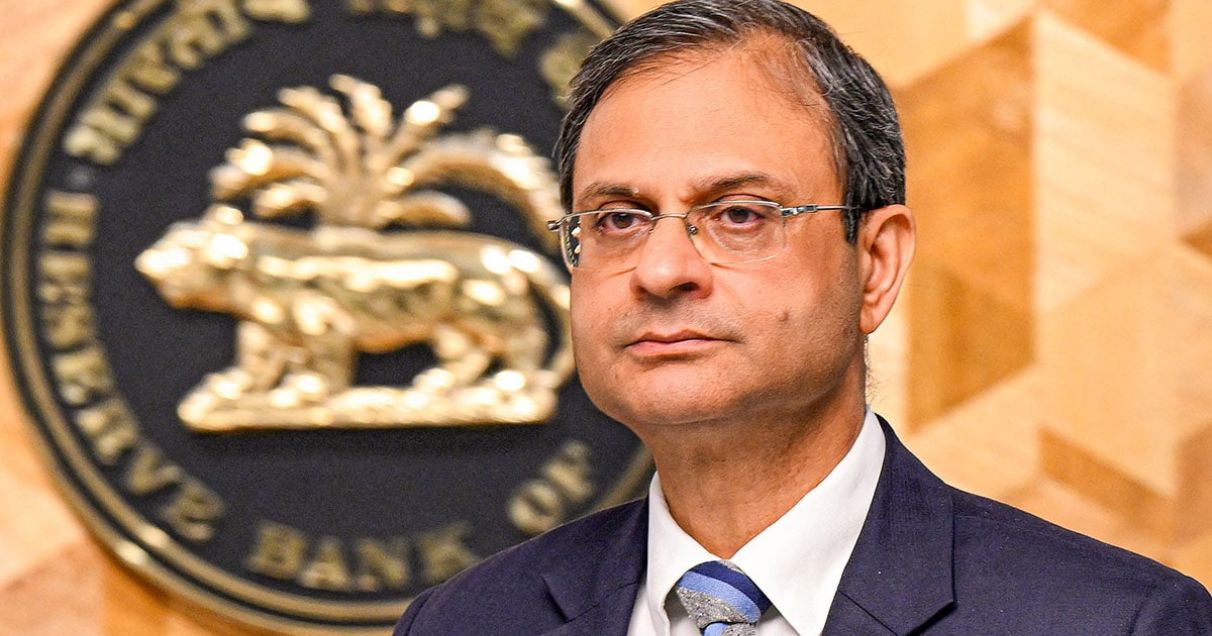
RBI Governor Sanjay Malhotra said the changing inflation outlook was a key factor behind the decision, although he maintained that the Indian economy continues to show resilience.
“Inflation and its outlook are not as benign as they were last year,” Malhotra said.
The RBI expects headline consumer price inflation to average around 5.8% over the next three quarters, while its projection for inflation for the full financial year stands at 4.4%.
The rate increase comes amid concerns over higher global food and energy prices, volatile financial markets and tighter monetary conditions internationally.
Malhotra said global economic growth remained resilient but was expected to moderate, while higher food and energy costs were contributing to renewed inflationary pressures.
The central bank is also monitoring uncertainty around international trade, elevated bond yields in advanced economies and the strengthening US dollar, all of which can influence financial conditions in India.
“The MPC noted that the global context on account of geopolitical developments remains challenging,” Malhotra said.
Despite these risks, he said India’s economic growth remained broad-based and that domestic momentum was expected to hold up.
“Nonetheless, the Indian economy has been strong and the economic momentum remains broad-based,” the governor said.
The MPC’s decision was primarily influenced by the changing inflation trajectory.
According to Malhotra, there are signs that inflation expectations have moved higher and that price pressures are becoming broader. At the same time, the RBI said there was limited evidence so far that supply-side shocks had become deeply embedded in companies’ pricing behaviour.
The central bank also highlighted the possibility of second-round effects, where supply disruptions eventually influence inflation expectations and the pricing decisions of businesses.
Monetary policy may take time to contain such effects, the RBI said.
“In this milieu, the MPC opined that recalibrating the policy rate is an imperative,” Malhotra said.
The MPC also took note of strong growth in monetary and credit aggregates, although it found limited evidence that demand was currently driving inflation.
The RBI’s shift to a “calibrated tightening” stance signals a clear change from the recent easing phase.
Malhotra said the central bank was not committing itself to a prolonged series of rate increases. Instead, future decisions would depend on incoming data and the evolving inflation and growth outlook.
“Given the current conditions, rate cuts are off the table in the near term and policy action ahead can only be a rate hike or a pause depending on the evolving conditions and the outlook,” he said.
This means the RBI could either hold rates at the current level or raise them again if inflationary pressures intensify.
The governor said the duration and scale of any future tightening would depend on actual developments in inflation and economic growth.
The RBI will closely track underlying inflation, the spread of price pressures, second-round effects from supply shocks and domestic demand conditions.
The 25-basis-point hike could marginally increase EMIs for borrowers with floating-rate home loans, depending on how banks transmit the rate change.
Abhay Mishra, President and CEO of Jindal Realty, said the impact on long-term homebuyers is likely to remain limited given typical 15–20-year loan tenures.
Yashank Wason, Managing Director of Royal Green Realty, said higher borrowing costs could weigh slightly on housing demand, but borrowers with stable incomes and longer investment horizons should be able to absorb the increase.
Amrita Gupta, Director of Manglam Group, said festive-season housing demand is likely to remain resilient despite the higher cost of borrowing, particularly for genuine end-users.
A higher repo rate can increase the cost of funds for lenders and, depending on transmission, make new borrowing more expensive for homebuyers.
The immediate impact on the property market is likely to vary by borrower profile, loan structure and the extent to which banks pass on the increase.
While higher EMIs could lead some prospective buyers to delay purchases, industry executives expect demand from end-users to remain comparatively steady, particularly for projects with strong fundamentals.
For existing borrowers, the effect will depend on whether their loans are linked to an external benchmark and how their lender adjusts the applicable lending rate.
The RBI’s latest decision therefore marks a shift in the interest-rate cycle, with inflation concerns taking precedence over the possibility of near-term rate cuts.


India-US trade negotiations have reached a “plateau”, Finance Minister Nirmala Sitharaman said,
Read More
Tata Trusts has proposed merging TESS and Tata Consulting Engineers with Tata Sons, a move that coul
Read More
Bangladesh has resumed purchasing wheat from India after a four-year interruption, with rising domes
Read More