It began with one of India’s greatest energy discoveries and a promise to remake the country’s gas economy. Fifteen years on, the dispute over what went wrong at the Dhirubhai-1 and Dhirubhai-3 fields has become one of the most consequential commercial arbitrations the Indian state has ever fought.
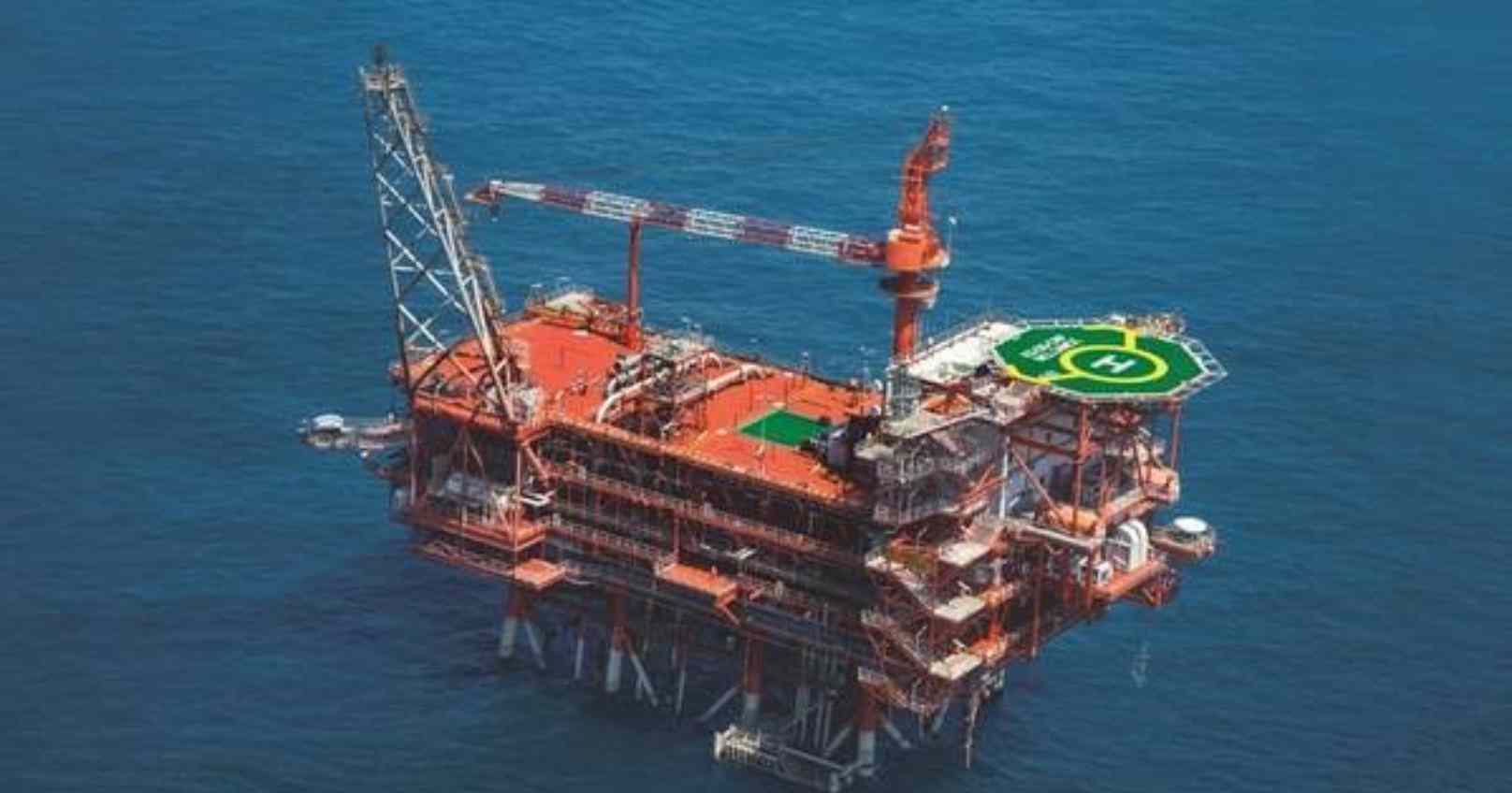
The fields sit in the deep-water KG-D6 block off India’s eastern coast. Production there climbed fast, then collapsed — and the argument over who should carry the cost of that collapse has outlasted governments, corporate partnerships and even some of the arbitrators appointed to decide it.
Final arguments concluded in November 2025. The parties are now waiting for an award.
The rise and fall of D1-D3
KG-D6, formally KG-DWN-98/3, became shorthand for India’s deep-water ambitions. Reliance’s original field-development plan, submitted in 2004, envisaged investment of about $2.47 billion (roughly Rs 23,470 crore) and peak output of around 40 million standard cubic metres a day.
An addendum approved in 2006 changed the scale of the project. The revised capital outlay is reported variously as $8.18 billion or $8.8 billion (about Rs 77,700 crore to Rs 83,600 crore), the figure differs between wire copy and audit-era reporting, and the plan projected peak output of roughly 80 mmscmd, to be delivered by drilling 31 wells. Twenty-two wells were drilled. Eighteen were put on production.
Output peaked at about 69 mmscmd in March 2010 and then fell away: 35.33 mmscmd in 2011-12, 20.88 mmscmd in 2012-13, 9.77 mmscmd in 2013-14. The decline continued until D1 and D3 stopped producing altogether in February 2020, far short of their projected life.
Reliance attributed the collapse to the reservoir, unanticipated sand and water ingress, and a sharper fall in pressure than expected. It revised recoverable reserves in the fields down from 10.03 trillion cubic feet in the 2006 plan to about 3.10 tcf. In 2020 the company said cumulative production from the block as a whole had reached around 3 tcf, without breaking out the D1-D3 share.
The Government read the same facts differently: that the contractors had failed to follow the approved plan, built facilities larger than the fields could ever fill, and left the state with the consequences.
The disallowance, and the notice
Between 2012 and 2016 the Government disallowed $3.02 billion (about Rs 28,690 crore) of costs, through letters dated May 2, 2012, November 14, 2013, July 10, 2014 and June 3, 2016, covering six years from April 1, 2010. On the strength of those disallowances it sought $247 million (about Rs 2,347 crore) in additional profit petroleum.
That $247 million is the number Reliance itself keeps returning to. The company says the demand has been consistently disclosed in its audited accounts — and that it is the quantified claim actually on the table.
Reliance served its notice of arbitration on November 23, 2011, telling the stock exchanges days later that the Production Sharing Contract contained no provision allowing the Government to restrict cost recovery by reference to production levels or how fully the facilities were used.
Its case rested on a single contractual proposition: a production forecast is not a guarantee, and a reservoir that underperforms does not hand the state a power to rewrite the cost-recovery terms.
An extraordinary tribunal, and a decade lost to constituting it
The panel reads like a roster of senior common-law judges. Justice Michael Kirby, formerly of the High Court of Australia, presides. Sir Bernard Rix, a Lord Justice of Appeal of England and Wales from 2000 to 2013, sits as the contractor nominee. Former Chief Justice of India V.N. Khare is the Government’s.
Getting them into a room took the better part of a decade. Reliance had first nominated former Chief Justice of India S.P. Bharucha, who recused; Rix was named in his place in 2014. The two party nominees could not agree on a chairman, and Reliance moved the Supreme Court under Section 11(6) of the Arbitration and Conciliation Act, 1996. The Court appointed Kirby in September 2014.
This is the detail that explains the fifteen years. The notice dates from 2011, but substantive hearings did not begin until 2023; Reuters has described the arbitration as underway since 2016. Much of the intervening period was spent fighting over the tribunal rather than the gas.
The Government moves against two arbitrators
In time, the Union Government sought the removal of Kirby and Rix, alleging bias on the face of the record in the way proceedings were being conducted. Procedurally, it asked the Delhi High Court to declare the two arbitrators de jure or de facto unable to perform their functions, so that their mandate would terminate under Section 14 of the 1996 Act.
In December 2022 the High Court dismissed the petition as not maintainable, without reaching the bias allegations on merits.
The Centre went to the Supreme Court. On January 11, 2023, a Bench of then Chief Justice of India D.Y. Chandrachud and Justice P.S. Narasimha dismissed the plea. The tribunal then began hearing the dispute.
From cost recovery to a reported $30 billion
In December 2025, Reuters reported, citing people familiar with proceedings that are confidential — that the Government was seeking more than $30 billion (upwards of Rs 2.85 lakh crore) from Reliance and BP over the shortfall.
On that account, the Government’s case runs well past disallowed development spending. The reported calculation took in the value of gas that was never produced, expenditure on facilities rendered surplus, marketing-related amounts and interest.
If a tribunal accepted that framing, a contractual argument about cost recovery would become something else entirely: a claim for the economic consequences of a reservoir that disappointed.
Reliance: There is no $30-billion claim
The company rejected the figure outright, calling it factually incorrect and saying there is no $30-billion claim against Reliance and BP. Its position, as reported, is that a claim advanced in submissions is not a demand against a party and becomes actionable only if a tribunal so decides. The matter is sub judice, RIL said, and will be determined in accordance with law.
The distinction matters for how the number should be read. The arbitration is confidential; no pleadings have been published and neither Reliance nor BP has confirmed the quantum. The $30 billion is a reported characterisation of a claim, not an award, not an admitted liability, and not a judicially established sum.
BP’s stake
BP entered in 2011, agreeing to pay about $7.2 billion (roughly Rs 68,400 crore at today’s rate) for a 30 per cent participating interest in a portfolio of Reliance production-sharing contracts that included KG-D6. The block count has been reported as 21, 22 or 23 depending on whether the reference is to the deal as announced or the set the Government later approved; some accounts date it to 2010. It was among the largest foreign investments in Indian energy at the time.
Before the transaction, Reliance held 90 per cent of KG-D6 and Canada’s Niko Resources 10 per cent. Afterwards: Reliance 60, BP 30, Niko 10. Niko has since exited, leaving Reliance and BP in a roughly two-thirds/one-third split. The contractor side in the dispute has therefore comprised all three at various points.
Arguments close
Final arguments concluded on November 7, 2025. Reporting at the time suggested an award during 2026, and that whichever side lost would probably take it to the Indian courts. As of August 2026, no final award appears to have been publicly reported.
The other KG-D6 war
Complicating the picture is a second, entirely separate multibillion-dollar dispute arising from the same block — the allegation that gas migrated from ONGC’s adjoining acreage into KG-D6 and was produced by the Reliance-led consortium.
It began in 2013, when ONGC raised concerns about connectivity between the blocks. A consultant’s report in 2015 found the reservoirs connected. In 2016 the Government demanded $1.55 billion (about Rs 14,725 crore at current rates) plus a further sum in profit petroleum, alleging unjust enrichment.
The consortium won that arbitration in July 2018. A Delhi High Court single judge upheld the award on May 9, 2023. A Division Bench of Justices Rekha Palli and Saurabh Banerjee set that aside on February 14, 2025, and the Petroleum Ministry followed with a provisional demand of about $2.81 billion (roughly Rs 26,695 crore). Reliance said it received the letter on March 3, 2025 and had been advised that both the judgment and the demand were unsustainable. The Petroleum Minister said the Government would pursue the money to the end.
Reliance, BP Exploration (Alpha) and Niko (NECO) appealed to the Supreme Court, arguing among other things that the High Court had wrongly treated an international arbitration as a domestic one. The Government’s case was put in blunt terms, that the consortium had, in effect, taken gas it had no right to.
Final hearings ran through May 2026 before Chief Justice of India Surya Kant and Justices Joymalya Bagchi and Vipul M. Pancholi. On May 20 the Court declined to pause proceedings while settlement was explored. Days later, after the Attorney General indicated the Centre was open to a bilateral process, it relented and adjourned the matter to the third week of July 2026, the Chief Justice noting that a settlement would allow the appeal to be disposed of.
So the two battles now sit on different tracks: one awaiting an arbitral award, the other nudged towards a negotiating table.
Why the D1-D3 award matters beyond Reliance
Strip away the numbers and a single question remains: who carries reservoir risk when a field fails to deliver?
The Government’s answer, broadly, is that a contractor cannot make ambitious projections, build infrastructure sized to them, recover the cost from petroleum revenues, and then leave the state holding the loss when production collapses.
The contractor’s answer is that a development plan is a forecast, not a warranty of what lies kilometres below the seabed, and that exploration risk sits entirely with the operator, which puts up the capital while the state puts up none and still takes profit petroleum and tax.
Whichever way the tribunal goes, the reasoning will be read closely by everyone holding an Indian production-sharing contract.
The fields stopped producing six years ago. The dispute they left behind has not.