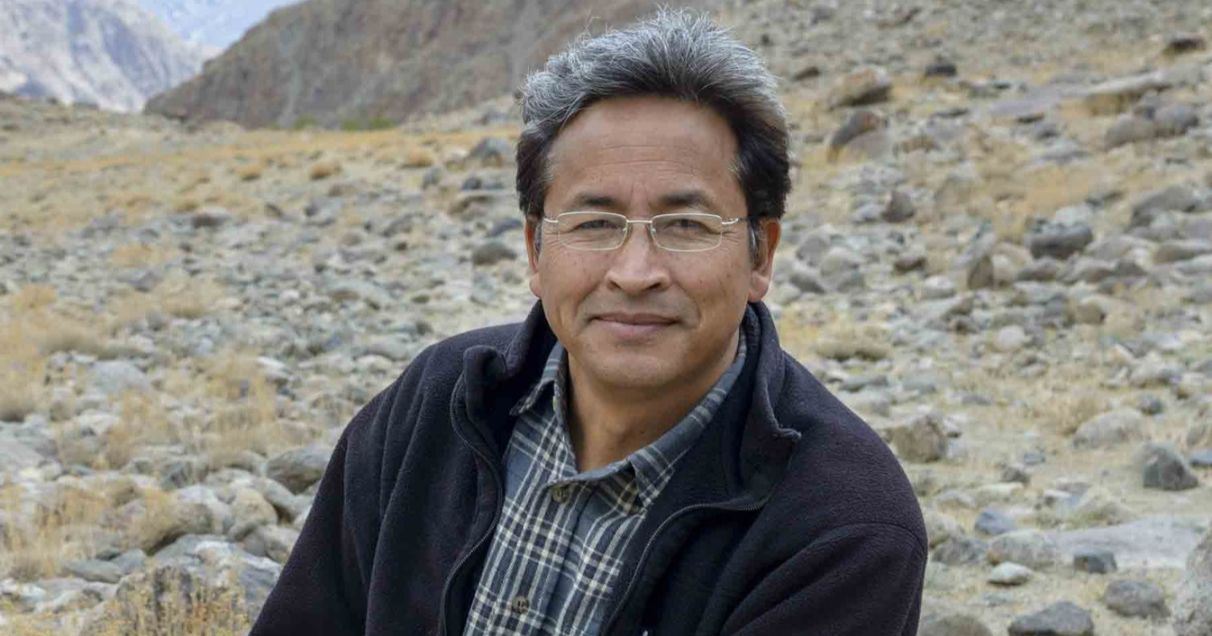
Climate activist Sonam Wangchuk has been placed under a 60-day house arrest, with the Ladakh administration prohibiting him from attending public rallies, processions and other gatherings. The restrictions were imposed under Section 163 of the Bharatiya Nagarik Suraksha Sanhita (BNSS), according to an order issued by the Leh Additional District Magistrate.
The order came a day after Wangchuk was removed from a protest site where Ladakhi groups were demonstrating against the administration's decision to hold Hill Council elections on December 4.
Citing a police report and a request from the Leh police chief, the magistrate invoked preventive provisions to restrict Wangchuk's movement. The order stated that the restrictions would take effect immediately and remain in force for 60 days.
Wangchuk alleges heavy police deployment outside his home
Wangchuk had claimed he was already under house arrest several hours before the formal order was issued. In a post on X, he said dozens of armed personnel had been stationed around his residence, while the administration had described the situation as advice for him to remain indoors.
The activist linked the action to his questions over the delay in releasing the Judicial Enquiry Commission report into last year's killings in Leh and the decision to conduct council elections during winter.
He also alleged that the reach of his accounts on X, Instagram and YouTube had been significantly restricted. Calling for wider circulation of his message, Wangchuk said protests had spread across Ladakh.
Winter election schedule draws opposition
The restrictions come amid growing opposition to the December 4 elections to the Ladakh Autonomous Hill Development Councils (LAHDCs). Wangchuk and several local leaders have argued that holding the polls during the winter months could prevent sections of the population from voting because of harsh weather and seasonal migration.
The elections will be the first major electoral exercise in Ladakh since it became a separate Union Territory in 2019. Polling is planned across all eight Hill Development Councils, covering 100 constituencies, of which 36 seats are reserved for women.
According to the schedule announced by the administration, candidates can file nominations until November 17. Scrutiny will take place on November 18, while November 20 is the deadline for withdrawal of nominations. The election process is scheduled to conclude by December 8.
Administration defends decision to hold polls in winter
Ladakh Chief Secretary Ashish Kundra has defended the timing, saying arrangements would be made to ensure that low temperatures do not prevent people from voting.
Polling stations will have heaters, and separate queues will be organised for elderly voters. Deputy commissioners have also been instructed to provide the necessary facilities at polling centres.
Kundra pointed to the school calendar, noting that educational institutions in Ladakh generally remain open until December 15 or 16.
"If children can attend schools during this period, there should be no difficulty for adults in coming out to vote," he said.
He also argued that the councils should be constituted without further delay so that the newly elected representatives have January, February and March to prepare budgets for the following financial year.
Eight councils to have 100 constituencies
The restructuring of Ladakh's administrative units has led to an expansion of the electoral map. Kundra said the number of constituencies had increased from 26 each in the erstwhile Leh and Kargil districts to 50 each, taking the total to 100 following the creation of eight districts.
The delimitation exercise, he said, followed population figures and the notified LAHDC rules. Under these provisions, a Panchayat Halqa or municipal ward cannot be divided to form a constituency, although two or more panchayats may be combined.
Kundra also clarified that the reconstituted Hill Councils would retain their existing statutory authority while taking on additional responsibilities envisaged for district-level panchayati institutions under the 73rd Constitutional Amendment.
The administration is considering holding the counting for Hill Council, municipal and panchayat elections simultaneously. Kundra said a recommendation would be made to ensure that results in one election do not affect the outcome of another.
Panchayat and municipal polls also underway
Elections to local bodies are being conducted alongside the Hill Council exercise. Ladakh has 192 panchayats, with 55 sarpanches already elected unopposed and issued certificates. Voting will be held for the remaining 137 sarpanch positions. Several panchayat seats have also been filled without a contest, while polls are scheduled for the remaining contested seats.
In Leh, 42 candidates are contesting across 21 municipal wards. The Kargil Municipal Council has 17 wards, with candidates in four of them already elected unopposed.
Kundra said panchayat elections had not been held for three years and that the current process would help establish elected institutions across the eight newly created districts.
Shutdown and boycott calls add to election pressure
The election schedule has triggered protests from political, social and cultural organisations, many of which are demanding that the polls be postponed until conditions are more suitable.
Kargil observed a complete shutdown on Tuesday in protest against the timing of the elections. In Leh, the Ladakh Buddhist Association has announced a boycott of the panchayat and municipal polls.
The agitation in Leh and Kargil is also part of a wider political movement seeking statehood for Ladakh and constitutional safeguards under the Sixth Schedule.
The administration has maintained that completing the elections on schedule is important for strengthening grassroots democracy and ensuring that the newly formed districts have functioning elected bodies.