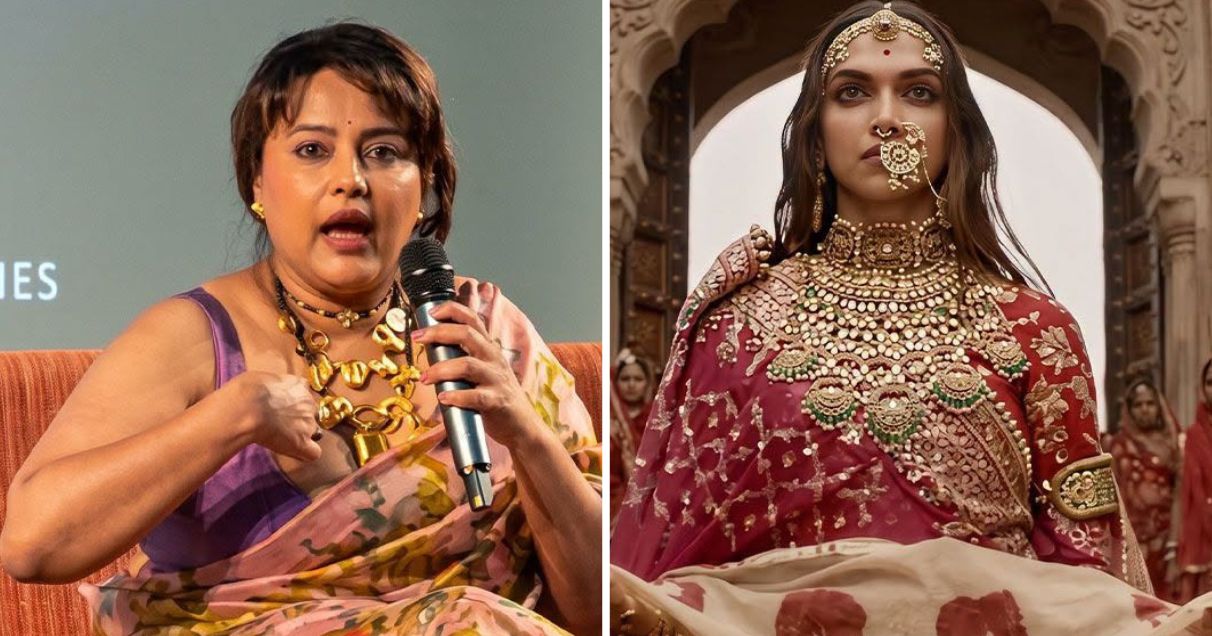
Eight years after Padmaavat triggered an intense national debate over its depiction of Jauhar, actor Swara Bhasker has returned to the controversy, questioning how the film's climactic sequence might be perceived by women who survive rape and sexual violence.
Speaking at the Woman Life Freedom event at the India International Centre in New Delhi on August 31, Bhasker revisited the objections she had originally raised following the release of Sanjay Leela Bhansali's 2018 film.
Her remarks have once again divided opinion, reviving a difficult debate involving history, honour, sexual violence, individual agency and whether a cinematic representation of a medieval practice can influence attitudes towards women living in the modern world.
At the centre of Bhasker's argument is a question she first raised years ago: could a dramatic depiction of women choosing death rather than facing capture and sexual violence inadvertently make a present-day rape survivor feel that surviving is somehow dishonourable?
Bhasker says her concern is about survivors
Bhasker recalled watching the film's Jauhar sequence and wondering how she would interpret its message if she herself were a survivor of rape.
Her concern, she explained, was that a survivor watching such a scene could potentially be left questioning whether choosing to remain alive after sexual violence represented weakness or loss of honour.
Bhasker rejected that proposition.
Her broader argument is that rape cannot be allowed to define the value, dignity or future of the woman subjected to it.
A survivor, in this interpretation, does not lose her honour because somebody commits an act of violence against her — and her life does not become less worthy of living.
That distinction has become particularly important following the circulation of abbreviated clips and interpretations of Bhasker's remarks online.
Critics have accused her of effectively branding historical Rajput women who chose Jauhar as cowards.
Bhasker's stated argument, however, centres on the potential contemporary message received by rape survivors rather than simply passing judgment on women confronting extreme circumstances centuries ago.
Pregnant woman in Jauhar sequence particularly disturbed her
Bhasker also returned to one specific image from Padmaavat's climax that she said had deeply troubled her.
The sequence includes a pregnant woman joining the other women as they move towards the fire.
For Bhasker, the image raised another moral question: should the threat of sexual violence against a woman mean that both she and her unborn child must die?
She argued that the scene reinforced her discomfort with connecting a woman's honour so closely with sexual purity that death could appear preferable to surviving sexual assault.
Controversy dates back to 2018
Bhasker's objections to Padmaavat are not new.
Following the film's release in 2018, she published an open letter addressed to Bhansali challenging what she considered the glorification of Jauhar in the movie's final sequence.
Her criticism focused substantially on the patriarchal concept of locating a woman's honour in her body and sexuality.
The argument generated enormous controversy at the time.
Supporters of the film countered that interpreting the sequence through the conditions of contemporary society removed it from the historical and narrative circumstances depicted in Padmaavat.
The film presents women facing the prospect of capture by an invading army and choosing death rather than falling into enemy hands.
That historical context is central to the counterargument now being made again.
Critics: Don't erase the historical context
Bhasker's latest comments have prompted strong responses from commentators and social-media users who argue that Jauhar cannot be understood without considering the extreme circumstances in which it historically occurred.
They contend that women confronted with the prospect of capture, enslavement, sexual violence and other forms of brutality were making choices in circumstances almost impossible to comprehend through the standards of modern civilian life.
From that perspective, characterising their decision as cowardice would deny those women agency and overlook the terror they believed awaited them.
Journalist Rubika Liyaquat and Shiv Sena (UBT) leader Priyanka Chaturvedi were among those drawn into the wider debate surrounding the remarks, with the controversy expanding beyond cinema into competing interpretations of history and women's autonomy.
Two very different questions collide
The renewed controversy ultimately involves two arguments that are related but not identical.
The first concerns history: how should society judge women who chose Jauhar when faced with the possibility of capture and sexual violence during medieval warfare?
The second concerns the present: how should popular culture portray such acts in a country where women continue to experience rape and sexual violence?
Bhasker's argument primarily focuses on the second question.
Her critics are focusing heavily on the first.
That difference explains why the debate has proved so difficult to resolve.
One side fears that romanticising death before sexual violation can reinforce the deeply damaging notion that a woman's honour resides in her sexual purity.
The other argues that applying modern assumptions to women facing extraordinarily brutal circumstances centuries ago can itself erase their choices, courage and historical experience.
‘Padmaavat’ controversy refuses to disappear
Directed by Sanjay Leela Bhansali, Padmaavat starred Deepika Padukone as Rani Padmavati, Shahid Kapoor as Maharawal Ratan Singh and Ranveer Singh as Alauddin Khilji.
The film was surrounded by controversy even before its theatrical release and subsequently became one of the most intensely debated Hindi films of its era.
Years later, its final sequence continues to generate arguments extending well beyond cinema.
Bhasker's latest intervention demonstrates why.
At its heart lies an uncomfortable collision between historical memory and contemporary ideas about women's autonomy.
Whatever one's interpretation of Jauhar, one proposition in the present is considerably clearer: a woman who survives rape has neither surrendered her dignity nor lost her right to live.
And it is that question, rather than an eight-year-old movie alone, that has put Padmaavat back at the centre of public debate.