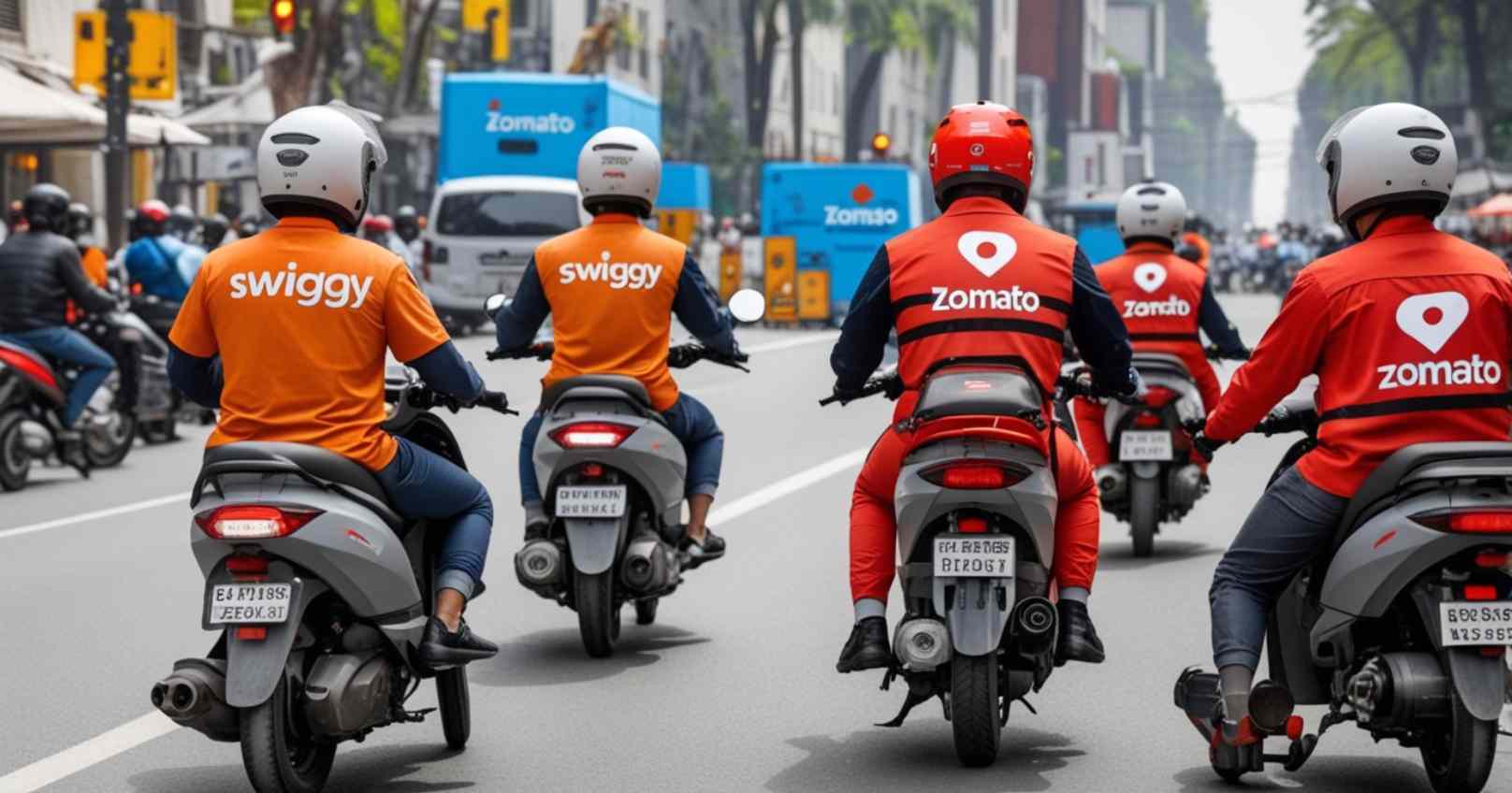
India's online food delivery industry is entering a new phase of competition, with fresh entrants attempting to loosen the long-standing grip of market leaders Swiggy and Zomato. While the two platforms continue to dominate the sector, emerging players are introducing new business models aimed at attracting price-conscious consumers and reshaping the competitive landscape.
Among the newest challengers is Rapido, which recently launched its food delivery platform, Ownly. The service has already gained traction in Bengaluru, where it reportedly handles more than 40,000 orders every day and has secured a noticeable share of the city's market.
Flipkart is also preparing to make its entry through the Open Network for Digital Commerce (ONDC). Beginning with Bengaluru, the e-commerce giant plans to test its offering, gather customer feedback and refine the platform before considering a nationwide rollout.
Unlike earlier competitive phases, industry observers note that the current battle is less about poaching customers from rivals and more about encouraging millions of Indians who have never ordered food online to adopt the service.
Despite India's massive internet population, online food delivery still serves only a small fraction of potential users. Industry executives believe the market has room to expand several times over if affordable pricing and improved accessibility bring more consumers onto digital platforms.
Rapido co-founder Aravind Sanka has argued that food delivery should become a mainstream convenience rather than a premium service, stating that expanding the customer base is more important than simply taking market share from existing players.
Flipkart, meanwhile, says its focus will be on creating a differentiated customer experience by improving reliability, service quality and value before expanding operations beyond its pilot market.
At the same time, newer companies such as Swish are experimenting with alternative operating models. By running their own cloud kitchens in densely populated locations, they aim to significantly reduce delivery times while maintaining lower costs.
The growing competition has prompted established players to respond with their own affordability-focused initiatives.
Swiggy recently introduced Toing, a separate platform centred on budget-friendly meals with lower commission rates for restaurants. However, the company remains cautious about adopting a zero-commission model, arguing that platforms still need sustainable revenue to fund technology, logistics and delivery operations.
Zomato's parent company, Eternal, has taken a different approach by investing in Bistro, its in-house rapid food delivery business. Instead of relying solely on lower commissions, the company is redesigning food preparation systems and kitchen operations to make affordable meals commercially viable while maintaining speed and consistency.
Industry experts believe restaurants could emerge as the biggest beneficiaries of the intensifying rivalry.
For years, restaurant owners have criticised the dominance of major delivery platforms, pointing to high commissions, advertising expenses and promotional costs that have squeezed profitability. The arrival of new competitors may strengthen restaurants' bargaining power by giving them more choices and greater leverage during negotiations.
Many restaurateurs argue that commissions are only one part of the financial burden, with advertising fees, discount programmes and visibility costs adding significantly to operating expenses.
As competition accelerates, companies are pursuing different strategies to capture India's next wave of consumers. Some are betting on lower prices, others on operational innovation, while several are attempting to improve restaurant economics.
The industry's next chapter may ultimately depend not on which platform steals customers from another, but on which company succeeds in convincing millions of first-time users that ordering food online should become part of everyday life.