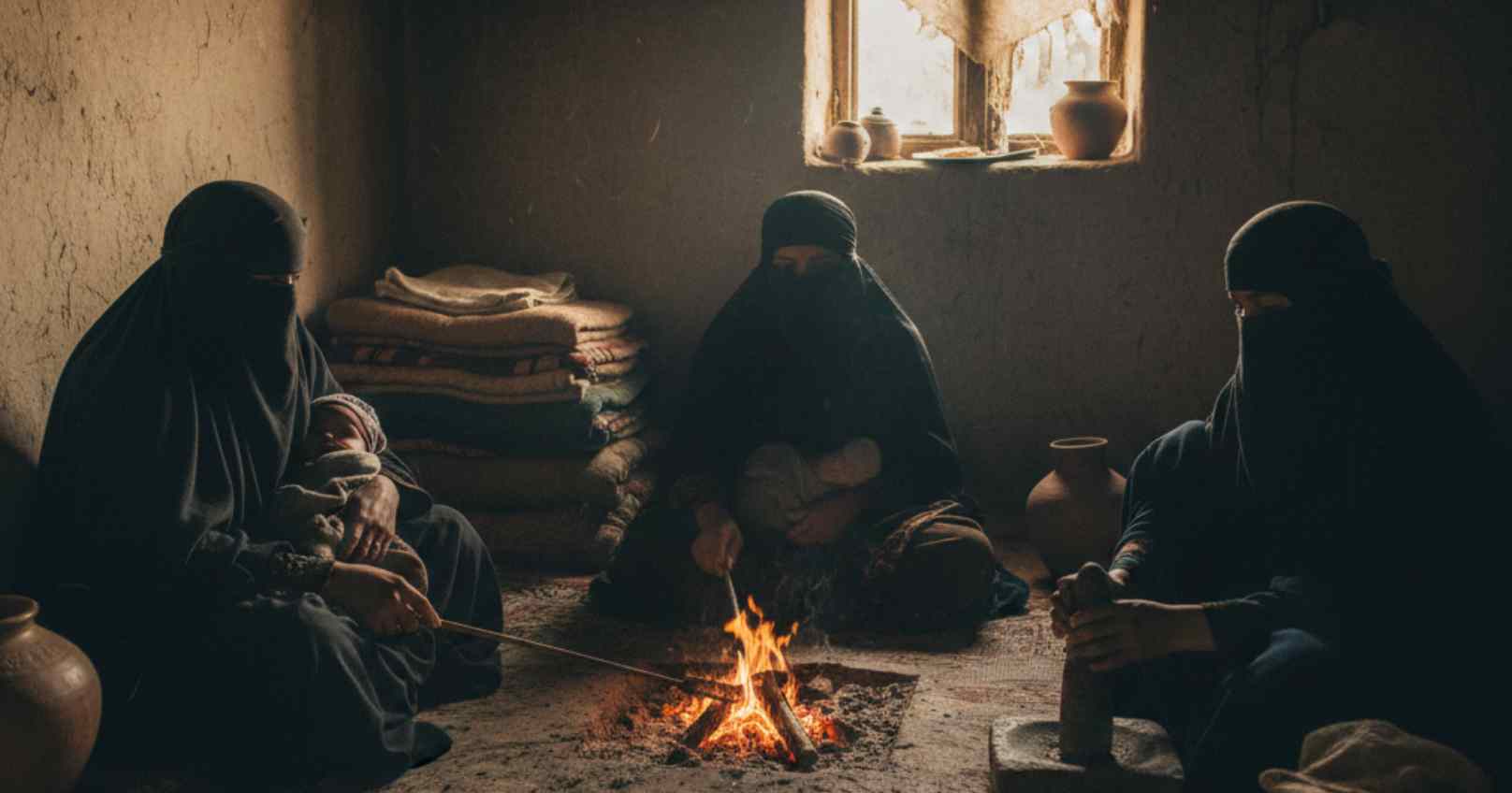
Taliban Enacts New Penal Code Permitting Beatings That Do Not Cause Fractures
Afghanistan’s latest criminal statute has triggered international alarm for formally allowing physical punishment within marriage under defined limits
20-02-2026

A newly implemented criminal code in Taliban-ruled Afghanistan has ignited widespread criticism from rights organisations, who say it formally embeds discrimination into law—particularly against women and those at the bottom of society’s hierarchy.
The 90-page statute, reportedly endorsed by Taliban supreme leader Hibatullah Akhundzada, restructures the country’s judicial framework by dividing citizens into ranked social categories. Religious authorities sit at the top, followed by elites, the middle class and, finally, the lowest social tier.
One of the most controversial provisions concerns women’s status under the law. According to legal experts and advocacy groups, the code places women on the same legal footing as enslaved persons and allows husbands or designated “guardians” to administer physical punishment, provided the violence does not result in broken bones or visible bleeding. Activists argue that this effectively codifies domestic abuse within prescribed limits.
The law also establishes varying consequences depending on a person’s social standing. Clerics accused of wrongdoing may face little more than advice or warning. Influential figures could receive a court summons. Individuals in the middle tier risk imprisonment, while those classified at the bottom may be subjected to both jail time and corporal punishment.
Copies of the code have reportedly been circulated to courts across Afghanistan. Legal observers say many citizens are afraid to discuss its contents publicly, amid reports that speaking out against the provisions could itself be treated as a criminal act.
Serious crimes are to be adjudicated by Islamic clerics rather than through conventional correctional institutions. Lesser offences fall under ta’zir, or discretionary punishment. In cases involving wives, this may translate into beatings carried out by husbands under the justification of discipline.
Although the statute does not entirely block women from filing complaints, the barriers are steep. A woman alleging assault must demonstrate significant bodily harm before a judge, while remaining fully veiled and accompanied by a male guardian—even when the accused is her own husband.
A legal adviser in Kabul described the pathway to justice as “extremely difficult and prolonged.” In one cited case, a woman assaulted by a Taliban guard was unable to formally pursue her complaint unless accompanied by her detained husband, effectively denying her recourse.
The overhaul represents a sharp departure from protections enacted under Afghanistan’s previous Western-backed government, which criminalised forced marriage, rape and domestic abuse. Under those earlier laws, perpetrators faced defined prison terms. Under the new code, even in cases where severe violence is proven, the maximum sentence for a husband reportedly does not exceed 15 days.
Human rights groups note that the statute does not explicitly outlaw physical, psychological or sexual abuse against women. Instead, they argue, it entrenches a system in which women’s legal standing is significantly diminished.
Exiled advocacy organisation Rawadari has raised alarm over Article 34, which states that if a woman repeatedly seeks refuge at her family home without her husband’s consent—and relatives prevent her return—both she and her family members could face up to three months in prison. Campaigners warn this clause further restricts women attempting to escape abusive situations.
The rapid enforcement of the new penal code has created deep uncertainty among Afghans, particularly women and those categorised within lower social ranks. Legal analysts say the framework introduces a rigid, hierarchy-based justice model that diverges significantly from recent Afghan legal standards.
International rights organisations continue to call for scrutiny, warning that the code institutionalises inequality and strips away safeguards for the country’s most vulnerable citizens.
AI photo used for representation only
CJP leaders Saurav Das and Ashutosh Ranka were released by a Special Executive Magistrate after furn
Read More
CJP leaders Saurav Das and Ashutosh Ranka will remain in judicial custody until October 21 after a S
Read More
Former India cricketer Yusuf Pathan is reportedly set to receive half of a disputed 1,000-square-met
Read More