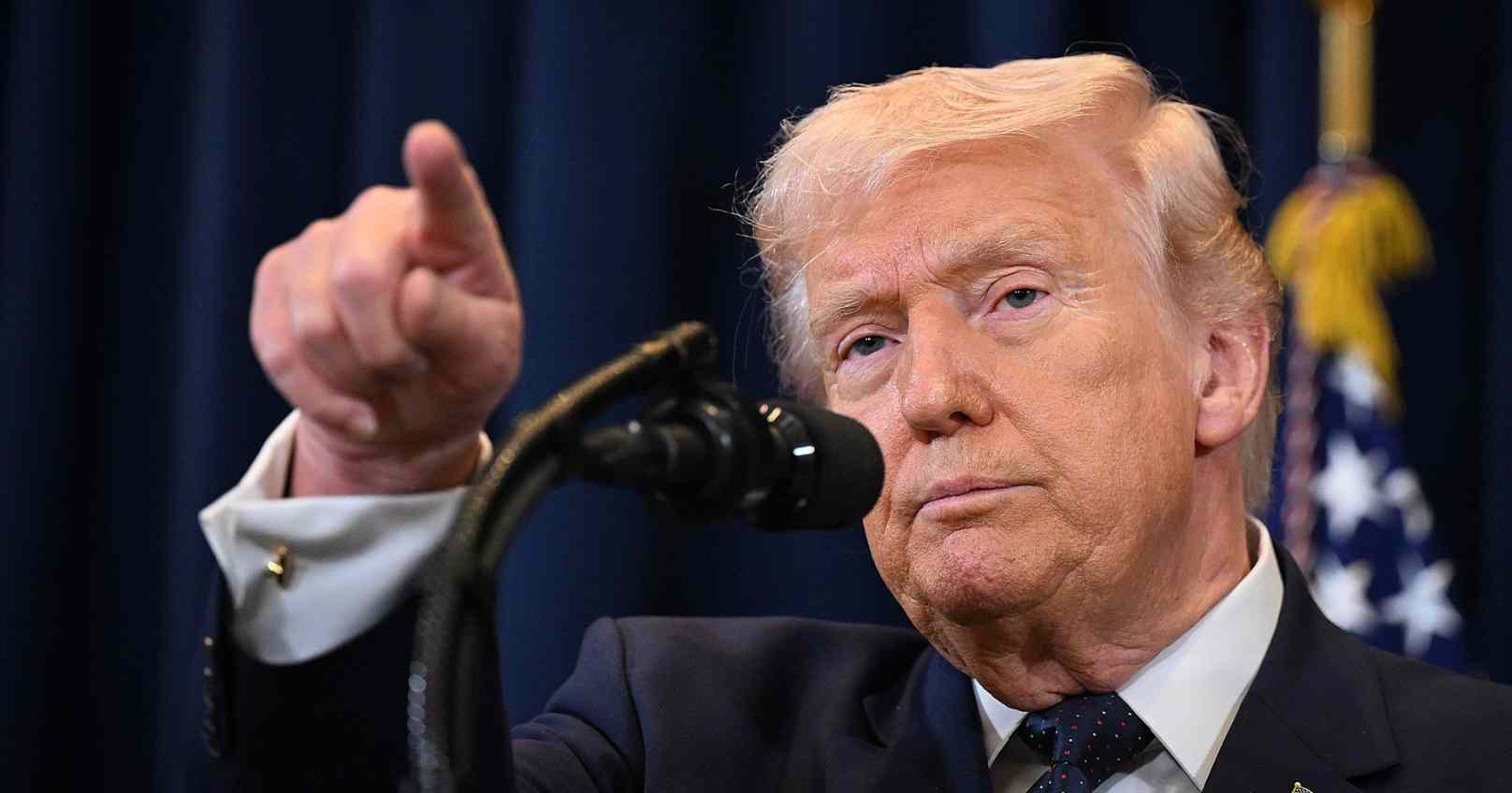
Trump Issues 48-Hour Warning to Iran Over Hormuz, Threatens Major Escalation
The US president sharpens his rhetoric as tensions mount over the Strait of Hormuz and stalled diplomatic efforts
04-04-2026

US President Donald Trump has delivered a fresh ultimatum to Iran, warning that Tehran has just 48 hours to comply with his demand to reopen the Strait of Hormuz or face severe consequences.
In a post on Truth Social, Trump reiterated that he had previously granted Iran a 10-day window to either reach an agreement or restore access to the strategic waterway. Declaring that the countdown was nearing its end, he cautioned that failure to act would trigger overwhelming retaliation.
The deadline had earlier been extended to April 6, amid indications from Washington that diplomatic backchannels were still active. However, the tone has since hardened.
When Trump announced the joint US-Israel military campaign, dubbed Operation Epic Fury, in late February, the administration outlined sweeping goals — including dismantling Iran’s missile systems, weakening its naval strength, and preventing any advancement toward nuclear capability.
More than a month later, those aims appear to have evolved. The president has alternated between signalling a limited engagement and hinting at broader ambitions. His statements have ranged from asserting that the conflict is unrelated to oil, to suggesting the US could profit from Iranian energy resources.
Similarly, his position on the Strait of Hormuz has fluctuated — at times implying that other nations could secure the route after a US pullback, and at other moments insisting Washington could resolve the issue independently.
Trump had also warned of potential strikes on Iran’s energy assets, including oil facilities and power infrastructure, though he temporarily paused such action until the April 6 deadline.
Iranian officials have dismissed US proposals as impractical and overly demanding. Foreign Minister Seyed Abbas Araghchi said Tehran has not rejected dialogue outright but insists that any negotiations must guarantee a durable and definitive end to hostilities.
In a public statement, Araghchi expressed appreciation for Pakistan’s mediation efforts and clarified that Iran has not refused to participate in talks in Islamabad. However, he stressed that any agreement must address what Tehran describes as an “imposed” and unlawful war.
Iran has repeatedly criticised Washington’s reported 15-point de-escalation framework, characterising it as one-sided and unacceptable.
Pakistan stepped in as a facilitator after the conflict expanded across the Gulf, attempting to bridge communication between Washington and Tehran. Reports suggest messages have been exchanged, though progress has slowed amid uncertainty over Iran’s final position.
According to regional sources, Pakistani leadership remains in touch with Iranian President Masoud Pezeshkian and senior officials, while China has also encouraged dialogue.
With tens of thousands of US troops stationed across the Middle East and rhetoric intensifying on both sides, the next 48 hours could prove pivotal in determining whether the standoff escalates further or returns to the negotiating table.

Donald Trump has again claimed that threats of 250 per cent tariffs helped stop the 2025 India-Pakis
Read More
The BJP has alleged a rift between Rahul Gandhi and Priyanka Gandhi Vadra over the removal of photog
Read More
Sonia Gandhi has joined X with a memory of meeting Rajiv Gandhi in Cambridge, introducing her upcomi
Read More