For generations, winter in India’s Himalayan belt followed a familiar rhythm. By the turn of the year, popular mountain destinations such as Gulmarg, Auli, Shimla and Manali would transform into snow-covered landscapes, attracting tourists eager for skiing, snowball fights and postcard-perfect views.
That dependable seasonal pattern is now breaking down.
In recent years, large parts of Kashmir and Himachal Pradesh have witnessed delayed, weak or sometimes absent snowfall. The shift has unsettled winter tourism, an industry that depends heavily on predictable weather and scenic snow cover.
Hotel owners, tour operators and travellers alike say that snowfall has become erratic. Even when it does arrive, it often comes after peak holiday weeks have passed, leaving visitors disappointed and businesses struggling to recover losses.
To cope with this growing uncertainty, authorities and tourism operators are experimenting with a stopgap solution: artificially produced snow. The goal is to preserve the winter experience—even when nature fails to cooperate.
What Is Artificial Snow?
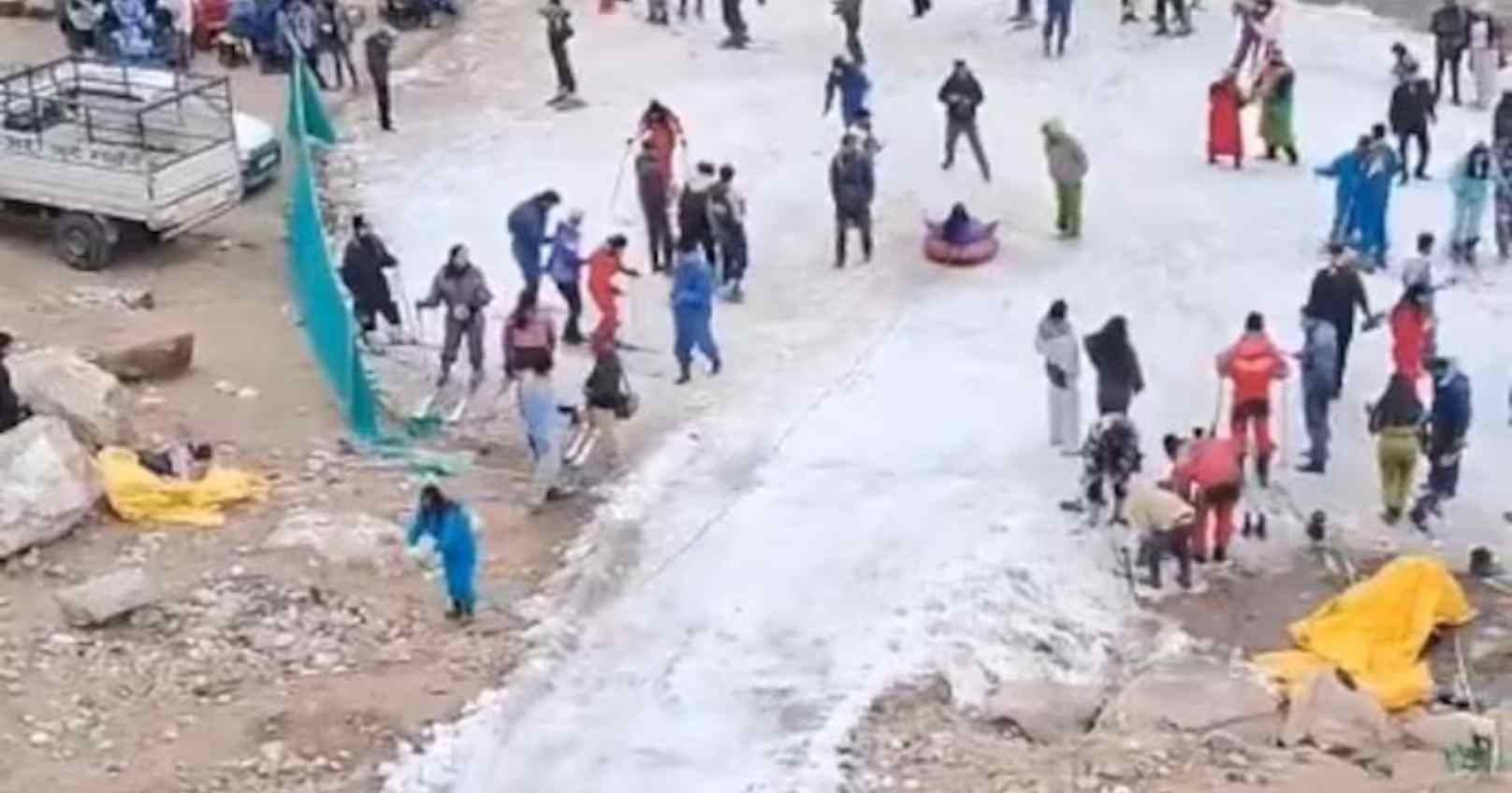
Recently, a video circulating online showed tourists enjoying a small patch of snow while the surrounding mountains remained dry and bare. The snow they were playing in was not natural.
Artificial snow is created using a combination of water, compressed air and snow-making machines that spray fine droplets into cold air, allowing them to freeze and settle like snow. Long used at international ski resorts, this technology is now finding a place in India’s Himalayan tourism sector.
With natural snowfall becoming increasingly unreliable, these manufactured snow zones are helping destinations maintain some level of winter appeal. However, they often appear in limited areas—small, designated “snow points” where visitors can pose for photographs, touch snow or try short sled rides.
Outside these pockets, the hillsides remain largely snowless, offering a stark contrast to the sweeping white landscapes once synonymous with Himalayan winters.
Vanishing Snow Seasons
The shrinking snow cover reflects a deeper environmental shift. Rising temperatures and changing atmospheric patterns are not only pushing snowfall later into the season but also reducing its frequency and intensity.
Satellite imagery over the years has underscored this transformation, revealing winter landscapes that now appear brown or patchy during months that were once reliably snowbound.
In this context, artificial snow is less a solution and more a temporary adaptation. It helps tourism survive in the short term but cannot replicate the scale, beauty or ecological role of natural snowfall.
There is also the risk of disillusionment. Tourists expecting pristine, natural snow may feel misled when they encounter small, manufactured patches instead, potentially damaging the credibility of these destinations.
Beyond tourism, the consequences are far-reaching. Snow acts as a natural water bank, slowly releasing meltwater that supports rivers, farming and hydropower generation. Declining snow cover raises long-term concerns about water security and livelihoods across the region.
Winter festivals, sports events and seasonal travel plans have already been disrupted, signalling a loss of confidence in once-reliable winter seasons.
In the larger picture, artificial snow stands as a visible symbol of a changing climate—an attempt to recreate conditions that nature once provided effortlessly. What may seem like a clever fix is, in reality, a reminder that India’s winters are undergoing a profound and irreversible transformation.