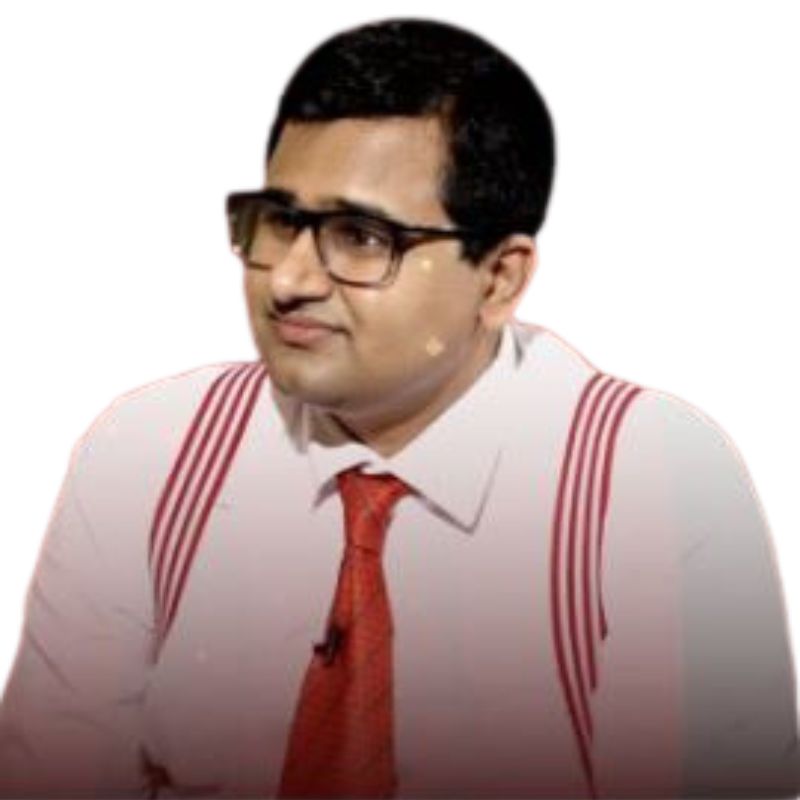
For years, Ajay Pratap Ashar was hardly a household name outside Maharashtra’s real-estate and political circles. In Thane, however, he was building both a substantial property business and relationships that would eventually take him remarkably close to the centre of Maharashtra’s political establishment. That changed dramatically in December 2022.
The newly installed government headed by Eknath Shinde appointed the Thane developer Vice-Chairman of the Maharashtra Institution for Transformation, or MITRA, the state’s newly created policy body modelled on NITI Aayog.
The appointment carried the stature associated with cabinet rank and immediately propelled a businessman accustomed to operating largely outside the political limelight into a formal position in Maharashtra’s policymaking apparatus. Contemporary reporting described Ashar as one of Shinde’s closest associates and someone who had worked with him for more than a decade.
It was an extraordinary transition: builder to policy insider. And when Ashar ceased to be part of MITRA’s reconstituted governing structure in March 2025, that development too was interpreted through the prism of Maharashtra’s shifting political equations.
So who exactly is Ajay Ashar?
The answer lies at the intersection of Thane, real estate, his close relation to powerful politicians from Thane running the state government, Maharashtra’s urban-development establishment and the complicated relationship between builders and governments in one of India’s most valuable property markets.
The businessman behind Ashar Group
Ashar is the founder and Chairman and Managing Director of Ashar Group, a real-estate business established in 2001 and centred historically around Thane and the Mumbai Metropolitan Region.
His company’s current profile describes activities spanning residential and commercial real estate, retail, education, IT parks and infrastructure. It also credits Ashar with developing Ashar IT Park and with involvement in industry bodies including CREDAI-MCHI. These are company claims and should be distinguished from independently verified figures.
One of the most important findings in the diligence material reviewed by The Daily Herald is that “Ashar Group” is a brand rather than one single legal entity.
The business operates through a collection of companies, LLPs and partnership firms. Ashar Realty Private Limited was incorporated in January 2007, while Ashar Ventures, a partnership established in 2013, has served as a development vehicle for projects including Ashar Axis, Ashar Pulse and Ashar Arize.
That distinction matters when assessing the scale of the businessman himself. The combined reputation and project portfolio marketed as the “Ashar Group” should not automatically be treated as the financial position of any individual company within it.
How large is the Ashar real-estate empire?
There is an interesting discrepancy here. The group’s current corporate website makes considerably larger development claims than figures independently recorded by a credit-rating agency.
The diligence note traces older company-linked material claiming approximately 4 million sq ft delivered, subsequent material referring to 7.5 million sq ft, and a 2026 corporate claim of 12.5 million sq ft delivered and 17.5 million sq ft under development. By comparison, an April 2024 assessment by Acuité Ratings recorded 22 projects comprising approximately 4.8 million sq ft.
The diligence report therefore cautions against treating headline marketing numbers as directly comparable or independently verified, noting that differences could partly reflect growth as well as different definitions of what constitutes development or delivery.
Interestingly, Ashar Group’s website now goes further still, saying Ashar’s 25-year journey has translated into more than 30 million sq ft of development across the MMR. Again, that is the company’s own representation rather than the same measurement used by the rating agency.
There is nevertheless independently documented evidence of actual project execution. The diligence note records Ashar Axis at Majiwada as having been completed in August 2024 and approximately 97% sold. It also identifies Ashar Edge as delivered with an occupancy certificate and Ashar Millennia and Ashar Sapphire & Galleria as completed on MahaRERA.
Current or more recent developments identified include Ashar Pulse, Ashar Arize, Ashar Merac and Ashar LBS Marg. In other words, whatever debate there may be over the precise aggregate square-footage figure, this is not merely a politically connected paper developer. There is a genuine real-estate business and a documented delivery record behind the name.
What do the finances reveal?
The most useful independent window into the group comes through Ashar Ventures, which has been rated by Acuité Ratings.
Acuité assigned it ACUITE BBB-/Stable on ₹365 crore of bank facilities in April 2024. The rating was reaffirmed in July 2025 on ₹275 crore of facilities after a ₹90 crore facility was withdrawn following repayment. BBB- is important because it remains investment grade, but at the lowest rung of investment-grade credit.
For FY23, according to the rating material compiled in the diligence report, Ashar Ventures recorded:
Operating income: ₹628.96 crore
Profit after tax: ₹158.31 crore
Debt/tangible net worth: 0.83 times
Interest coverage: 7.04 times
The enormous movement in revenue from ₹9.51 crore in FY22 to ₹628.96 crore in FY23 should not be interpreted as ordinary year-on-year operating growth: project-based real-estate accounting can produce highly uneven revenue recognition. The rating material also illustrates the capital intensity of development.
For Ashar Pulse, as of May 31, 2025, approximately ₹415.85 crore of an estimated ₹679.16 crore project cost had been incurred. Of ₹275 crore in tied-up debt, ₹199.90 crore had been drawn and ₹189.91 crore remained outstanding. Forty-nine per cent of inventory had reportedly been sold and 45% of collections received.
This paints a more nuanced picture than either extreme characterization of Ashar. He presides over an established developer with completed projects and meaningful financial activity. But the independently rated entity does not possess the kind of fortress balance sheet associated with India’s largest listed property conglomerates.
Then came Eknath Shinde
It is impossible to write a serious profile of Ajay Ashar without examining his association with Eknath Shinde. The relationship predates Shinde becoming chief minister.
The Indian Express reported at the time of Ashar’s MITRA appointment that he had worked with Shinde for more than a decade and was known within Maharashtra’s political establishment for working alongside him, even though he had previously remained largely outside public view.
Hindustan Times went further, describing Ashar as Shinde’s friend and reporting that he was believed to have played a major role in Shinde’s June 2022 rebellion against then chief minister Uddhav Thackeray. That is a press report concerning his alleged political role, not an adjudicated finding, and should be understood as such.
That distinction is important throughout Ashar’s story. There is a substantial public record of political allegations and descriptions of proximity to power. There is not, on the material reviewed for this profile, a corresponding record establishing criminal wrongdoing by Ashar.
The urban-development connection
The Ashar-Shinde association attracted particular attention because of Shinde’s earlier role as Maharashtra’s Urban Development Minister. Real estate in Mumbai and Thane is unusually dependent upon government decisions: development plans, FSI, redevelopment policy, infrastructure, permissions and municipal regulation can materially affect land values and project economics.
Consequently, a developer’s perceived proximity to the minister controlling urban development is politically sensitive even without proof of improper conduct. And Ashar’s proximity had already become an opposition issue before the BJP and Shinde came to power together.
The diligence report records that BJP figures including Ashish Shelar and Mihir Kotecha had raised allegations concerning Ashar’s purported influence over decisions in the Urban Development Department when Shinde headed it. Devendra Fadnavis, then Leader of the Opposition, had reportedly raised objections as well. The significance of what happened next was therefore difficult to miss.
After the political upheaval of 2022, Shinde became chief minister with BJP support, and Ashar was appointed to a significant government body.
Ajay Ashar enters government
Maharashtra created MITRA, the Maharashtra Institution for Transformation, on the broad model of NITI Aayog. The institution was intended to undertake data analysis and advise the government across major areas of economic and social development.
On December 1, 2022, Ashar was appointed one of its vice-chairmen/deputy chairpersons. Press reports at the time said the position carried cabinet-rank status and associated facilities. For Ashar, it represented a remarkable elevation.
A Thane developer who had been described in political reporting as someone who worked behind the scenes with Shinde was suddenly formally participating in an institution intended to help formulate Maharashtra’s developmental direction. That appointment triggered an immediate political storm.
Congress leader Nana Patole questioned how the government could appoint Ashar after BJP politicians themselves had previously raised allegations concerning him. Congress’s Sachin Sawant similarly questioned whether responsibility for planning Maharashtra should be handed to a builder who had previously figured in opposition attacks. The irony was obvious.
The political formation that had previously questioned Ashar was now part of the government appointing him.
Ashar’s answer: development, not developers
Ashar defended the appointment. His response, as reported at the time, was essentially that his work at MITRA would be about development rather than developers. That distinction captured his attempted transition from sectoral businessman to policy contributor.
There is some context supporting that positioning. Ashar Group currently describes him as an industry-policy participant who held leadership positions within CREDAI-MCHI and MCHI Thane and says he played a role in reforms including urban-development regulations. Those claims come from the company itself and should be treated accordingly.
Nevertheless, the political controversy surrounding the appointment never entirely disappeared.
The Aaditya Thackeray allegation
Ashar’s name had surfaced in another political controversy two years earlier. In November 2020, BJP leader Kirit Somaiya made allegations concerning Aaditya Thackeray’s interests in private entities while serving as a minister and publicly asked whether Thackeray was a partner with builder Ajay Ashar in an entity referred to as Ashar Projects DM LLP.
The diligence report carefully records this episode as a political allegation, not an established finding. That qualification matters enormously. The public record reviewed for this profile does not establish wrongdoing by Ashar arising from that allegation.
But politically, it demonstrates something else: Ashar’s name had already become familiar enough within Maharashtra’s political battles to be invoked by senior politicians before his eventual appointment to MITRA.
What the searches did NOT find is equally important
For a profile dealing with political influence, allegations must not be allowed to become synonymous with guilt. The diligence exercise supplied to The Daily Herald specifically searched for adverse enforcement and judicial material.
It reported finding no ED, PMLA, CBI or income-tax raid or investigation involving Ajay Ashar or Ashar Group; no adverse court judgment against the group in the accessible databases searched; no consumer commission ruling that surfaced; and no rating default, downgrade or issuer non-cooperation.
The projects checked, Axis and Merax also displayed no litigation against the proposed project on the relevant MahaRERA pages reviewed.
Absence in public searches can never conclusively prove that no dispute or inquiry exists anywhere. But it is a crucial counterweight to the political rhetoric surrounding Ashar. Political proximity is documented. Political allegations are documented. An adverse enforcement finding is not.
Indeed, the Indian Express reported in 2022 that although Ashar had reportedly been on the radar of central agencies during the MVA period, he had neither been named in a scam nor summoned for questioning by those agencies.
March 2025: the wheel of politics turns
If Ashar’s appointment to MITRA illustrated the benefits, or at minimum the visibility, associated with political proximity, what happened in March 2025 illustrated its fragility. By then Maharashtra’s political architecture had changed again. Devendra Fadnavis was chief minister. Eknath Shinde was deputy chief minister.
MITRA’s governing structure was reconstituted. And Ajay Ashar was not retained. Times of India reported officials as saying Ashar’s term had expired and was not renewed. The newly constituted arrangement brought in Dilip Walse Patil and Rana Jagjitsinh Patil, while Rajesh Kshirsagar remained.
Other reporting gave the development a sharper political interpretation. Hindustan Times described Ashar as a close Shinde associate when reporting his removal, while Free Press Journal explicitly framed the restructuring as curtailing Shinde’s influence.
It would be excessive to infer from this alone that Ashar had somehow fallen out with the government. Terms expire and governments routinely reconstitute advisory institutions. But the symbolism was difficult to ignore.
Ashar’s formal ascent had coincided with Shinde’s elevation to chief minister. His departure from MITRA came after the balance of power shifted and Fadnavis became chief minister.
That does not establish causation. It does, however, explain why the event attracted political attention.
A businessman whose political importance exceeded his public profile
This perhaps explains what makes Ajay Ashar an unusual figure. He isn’t one of India’s billionaire industrialists whose every move receives national coverage. Nor is he an elected politician. His significance appears instead to have developed through a combination of real-estate entrepreneurship, Thane’s extraordinary growth and unusually close access to an important Maharashtra politician. Thane itself is central to understanding that story.
It is both Ashar’s business base and Eknath Shinde’s political fortress.
As Thane developed into one of the Mumbai Metropolitan Region’s most valuable urban corridors, decisions involving roads, transit, FSI, redevelopment and land became increasingly consequential. A businessman operating successfully in that environment naturally encounters the political and administrative state repeatedly. Ashar appears to have moved beyond encountering it. For a period, he became formally part of it.
The business itself continues
Political appointments come and go; Ashar’s property business has continued. The diligence note records a number of projects extending toward December 2028, including Ashar Pulse and Ashar Merac.
There has also been movement within the corporate architecture. The composition of Ashar Ventures changed materially between the April 2024 and July 2025 rating exercises: two corporate partners previously named, Max Motors Private Limited and Toscano Infrastructure Private Limited—were absent in the later structure, while Kryshnajay Developers Private Limited appeared as a current partner.
The diligence report rightly treats this as something worth understanding rather than evidence of wrongdoing. That distinction is representative of the wider Ashar story. There are questions. There are political relationships. There are allegations. But allegations and questions must not be converted into findings without evidence.
The paradox of Ajay Ashar
Perhaps the most revealing episode in Ashar’s public life remains the reaction to his MITRA appointment. Some of the politicians whose parties had previously questioned his perceived influence were now members of the political arrangement that put him inside Maharashtra’s policymaking structure.
That tells us something not merely about Ajay Ashar, but about Maharashtra politics. Businessmen can be attacked as symbols of proximity when governments change—and subsequently be embraced when political alliances change. Ashar’s trajectory crossed both sides of that divide. He was publicly criticised. Then appointed. Then eventually not retained. Through it all, his real-estate business continued.
So, who is Ajay Ashar?
Strip away the rhetoric and a clearer portrait emerges. Ajay Pratap Ashar is an established Thane-based real-estate developer who founded Ashar Group in 2001 and built a genuine portfolio of residential, commercial and institutional development in the Mumbai Metropolitan Region.
He is also a businessman whose proximity to Eknath Shinde became sufficiently significant that mainstream newspapers repeatedly described him as a close aide, associate or friend of the Maharashtra leader.
That relationship carried Ashar somewhere most builders never reach: from developing a city to obtaining a formal seat in an institution charged with thinking about how the entire state should develop.
His 2022 appointment to MITRA gave him a cabinet-rank platform at precisely the moment his political associate occupied the chief minister’s chair. His absence from the reconstituted body in 2025 came as Maharashtra’s internal political balance changed. None of that, by itself, proves improper influence.
Indeed, the public-record diligence reviewed for this article found no adverse enforcement or regulatory finding against him. But it does establish something worth understanding about Ajay Ashar. He is not simply another Thane builder.
For more than a decade, his name has appeared at the intersection of property, urban policy and Maharashtra’s political power structure. He went from operating largely outside public view to occupying a government position at the highest levels of state planning, and then watched that formal role disappear when the political architecture changed again.
That makes the story of Ajay Ashar larger than a conventional developer profile.
It is the story of how business influence operates around India’s rapidly expanding cities: where land, infrastructure, regulation, political relationships and public policy inevitably meet, and where proximity to power can be enormously consequential, but never necessarily permanent.