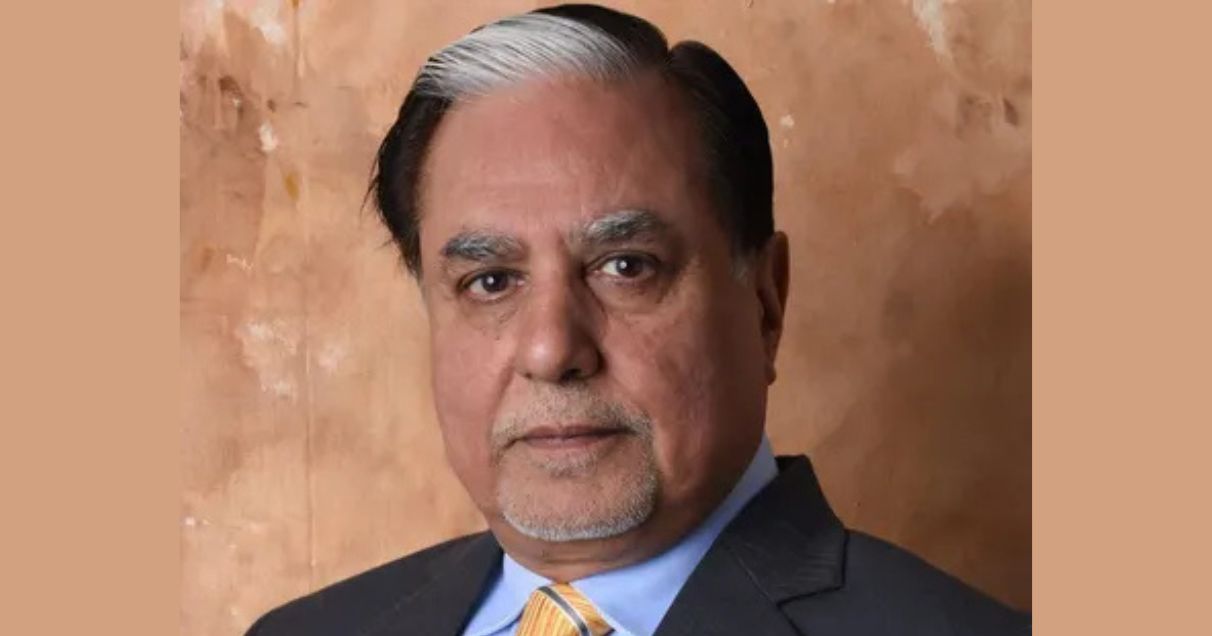
Essel Group founder Dr Subhash Chandra has issued a detailed rebuttal to recent reports concerning his personal insolvency proceedings before the National Company Law Tribunal, asserting that he did not personally borrow money from any lender and that the widely reported figure of approximately ₹22,000 crore represents claims connected with personal guarantees furnished for group companies, not loans taken by him.
In a press note issued on Thursday, Chandra accused what he described as a “vested media house” of circulating incorrect and selective information about the proceedings. He said the clarification was being issued to remove alleged misinformation among stakeholders as well as before the courts.
Chandra’s statement follows a Third Member opinion favouring approval of his repayment plan after a difference of opinion arose within the original NCLT Bench. He stressed that the judicial opinion must still be converted into a formal majority order and that, technically, the matter remains pending before the NCLT.
The assertions in the press note represent Chandra’s account of the proceedings and financial transactions. The amounts relating to claims, repayments, disputes and proposed settlements remain subject to the tribunal’s record and the respective positions of the creditors.
“I am a guarantor, not a borrower”
Chandra’s central contention is that there was “zero borrowing” by him personally. He said he had only executed personal guarantees in favour of lenders that advanced money to companies loosely identified with the Essel Group.
According to him, the personal guarantees signed by him aggregated approximately ₹22,000 crore. Claims totalling ₹22,006 crore were filed in the personal insolvency proceedings, of which approximately ₹21,696 crore were admitted.
Chandra maintained that these figures should not be presented as money personally borrowed or presently payable by him. He said the numbers quoted in reports were drawn from claims and documents placed in proceedings pending since February 8, 2022, and did not reflect the current position after repayments, settlements and disputes raised by the principal borrowers.
He further claimed that most of the personal guarantees were executed after January 24, 2019—the date on which the group defaulted within the financial system and on which he issued an open letter concerning the situation.
According to Chandra, several lenders made emotional appeals asking him to furnish personal guarantees on the ground that their employees could otherwise lose their jobs. He said he agreed after the principal borrowing entities assured him that they would repay their respective debts.
Says companies repaid ₹43,000 crore
Chandra said the total outstanding borrowings of the companies concerned stood at close to ₹45,000 crore on January 24, 2019.
Since then, he claimed, the borrowing entities have repaid approximately ₹43,000 crore to the financial system, including payments to several lenders whose claims feature in the insolvency proceedings.
The repayments by the principal borrowers, he argued, are essential to understanding the present exposure and were not adequately reflected in recent media reports.
Repayment plan secured 80.814% vote
The press note said the repayment plan placed for voting by the Resolution Professional received the support of creditors representing 80.814% of the voting share.
Chandra said several creditors within the remaining voting share did not cast their votes despite voting remaining open for multiple days. Certain financial creditors thereafter filed objections before the NCLT against approval of the plan, following which other creditors joined the objections, he claimed.
The note describes two broad categories of lenders: those who objected to the repayment plan and those who either accepted it or did not file objections before the adjudicating authority.
Objecting creditors’ claims placed at ₹3,992 crore
According to Chandra, creditors objecting to the repayment plan represent 19.251% of the total claims and had filed claims aggregating ₹3,992 crore.
He said claims worth ₹620 crore have since been settled, leaving claims of approximately ₹3,372 crore within this category.
The press note stated that the Resolution Professional admitted claims of ₹3,992 crore from these creditors. Chandra said the principal borrowing entities acknowledged only ₹1,033 crore and disputed the balance, though those disputes were rejected by the Resolution Professional.
Chandra provided a separate cash-flow calculation for this set of cases. According to the borrowing entities’ account cited by him, lenders originally disbursed ₹2,856 crore and borrowers repaid ₹1,633 crore, leaving a balance of approximately ₹1,223 crore. The lenders, however, filed claims totalling ₹3,992 crore.
The press note said the borrowing entities had offered approximately ₹1,113 crore to multiple objecting lenders. It added that claims worth ₹620 crore had been settled out of this proposed amount and discussions concerning the remaining cases were continuing.
Chandra suggested that settlement progress may have slowed because lenders were awaiting the outcome of the NCLT proceedings. He expressed hope that, following the Third Member’s opinion, lenders would accept the settlement proposals and receive the offered funds in addition to the amount available under his personal repayment plan.
The introductory portion of the press note separately stated that borrower entities had offered ₹1,063 crore, while the detailed account later referred to ₹1,033 crore as the amount acknowledged by borrowing entities and ₹1,113 crore as the amount offered to multiple lenders.
Remaining admitted claims placed at ₹16,201 crore
The second category, according to Chandra, consists of lenders who either accepted the repayment plan or did not file objections before the NCLT.
He said these lenders submitted claims of approximately ₹16,386 crore when the claims were filed, of which approximately ₹16,201 crore were admitted.
Chandra said the borrowing entities disputed claims in this category as well, but the Resolution Professional did not accept those disputes. He added that the principal borrowers had informed him that they were in the process of settling the remaining amounts with these creditors.
According to Chandra, the borrowers’ commitment to settle their obligations formed part of the repayment plan under consideration before the NCLT but was omitted from recent reports.
He said approximately ₹16,200 crore of the reported ₹22,000-crore figure relates to this second set of creditors, who had either supported the plan or had not objected to it.
Disputes reported ₹45,888-crore net-worth certificate
Chandra also responded to reports that a lender had relied on a declaration placing his net worth at ₹45,888 crore in 2017, compared with assets or net worth of ₹31.79 crore disclosed to the Resolution Professional during the personal insolvency proceedings.
He alleged that the borrower involved was a third party that had raised money internationally and that junior employees had treated the entire market capitalisation of Essel Group entities as Chandra’s personal net worth.
Chandra said this explanation had been placed before the NCLT during the prolonged proceedings but had not been reported.
He pointed instead to his declaration before Parliament in 2016, which, according to him, showed total personal assets of ₹39.08 crore and formed part of the public record. He questioned how a lender could have accepted a net-worth figure of ₹45,888 crore in 2017 when his publicly declared assets a year earlier stood at ₹39.08 crore.
Says personal funds were used to pay salaries
Explaining the reduction from ₹39.08 crore in declared assets in 2016 to ₹31.79 crore in 2024, Chandra said he had on several occasions paid employee salaries from his personal bank account when the borrowing companies were unable to do so.
He said the ₹31.79-crore asset figure includes a residential house valued at close to ₹25 crore. Since the house accounts for most of his declared assets, Chandra maintained that the ₹6.50-crore repayment plan represents the amount he is capable of paying from his available resources.
“He can pay what he has. Hence ₹6.5 crore repayment plan,” the press note stated.
Objects to “selective” reporting
Chandra alleged that reports published during the preceding two days selectively extracted portions of the judicial opinion to sensationalise the matter.
He said reporters should read the complete decision and account for repayments, disputed claims, settlements and the continuing liability of the principal borrowers before presenting the ₹22,000-crore figure.
His clarification makes three principal claims: that the ₹22,000-crore figure concerns guarantees and historical claims rather than his personal borrowing; that principal borrowing entities have already repaid the overwhelming portion of their original group-level liabilities and continue to negotiate settlements; and that his personal repayment proposal is restricted by the value and composition of his declared assets.
The Third Member’s opinion must now be placed before the original NCLT Division Bench for a majority order. Until that process is completed, the approval of the repayment plan has not attained the form of the tribunal’s final operative order.
All figures relating to repayments, disputed claims, settlement offers, asset values and the circumstances in which personal guarantees were executed are based on Dr Subhash Chandra’s press note dated August 27, 2026, and have been attributed accordingly.