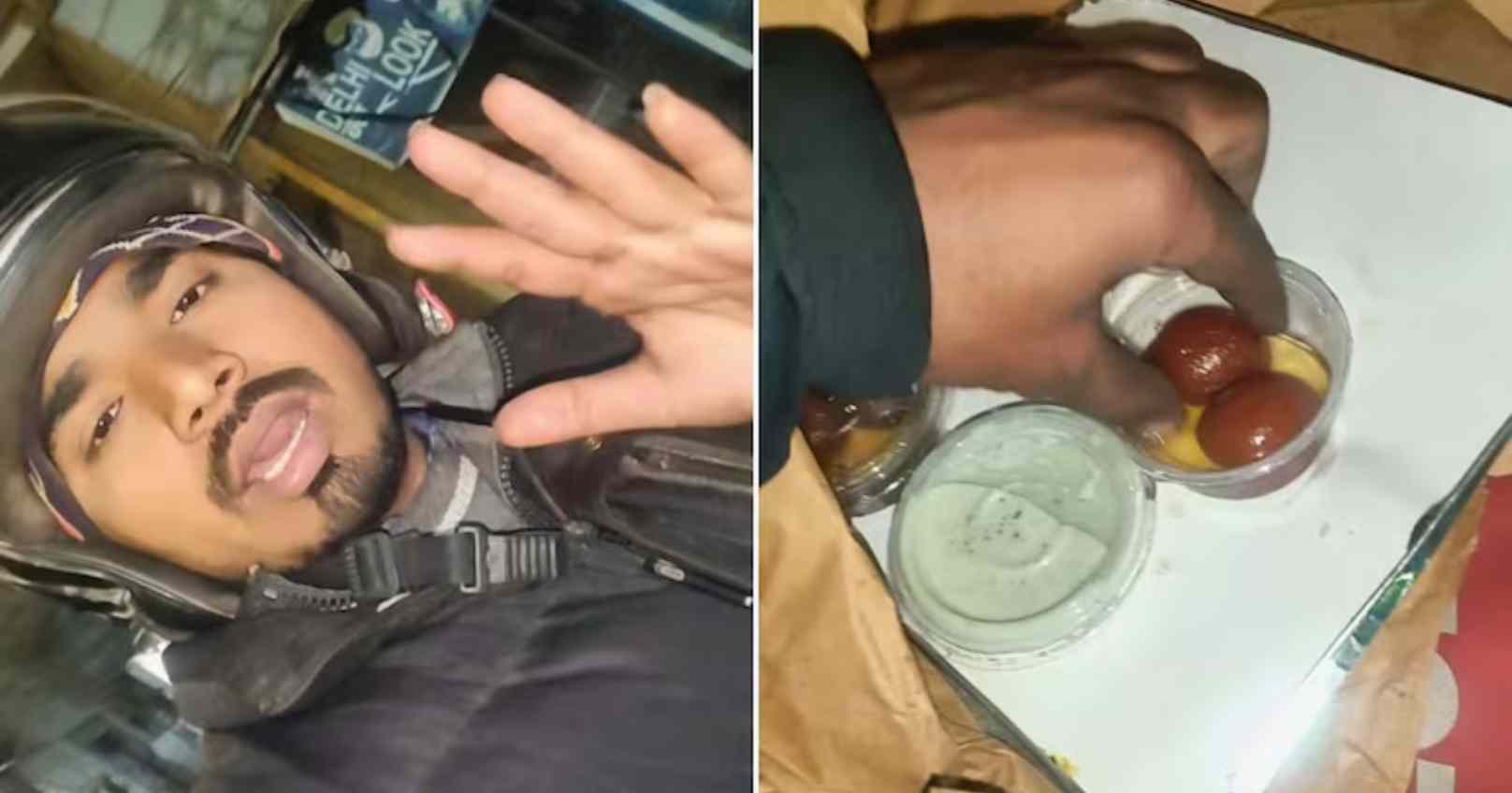
A late-night food delivery turned into an unusual standoff when a Zomato rider decided to keep and eat the order after a disagreement with the customer about doorstep delivery. The incident came to light after delivery executive Ankur Thakur shared a video on Instagram describing what unfolded during the 2:30 am drop.
In the video, Thakur says he asked the customer to come down and collect the parcel, explaining that leaving his motorcycle unattended on the street at that hour felt risky. According to him, the customer refused and shouted from the balcony that since the payment had already been made, the food must be brought right to the apartment door.
The rider maintained that night deliveries come with their own challenges, including long travel distances in cold weather and concerns about vehicle theft. He argued that a little cooperation from customers could make the job safer.
Thakur alleged that the customer gave him only two options — either climb upstairs with the order or cancel it. Choosing the latter, he recorded himself opening the packet and eating a gulab jamun, saying he would also finish the biryani inside. “I have cancelled it and I’ll eat it myself,” he remarks in the clip.
The post, uploaded on January 1, quickly went viral and has crossed 1.2 million views, drawing sharply divided opinions. Many users sympathised with the rider’s safety concerns, while others insisted that doorstep delivery is a paid service that must be honoured.
One commenter wrote that customers pay additional charges precisely for the convenience of home delivery and should not be asked to step out. Another pointed out that company guidelines require riders to complete doorstep drops and suggested he should have understood the rules before taking the job.
Some proposed middle-ground solutions, such as leaving the parcel with security at the gate. However, several users backed Thakur, arguing that expecting riders to enter buildings alone in the middle of the night can be unreasonable and unsafe.
The episode has reignited discussion about the working conditions of gig workers and the balance between customer convenience and delivery partner security.