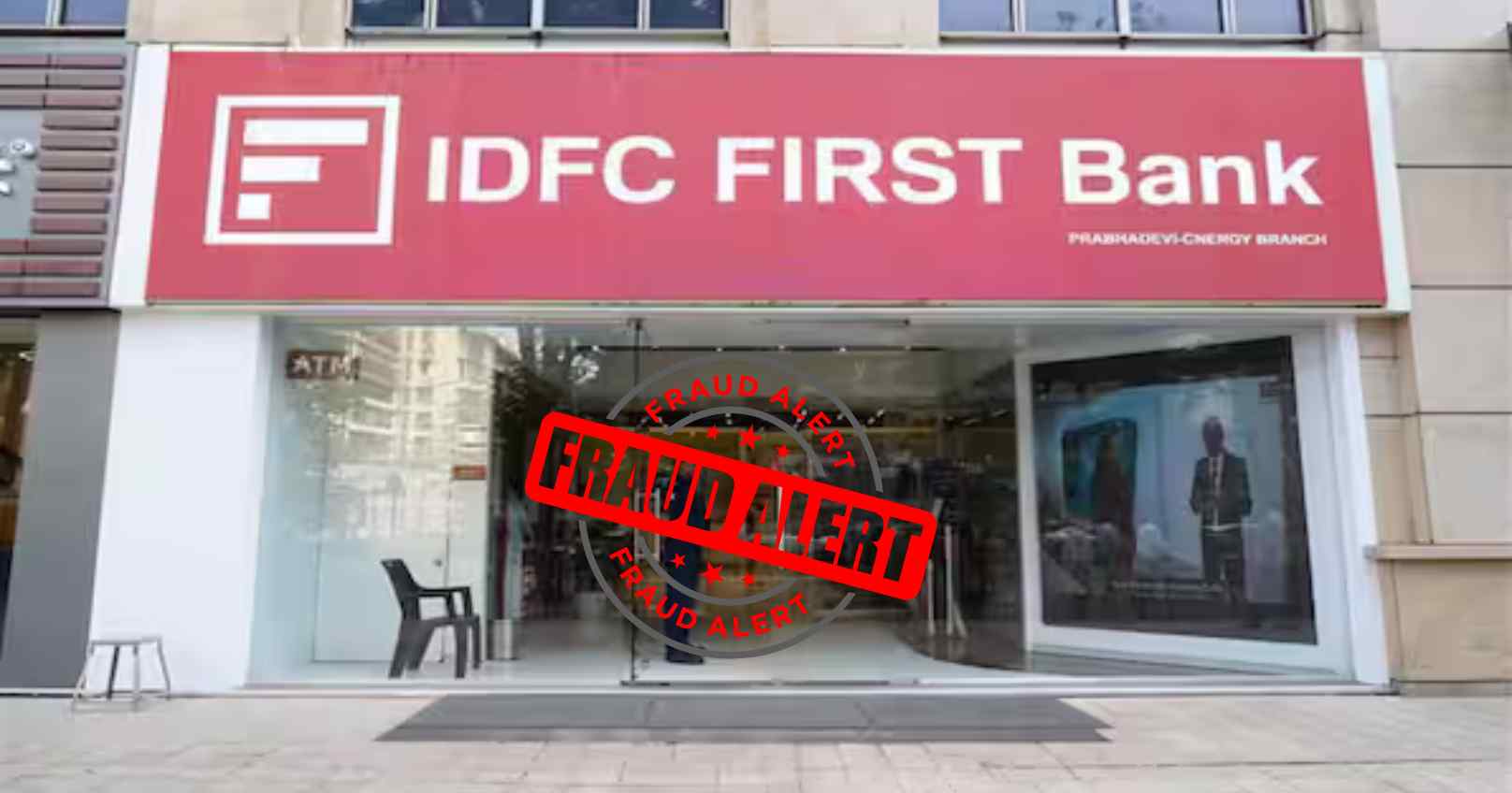
A suspected ₹590-crore fraud involving Haryana government-linked accounts has been attributed to alleged collusion between certain staff members and outside entities, according to V Vaidyanathan, Managing Director and CEO of IDFC First Bank.
Addressing investors ahead of market hours on Monday, Vaidyanathan said the lender would follow its standard practice of recognising financial stress early and make necessary provisions. He maintained, however, that the development is unlikely to materially dent the bank’s earnings trajectory. The management had been anticipating a robust fourth quarter, supported by healthy margins and steady credit costs, he noted.
Forensic Review Commissioned
To independently examine the matter, the bank has appointed KPMG to conduct a forensic audit. The review is expected to take approximately four to five weeks.
Of the total suspected discrepancy, around ₹490 crore reportedly surfaced during a reconciliation process, while an additional ₹100 crore emerged from internal scrutiny. Bank officials indicated they do not foresee a further escalation in the estimated amount.
Government Response And Containment
Following the disclosure, the Haryana government removed IDFC First Bank and AU Small Finance Bank from its empanelled list for handling official transactions. AU Small Finance Bank has publicly denied any involvement.
The lender clarified that the issue appears confined to a specific set of Haryana government accounts handled at its Chandigarh branch and involved allegedly forged physical cheques. Police complaints have been filed and regulators notified. Four employees connected to the case have been suspended pending investigation.
According to the bank, deposits associated with Haryana government entities account for roughly 0.5% of its total deposit base. In the December quarter, IDFC First Bank reported a 48% jump in net profit to ₹503 crore, alongside a 24% year-on-year increase in deposits.
How The Irregularity Emerged
The matter reportedly came to light when a state department sought to shut its account and transfer funds elsewhere. During the transition, discrepancies were detected between the department’s stated balance and the bank’s records. Subsequent internal checks revealed similar mismatches in other Haryana-linked accounts at the same branch.
The bank has emphasised that the irregularities are restricted to this cluster of accounts and do not impact customers at other branches. Final financial implications will depend on recoveries, insurance claims, and the outcome of legal proceedings.
As the forensic audit progresses, the focus remains on establishing accountability and assessing the ultimate impact on public funds.