Andes Glaciers Melting at Alarming Rate, Threatening Millions in South America
Scientists at UNESCO's World Day for Glaciers conference warn that rapid glacier loss in the Andes endangers water security for 90 million people
25-03-2025

At the inaugural World Day for Glaciers conference, hosted by the United Nations Educational, Scientific and Cultural Organization (UNESCO), scientists cautioned policymakers about the severe impact of the Andes' rapidly melting glaciers on the millions who depend on them for survival.
Stretching across Argentina, Chile, Bolivia, Peru, Ecuador, and Colombia, the Andes mountain range plays a crucial role in providing water for household use, hydroelectric energy, industrial processes, agriculture, and livestock farming. However, scientists have observed that glaciers in the Andes are thinning at an alarming rate of 0.7 meters per year—35% faster than the global average—putting at risk nearly 90 million people who rely on these water sources.
The primary driver of this rapid glacier loss is climate change. Rising global temperatures have intensified extreme weather patterns, including prolonged droughts and decreased snowfall, which have contributed significantly to the shrinking of Andean glaciers.
Despite commitments under the Paris Agreement to limit global temperature increases to below 2°C above pre-industrial levels, many countries have fallen short of their targets. Poor water resource management, changing demand patterns, and unchecked carbon emissions have further worsened the situation.
If global temperatures exceed 2°C, projections indicate that large portions of the Andes could become nearly ice-free by 2100. The resulting water shortages will severely impact major cities and rural communities that depend on glacier-fed rivers.
Dr. Jeremy Ely from the University of Sheffield’s School of Geography and Planning emphasized the looming crisis, stating, “With temperatures in the Andes expected to rise by up to 4.5°C by the end of this century, the threats to water and food security will put millions of lives at risk.”
A decline in food production will not only affect livelihoods but also trigger economic instability across the region.
The Andes are not alone in facing the devastating consequences of glacier retreat. According to a UNESCO report, the world’s glaciers are vanishing at an unprecedented rate, with the past three years marking the highest recorded glacial mass loss. Countries such as Slovenia and Venezuela may have already lost all their glaciers, while regions including Scandinavia, Central Europe (including Switzerland), the Caucasus, New Zealand, Central Asia (Kazakhstan, Kyrgyzstan, and Uzbekistan), and the Himalayas are at risk of losing theirs by the end of the century.
Glacier loss is not just about melting ice—it is a crisis of survival for communities reliant on these water sources. As freshwater becomes scarcer, some governments may resort to constructing dams, which could further strain the economies of developing nations already grappling with climate-related challenges.
To mitigate these risks, urgent global collaboration is needed. A sharp reduction in carbon emissions, adherence to international climate agreements, sustainable resource management, and improved water conservation strategies are essential to safeguarding these critical ecosystems and the populations that depend on them.
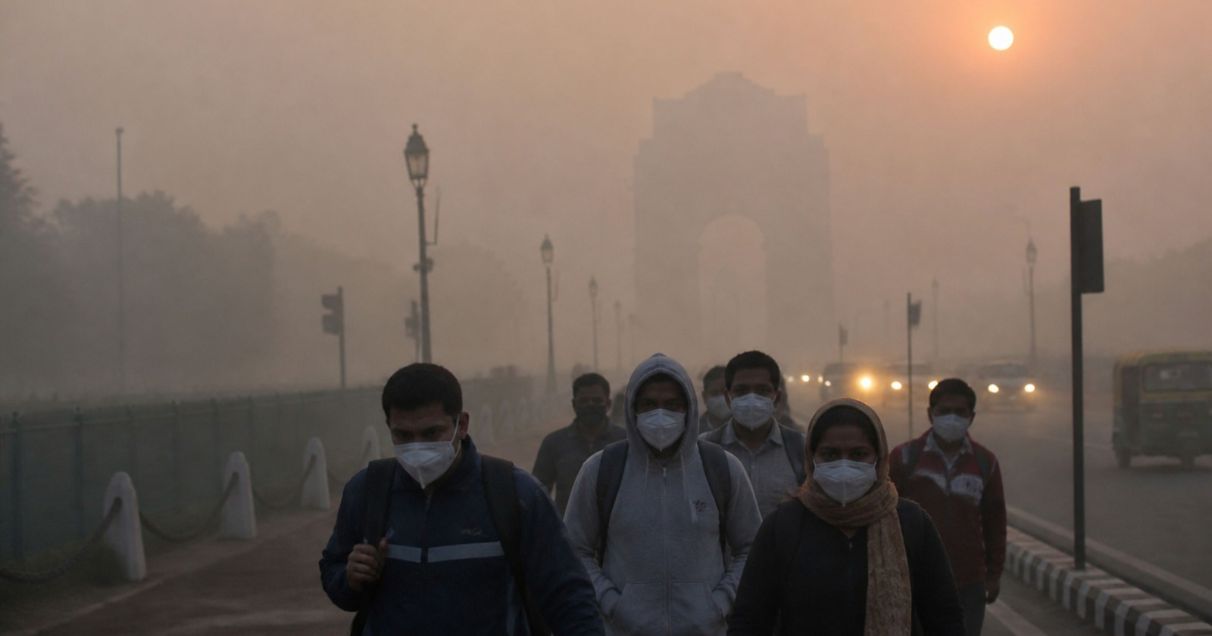
Delhi's air quality deteriorated sharply after Diwali, with PM2.5 concentrations crossing 3,700 micr
Read More
Pakistan has attributed Lahore’s deteriorating air quality to pollution allegedly carried across t
Read More
Four coaches of the Karmabhoomi Express caught fire near Rajpura in Punjab on Friday after a blaze r
Read More