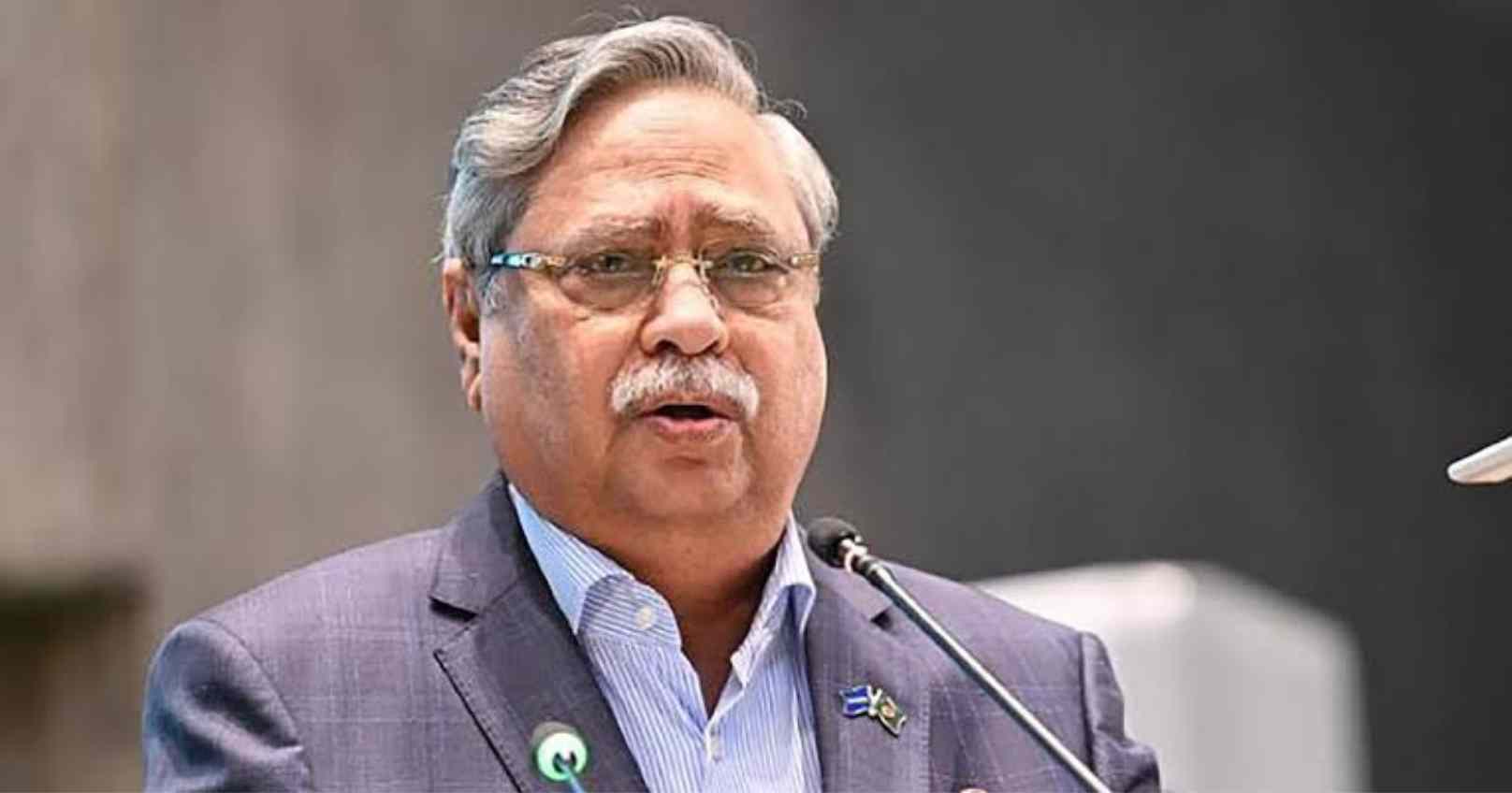
Bangladesh President Mohammed Shahabuddin has resigned from office, his press secretary announced on Friday, citing serious health concerns.
The 76-year-old had served as the country's president since April 2023 and remained in the position through a period of intense political upheaval that culminated in the ouster of former Prime Minister Sheikh Hasina following a student-led movement in 2024.
In a statement issued by his press secretary, Shahabuddin said recent medical evaluations had identified a condition known as autonomic neuropathy. He said the condition had resulted in occasional episodes in which he briefly lost consciousness.
Shahabuddin's departure is politically significant as it removes one of the last figures associated with Hasina from a senior constitutional position. Hasina fled to India after her government was overthrown amid the 2024 uprising, while her Awami League party has since been prohibited from political activity.
A number of senior Awami League figures and supporters have faced arrest, while others have gone into hiding following the political upheaval.
Under Bangladesh's constitutional arrangements, the Speaker of the Jatiya Sangsad, the country's national parliament, will temporarily assume the responsibilities of the presidency until a successor is elected.
Although the presidency is largely ceremonial, the office-holder serves as commander-in-chief of Bangladesh's armed forces. Day-to-day executive authority, however, lies with the prime minister and the Cabinet.
Shahabuddin's resignation comes months before Hasina was reportedly expected to return to Bangladesh, further altering the political landscape surrounding the former prime minister.
The resignation had been anticipated. Reuters reported a day earlier that Shahabuddin, who had been regarded as an ally of the ousted premier, was expected to leave office on Friday.
Bangladesh, a predominantly Muslim nation of around 173 million people, has undergone significant political turbulence since the fall of Hasina's government, with the country's institutions continuing to navigate the aftermath of the 2024 student-led uprising.