A prime Lower Parel land parcel reclaimed by the Brihanmumbai Municipal Corporation after a decades-long legal battle has been approved for lease to a subsidiary of JSW Steel for ₹1,351 crore, only ₹3 crore above the BMC’s reserve price of ₹1,348 crore.
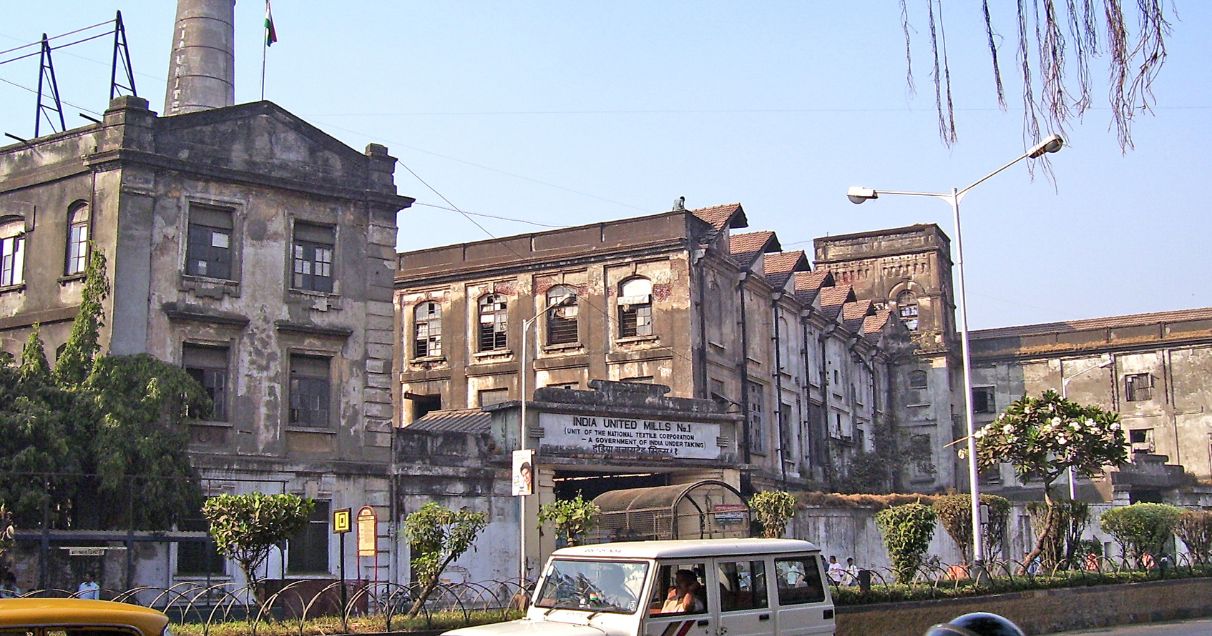
The BMC Improvement Committee on August 14 cleared the 30-year lease of approximately 23,822 square metres, or 6.17 acres, of the former Century Mills workers’ colony to Peddar Realty Ltd, a wholly owned subsidiary of JSW Steel. The lease is structured under a public-private partnership model and can potentially be extended by another 30 years.
The transaction is significant not merely because of the size and location of the property, but because the BMC recovered the land only after the Supreme Court ruled in its favour in January 2025, overturning relief earlier granted to Century Textiles & Industries by the Bombay High Court.
The property had originally been leased in the 1920s for housing employees from what the lease described as the “poorer class”. The lease expired in 1955, but the company subsequently sought to have the land transferred into its own name rather than returned to the civic body, triggering litigation that ultimately reached the Supreme Court.
Today, the site contains 23 buildings, 476 tenements occupied by eligible mill-worker families and 10 shops. The Century Mill itself shut in December 2006. A tenants’ representative, Rajesh Parab, has said that at least 250 mill workers died while waiting for redevelopment.
Four developers in the race
The BMC tender was floated in December 2025 with a reserve price of ₹1,348 crore. Four major developers participated:
Peddar Realty Ltd
K Raheja Corp Pvt Ltd
Keystone Realtors Ltd
Shapoorji Pallonji Real Estate Pvt Ltd
Peddar Realty emerged as the highest bidder with an offer of ₹1,351 crore, a premium of just ₹3 crore, or around 0.22 per cent, over the reserve price. BMC Joint Municipal Commissioner (Improvements) Sanjog Kabare has confirmed that Peddar Realty was the highest bidder and that the land is to be leased for 30 years. What remains unknown, however, are the values of the three losing bids.
Those numbers could become important in evaluating how competitive the bidding process actually was and whether the reserve price effectively acted as the final market price. A narrow premium above reserve is not, by itself, evidence of anything improper. If the reserve was accurately and aggressively priced, bidders would have little reason to substantially overbid. But without disclosure of the other bids and the underlying valuation methodology, the full competitive picture remains unavailable.
A ₹1,348-crore reserve on land separately valued at ₹660 crore
Another issue likely to attract scrutiny is the valuation architecture behind the transaction. The briefing material records the land as being separately valued at approximately ₹660 crore, while the tender reserve price was set at ₹1,348 crore. Opposition corporators have also cited a possible gross development value of approximately ₹7,000 crore, based on an indicative development potential of around 10.75 lakh sq ft.
These figures are not directly comparable. A land valuation, a tender reserve price and gross development value measure different things. Gross development value represents potential sales proceeds before construction, rehabilitation, financing costs, statutory payments and the lease consideration itself.
Even so, opposition members have demanded greater disclosure of how the reserve price was fixed, which floor-space assumptions were used and whether a BMC-led redevelopment model was ever seriously evaluated.
Opposition questions transparency
Congress group leader Ashraf Azmi has questioned why land fought for by the BMC for decades should be committed to a private developer for a period that could ultimately extend to 60 years.
He has sought an independent valuation, a comparison with the economics of redevelopment directly by the BMC, and safeguards concerning what he says could be roughly ₹1,000 crore of deferred payments.
Shiv Sena (UBT) leader Vishakha Raut has raised concerns over protection of mill-worker families, while corporator Sachin Padwal has questioned the bidding process and alleged that certain terms may have been tailored to favour a particular developer.
Those allegations remain political claims and have not been independently established. Committee chairperson Sandhya Doshi, meanwhile, defended the proposal, saying efforts would be made to house mill-worker families, particularly Marathi families, at the same location and that the redevelopment would enhance BMC revenues.
The JSW ownership question
The transaction carries another layer that could prove significant. On January 23, 2026, approximately a month after the BMC tender opened, JSW Steel informed the stock exchanges that Peddar Realty had been authorised to hold 51 per cent in a new joint venture created to bid for a Mumbai land parcel through a formal tender process.
The remaining 49 per cent was to be held by JSW Realty Pvt Ltd, which JSW Steel itself identified as a promoter-group entity, together with unnamed “other partners”. JSW Steel classified that transaction as a related-party transaction conducted on an arm’s-length basis.
JSW Realty Pvt Ltd is registered at Jindal Mansion on Peddar Road and its directors include Sangita Jindal and Tarini Jindal Handa, according to the material reviewed.
But one critical fact is not yet established: Was that January joint venture created for the Century Mill parcel, or for another Mumbai property altogether?
The available documents do not answer that question. Nor is it yet established whether Peddar Realty bid for the Century Mill land entirely on its own account or whether the project will eventually sit within the separately disclosed joint venture.
That distinction matters because Peddar Realty is wholly owned by JSW Steel, whereas the separate JV introduces promoter-group ownership and unnamed outside partners.
Funding also needs clarity
There is also a financial question. The briefing material notes that Peddar Realty has ₹1 lakh in paid-up capital, while its disclosed commitment to the new JV was up to ₹51 crore.
How a ₹1,351-crore lease obligation will ultimately be funded, through a parent guarantee, equity from the JV, internal resources or external borrowing, remains unanswered in the material currently available.
Again, low paid-up capital in a special-purpose subsidiary does not itself indicate financial weakness or impropriety. Large corporate groups routinely execute transactions through subsidiaries supported by parent guarantees, inter-corporate funding or structured debt. The relevant issue is disclosure.
Mill workers remain at the centre
Beyond the corporate and political contest lies the human question that has followed the land for decades. The parcel was originally meant to house mill workers. Hundreds of families continue to live on the site, and rehabilitation is an integral part of the redevelopment. The proposed rehabilitation flats are expected to measure around 405 sq ft, depending on the final scheme adopted.
Questions remain over exactly who will qualify, how transit accommodation will be handled, what happens to families outside the formally recognised list and what contractual protection exists to ensure that those entitled to rehabilitation return to the same location.
For residents who have waited through the closure of the mill, decades of litigation and political promises, those questions may prove more important than the headline bid value itself.
What needs to be disclosed now
For the controversy to move beyond allegation and political rhetoric, several documents will be critical: the comparative statement showing all four bids; the valuation note explaining the ₹1,348-crore reserve price; the deferred-payment schedule; the final lease and rehabilitation obligations; the award letter identifying whether the award is to Peddar Realty alone or another vehicle; and details clarifying whether the January 2026 JSW joint venture is connected with this particular parcel.
There is, at present, no established allegation of wrongdoing against JSW Steel, Peddar Realty or Sajjan Jindal. The issue is instead one of transparency around an unusually valuable public asset: a parcel reclaimed by the civic body after prolonged litigation, leased for ₹1,351 crore to a major corporate group, with a winning bid only marginally above reserve and with important questions on ownership structure, valuation and payment terms still awaiting documentary answers.