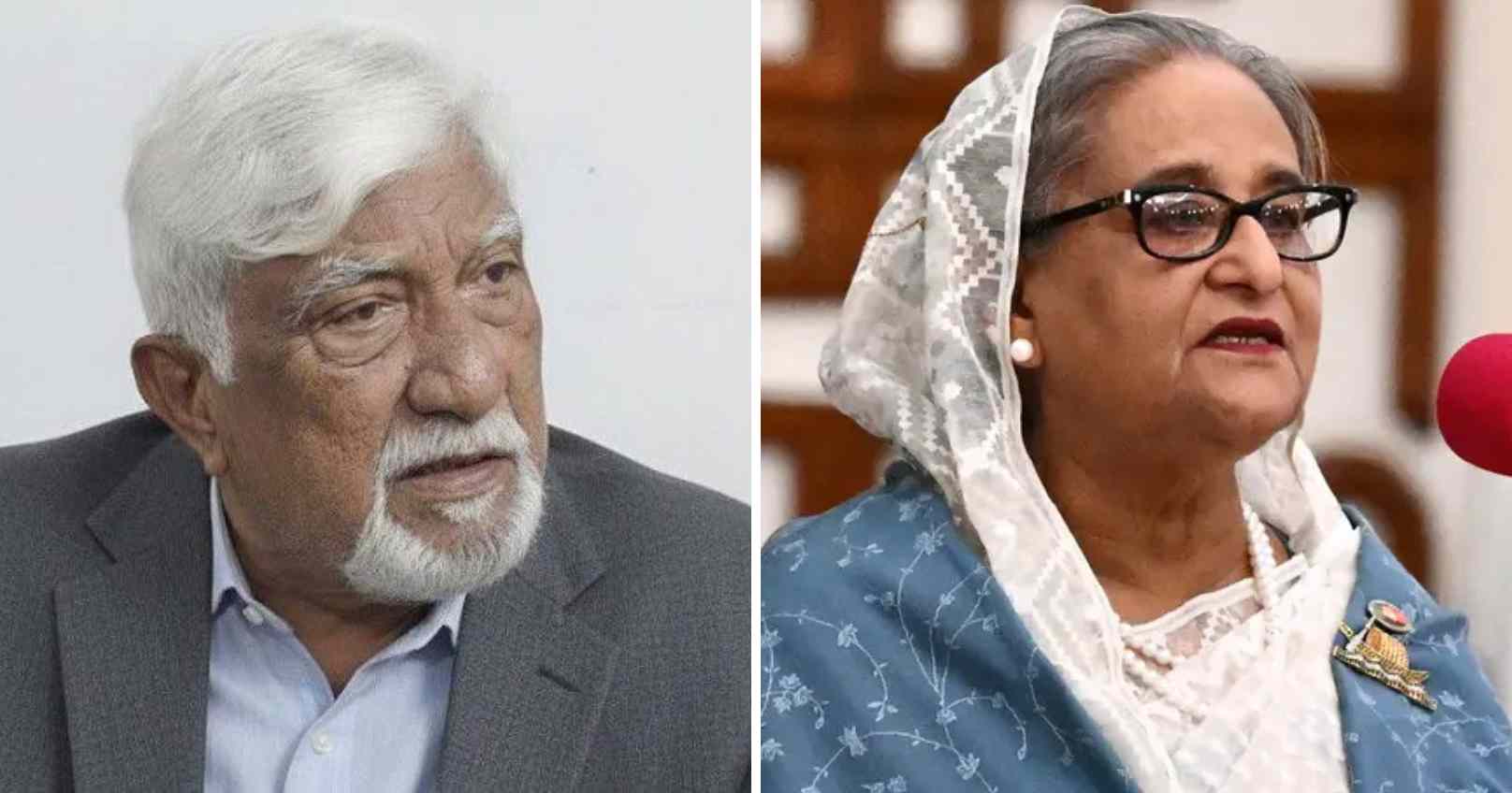
Bangladesh's political landscape witnessed an unexpected twist days after former Prime Minister Sheikh Hasina declared from New Delhi that she would return to Bangladesh in December. A senior lawmaker from the ruling Bangladesh Nationalist Party (BNP) has publicly described Hasina's Awami League as an ally and suggested that the two parties could eventually unite.
Nasir Uddin Chowdhury, the BNP Member of Parliament from Sunamganj-2, made the remarks while addressing a public gathering in Derai municipality. Recalling the two parties' shared role during Bangladesh's Liberation War, he said the Awami League should not be viewed as an adversary and predicted that it could one day merge with the BNP.
His comments stand in sharp contrast to the official position of both the BNP leadership and the Bangladesh government, which have consistently opposed Hasina's political activities since her removal from office in 2024.
The statement comes shortly after Sheikh Hasina's first public interaction with the international media since leaving Bangladesh. Speaking at a press conference in New Delhi, the former prime minister reaffirmed her intention to return home later this year despite the legal proceedings pending against her. She said her decision was driven by a sense of responsibility towards the people of Bangladesh and not by a desire to regain political power.
Hasina has been residing in India since widespread student-led demonstrations in 2024 forced her government from office. The Awami League was subsequently barred from political activity, while Bangladesh's new administration has continued to pursue her extradition.
Ahead of Hasina's appearance in New Delhi, Dhaka had urged India not to permit its territory to be used for political messaging that could affect Bangladesh's internal affairs. Authorities also advised domestic media organisations against carrying her remarks.
Within the BNP, however, Chowdhury's position appears to have found little support.
Senior BNP leader Ruhul Kabir Rizvi strongly criticised Hasina's press conference, accusing Indian authorities of deliberately allowing the event to coincide with the anniversary of the July 2024 uprising. He alleged that the timing was intended to disrespect those who lost their lives during the movement and argued that permitting Hasina to speak from Indian soil amounted to interference in Bangladesh's internal matters.
Bangladesh's Foreign Ministry also objected to the event, stating that allowing the former prime minister to address the media from India had negatively affected bilateral relations and undermined Bangladesh's sovereignty.
Adding to the political tensions, Acting President Hafiz Uddin Ahmed responded to Hasina's announcement by saying her supporters would be confronted if she returned to Bangladesh. Addressing a public function, he accused the former ruling party of failing to acknowledge allegations relating to enforced disappearances, violence and financial misconduct, while asserting that he remained prepared to defend the country's interests if required.
Ahmed assumed office as Acting President after the resignation of Mohammed Shahabuddin earlier this year.
With Hasina reiterating her plans to return and political divisions deepening within Bangladesh, Chowdhury's unexpected call for reconciliation has added a fresh dimension to an already polarised national debate.