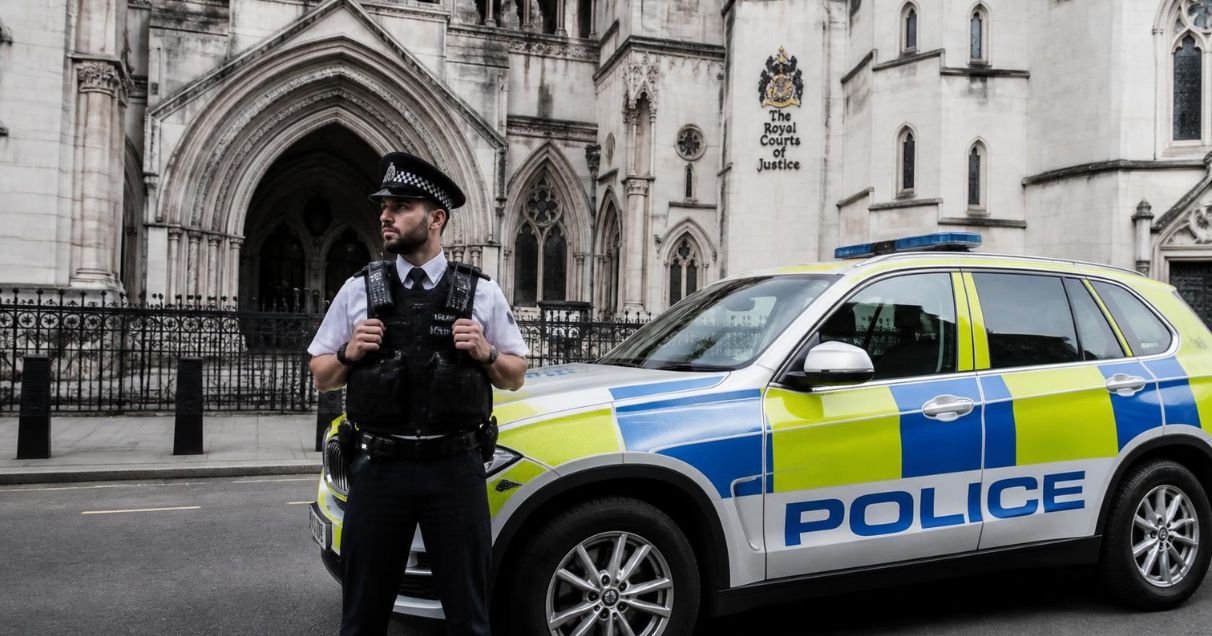
What happens when the machinery created to investigate crime is itself deliberately misused? In England and Wales, the answer can be severe: a police officer who intentionally corrupts a criminal investigation can potentially move from being the investigator to being the accused.
British law does not criminalise police officers merely because an investigation fails, a defendant is acquitted or prosecutors eventually withdraw charges. Police investigations inevitably involve judgments that can subsequently turn out to be wrong. But there is a fundamental difference between being wrong and being deliberately dishonest.
Where evidence establishes that an officer knowingly fabricated evidence, concealed material, provided false information, deliberately caused an innocent person to fall under suspicion or otherwise intentionally interfered with the administration of justice, criminal liability can potentially follow.
Perverting The Course Of Justice
One of the most serious offences potentially available is perverting the course of justice. It is a common-law offence covering conduct intended to pervert the course of public justice. Importantly, the concept of the “course of justice” is not confined to what happens after a trial begins. Crown Prosecution Service guidance recognises that it can encompass the investigative process itself.
Examples of conduct capable of raising the offence include fabricating or interfering with evidence, giving false information and conduct designed to cause another person improperly to fall under suspicion. That distinction is crucial.
An officer who investigates a person on evidence genuinely believed to be reliable is in a fundamentally different legal position from an officer who knowingly manufactures evidence to create a case. The maximum sentence for perverting the course of justice is life imprisonment, although the sentence actually imposed in any case depends upon the facts and seriousness of the offending.
No Blanket Immunity For Police
Police officers do not enjoy blanket immunity from the criminal law simply because allegedly unlawful conduct occurred while they were performing official duties. The Crown Prosecution Service has specific guidance governing criminal allegations against police officers.
As with other suspects, prosecutors consider whether there is sufficient evidence to provide a realistic prospect of conviction and whether prosecution is required in the public interest. The significance of this principle is considerable.
The enormous coercive powers available to the State , arrest, detention, questioning, search and seizure, are accompanied by legal responsibilities governing how those powers are exercised. A police badge does not provide a licence to fabricate a case.
Misconduct In Public Office
Depending upon the circumstances, deliberate abuse of police powers may also raise the common-law offence of misconduct in public office. The threshold is deliberately high. It is not designed to criminalise ordinary incompetence, negligence or poor decision-making by public officials.
Broadly, the offence addresses wilful misconduct by a public officer which represents such a serious departure from the standards expected of the office that it amounts to an abuse of the public’s trust. It too is capable, at the most serious end, of attracting a maximum sentence of life imprisonment.
Other offences — including perjury or offences involving false statements or evidence — could potentially arise depending upon precisely what an officer is proved to have done.
An Acquittal Does Not Mean The Police Committed A Crime
There is, however, an equally important safeguard on the other side of the equation. The collapse of a prosecution does not automatically mean that the police acted maliciously. Nor does an acquittal.
A criminal case may fail because witnesses are unreliable, evidence is insufficient, new material emerges or prosecutors conclude that the evidential threshold can no longer be satisfied. None of those circumstances, standing alone, establishes that investigators committed an offence.
For an officer to face criminal liability, prosecutors would need evidence satisfying the ingredients of the particular offence alleged, including the necessary element of deliberate or wilful wrongdoing where required. That is a substantially higher threshold than merely demonstrating that the original prosecution was unsuccessful.
Malicious Prosecution: The Civil Route
English law also separately recognises the tort of malicious prosecution, under which a person may, in appropriate circumstances, seek damages. Again, the test is demanding.
The claimant generally needs to establish matters including that the defendant was responsible for the prosecution, that the proceedings terminated in the claimant’s favour, that there was an absence of reasonable and probable cause, and that the prosecution was motivated by malice.
The civil concept of malicious prosecution should therefore not be confused with criminal prosecution of a police officer. They are different legal routes with different ingredients and consequences.
When The Investigator Becomes The Accused
There is a larger constitutional principle involved. The criminal justice system gives police officers powers that ordinary citizens do not possess precisely because society trusts those powers will be exercised for legitimate purposes.
When an investigation is conducted honestly but turns out to be wrong, the legal system recognises that reality. When evidence is deliberately manufactured or an innocent person is knowingly framed, the position changes completely.
The same criminal justice machinery initially deployed against the suspect can potentially turn towards those who corrupted it. The distinction under British law is therefore stark:
A failed prosecution is not necessarily a false prosecution. A mistake is not necessarily misconduct. But deliberately fabricating evidence or manipulating justice can itself become a serious crime. And in the gravest cases, the police officer who began the investigation exercising the authority of the State can ultimately find himself standing in the dock.