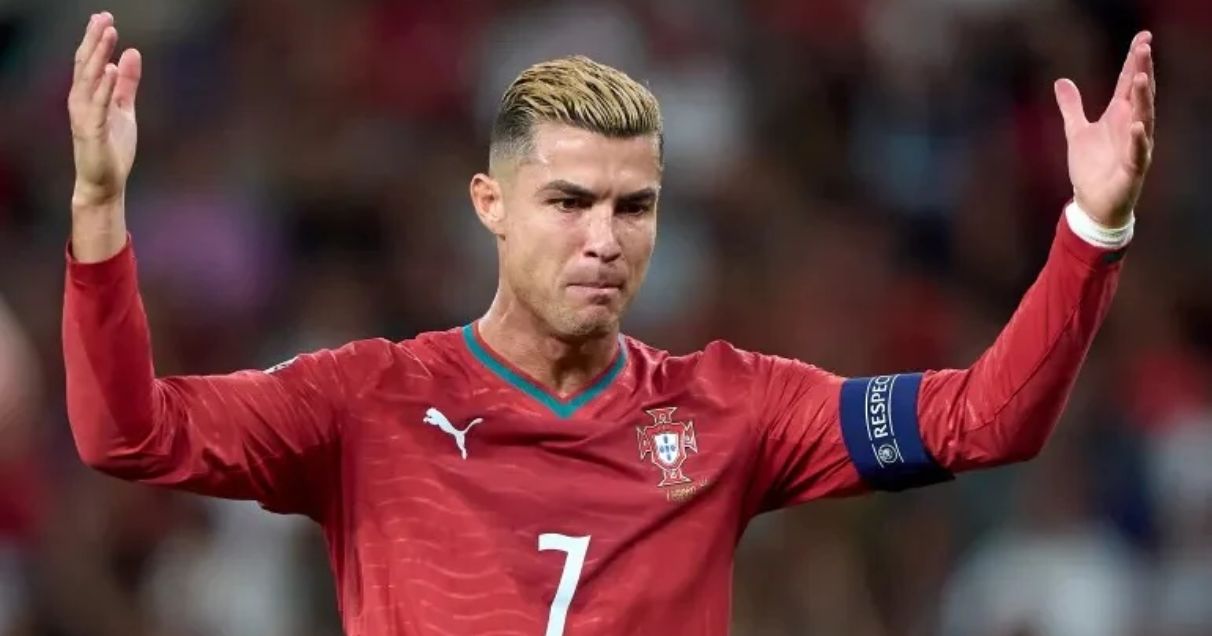
Cristiano Ronaldo has announced the end of his international football career, closing a remarkable chapter that began in 2003 and saw him emerge as one of the most celebrated players in the history of the sport.
The 41-year-old footballer shared an emotional farewell message on social media, reflecting on his years representing Portugal and the significance of wearing the national team's famous No. 7 jersey.
His retirement brings an end to a journey spanning 23 years, during which he reportedly accumulated 234 international appearances and scored 146 goals, establishing records for both appearances and goals in men's international football.
Although Ronaldo leaves behind an extraordinary sporting legacy, the announcement follows a difficult period marked by disagreements over his role in the national team.
An Emotional Goodbye To The Portuguese People
In his farewell message, Ronaldo expressed gratitude to the supporters, coaches, family members and fellow players who had accompanied him throughout his international career.
He reflected on the responsibility of representing his country, describing the experience as one of the greatest honours of his life.
The veteran forward acknowledged the emotional difficulty of ending his association with the national team while emphasising his pride in having devoted more than two decades to Portuguese football.
Ronaldo also indicated that the No. 7 jersey would now pass to a new generation of players, although the memories and achievements associated with it would remain an inseparable part of his life.
His departure represents a major transition for Portugal, which has relied on his leadership, goalscoring ability and international experience across successive generations.
Disagreement With Coach Jorge Jesus Preceded Retirement
Ronaldo's final months with the national side were reportedly complicated by a disagreement with head coach Jorge Jesus over team selection and communication.
The controversy intensified following Portugal's Nations League encounter against Norway on September 27, when Ronaldo remained among the substitutes throughout the match.
According to Ronaldo's account, he had initially understood that his playing time would be managed during the fixtures against Norway and Denmark.
He subsequently claimed that he had been given reason to expect an appearance of approximately 30 minutes against Norway. Despite warming up during the match, he was not brought onto the field.
The disagreement extended beyond the selection decision, with Ronaldo expressing dissatisfaction over how the situation was subsequently explained publicly.
Jesus, meanwhile, maintained that decisions concerning the starting lineup and substitutions remained the responsibility of the coaching staff.
Training Camp Exit Led To Disciplinary Action
The tensions escalated when Ronaldo departed Portugal's training camp in Copenhagen before the scheduled encounter against Denmark.
His decision attracted criticism, particularly because of his position as one of the national team's most experienced players and its longstanding captain.
Ronaldo later acknowledged that leaving the camp had been an error and apologised to his teammates and supporters.
The Portuguese Football Federation reportedly imposed a 30-day suspension and a financial penalty of €255. The suspension was backdated, allowing him to remain eligible for subsequent international fixtures.
Despite the controversy, Ronaldo had initially indicated that he wished to continue representing Portugal.
His eventual retirement therefore marks a change from his previously expressed intention to extend his international career.
Importantly, Ronaldo has not publicly established that the disagreement with the coaching staff was the reason for his retirement.
From Teenage Debut To European Championship Glory
Ronaldo made his senior international debut against Kazakhstan in August 2003, beginning a career that would transform his standing in Portuguese sporting history.
His first major international tournament came at the 2004 European Championship, hosted by Portugal.
The teenager played an important role in Portugal's journey to the final, although the hosts suffered a disappointing defeat against Greece.
Further disappointments followed, including Portugal's semi-final appearances at the 2006 FIFA World Cup and the 2012 European Championship.
However, the defining moment of Ronaldo's international career arrived at Euro 2016.
Portugal reached the final against hosts France, with Ronaldo leading the team as captain.
An injury forced him to leave the field during the first half, but he continued encouraging his teammates from the sidelines.
Eder eventually scored the decisive goal in extra time, securing Portugal's first European Championship title.
The victory gave Ronaldo the major international trophy that had eluded him for much of his career.
Nations League Triumphs Added To Ronaldo's Legacy
Ronaldo subsequently helped Portugal secure the inaugural UEFA Nations League title in 2019.
His hat-trick against Switzerland in the semi-finals proved instrumental in taking Portugal into the final, where they defeated the Netherlands.
Portugal went on to claim another Nations League title in 2025, further strengthening Ronaldo's international trophy collection.
Across his career, he became synonymous with Portugal's emergence as a formidable force in European and international football.
His longevity also allowed him to represent the country across multiple generations, playing alongside teammates who had grown up watching him establish himself as a global football icon.
World Cup Trophy Remained Beyond His Reach
Despite his considerable success, Ronaldo never managed to lift the FIFA World Cup.
Portugal's strongest World Cup performance during his international career came in 2006, when the team reached the semi-finals.
The disappointment of Portugal's quarter-final defeat against Morocco in 2022 was followed by another unsuccessful campaign in 2026.
Nevertheless, Ronaldo's World Cup appearances became an important part of his legacy, reflecting his extraordinary ability to remain competitive at the highest level over an extended period.
His international career was defined not only by trophies but also by his consistency, physical conditioning and determination to continue performing long after many of his contemporaries had retired.
Ronaldo's Football Journey Continues At Club Level
While his international career has concluded, Ronaldo is expected to continue playing club football with Saudi Arabian side Al Nassr.
The Portuguese forward remains in pursuit of the extraordinary milestone of 1,000 senior career goals.
According to the figures cited in reports surrounding his retirement, his overall tally stands at 979 goals.
Reaching four figures would provide another remarkable achievement in a career already distinguished by individual records, domestic titles and international honours.
For Portugal, however, Ronaldo's departure creates a challenge that extends beyond replacing a prolific goalscorer.
For more than two decades, he has been the defining public face of Portuguese football, representing the country through periods of disappointment, rebuilding and historic success.
The No. 7 shirt will eventually belong to another player, but Ronaldo's contribution to Portugal's footballing identity will remain an enduring part of the nation's sporting history.