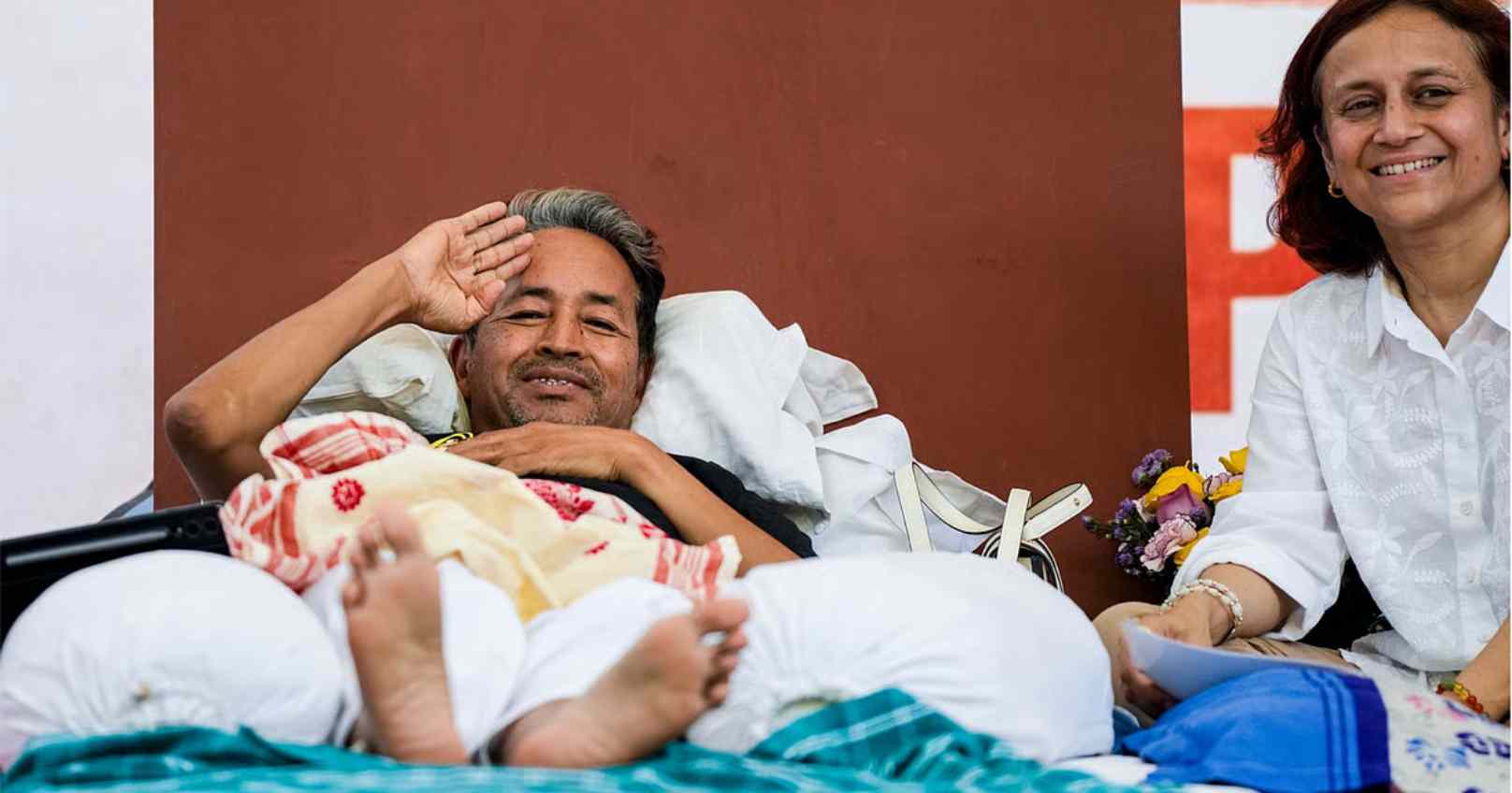
The Delhi High Court has supported the Centre's decision to move activist Sonam Wangchuk to Safdarjung Hospital, observing that the step was taken in view of his declining health after an extended hunger strike and could not be termed arbitrary. The court also made it clear that Wangchuk continues to enjoy his personal liberty, rejecting claims that he was being unlawfully confined or subjected to medical treatment against his wishes.
The observations came while hearing a petition filed by Wangchuk's wife, Gitanjali Angmo, who sought permission to shift him from Safdarjung Hospital to Medanta. She argued that he should be allowed to receive treatment at a hospital of his own choosing.
While issuing notices to the Centre, Delhi Police and hospital authorities, the court directed them to submit their replies within three days. The matter has been listed for further hearing on Thursday, with no interim relief granted.
Court Finds Hospital Transfer Reasonable
The High Court noted that Wangchuk had been fasting for nearly three weeks and referred to an earlier Division Bench order that had acknowledged his fragile medical condition.
The government informed the court that Wangchuk's deteriorating health, including low blood sugar and dangerously reduced potassium levels, prompted authorities to shift him from the protest site to Safdarjung Hospital for medical care.
Accepting the government's explanation, the court observed that the decision was based on medical necessity rather than any arbitrary exercise of power. It also took note of the Centre's submission that safeguarding human life remained its foremost responsibility.
Government counsel further argued that prolonged fasting, combined with dehydration and humid weather, posed serious health risks, including complications such as ketosis and electrolyte imbalance.
'Wangchuk Is Not Under Detention'
During the proceedings, senior advocate Kapil Sibal, appearing for Wangchuk, questioned why the activist could not choose a private hospital when there was no detention order or criminal case against him.
He contended that every citizen should have the freedom to select their doctors and preferred medical facility.
The court, however, repeatedly clarified that Wangchuk was not in custody and remained free. It observed that authorities had intervened only because his health had reached a stage requiring urgent medical supervision.
Treatment Being Given Only With Consent
The High Court also dismissed allegations that Wangchuk's bodily autonomy had been compromised.
It recorded that doctors at Safdarjung Hospital had administered treatment only after obtaining his consent and that there was no evidence of force or coercion.
The bench also noted that Wangchuk had been granted exceptional access to his family, with his wife allowed to visit him at any time and other relatives permitted beyond standard visiting hours.
Medical Reports Raise Questions
Angmo told the court that she sought a second medical opinion after receiving differing reports regarding Wangchuk's potassium levels. According to her, one report showed a critically low reading while another later indicated an improved level, creating confusion and eroding the family's trust in the treatment process.
She informed the court that Medanta was prepared to admit Wangchuk and said she intended to shift him there after obtaining discharge against medical advice.
Angmo also alleged that police personnel were stationed inside or near Wangchuk's hospital room, claiming their presence affected private conversations.
Government Urges Caution
The Centre argued that Wangchuk's condition required heightened vigilance due to the prolonged hunger strike and the wider public implications of his health.
Officials submitted that doctors had encountered instances where Wangchuk had declined certain medical interventions, citing a lack of confidence in the treating team.
A doctor from Safdarjung Hospital confirmed before the court that Wangchuk had expressed distrust in the medical staff, making treatment more challenging.
Court Calls for Cooperation
The government requested the court to direct Wangchuk to cooperate with doctors.
While the bench initially observed that he should assist medical professionals in providing necessary care, it later clarified that it was not compelling him to undergo any specific treatment.
The court stated that any medical decisions would ultimately rest with the treating doctors, who would act according to established medical protocols.
It also recorded the government's assurance that all medical reports would be shared with Wangchuk's family.
No Interim Relief
Declining to pass any interim order, the High Court directed all respondents to file their responses within three days before the next hearing.
Emphasising the importance of preserving life, the court remarked that health indicators can change over time and that every human life deserves protection.
The case will now be taken up again after the government and hospital authorities submit their status reports.