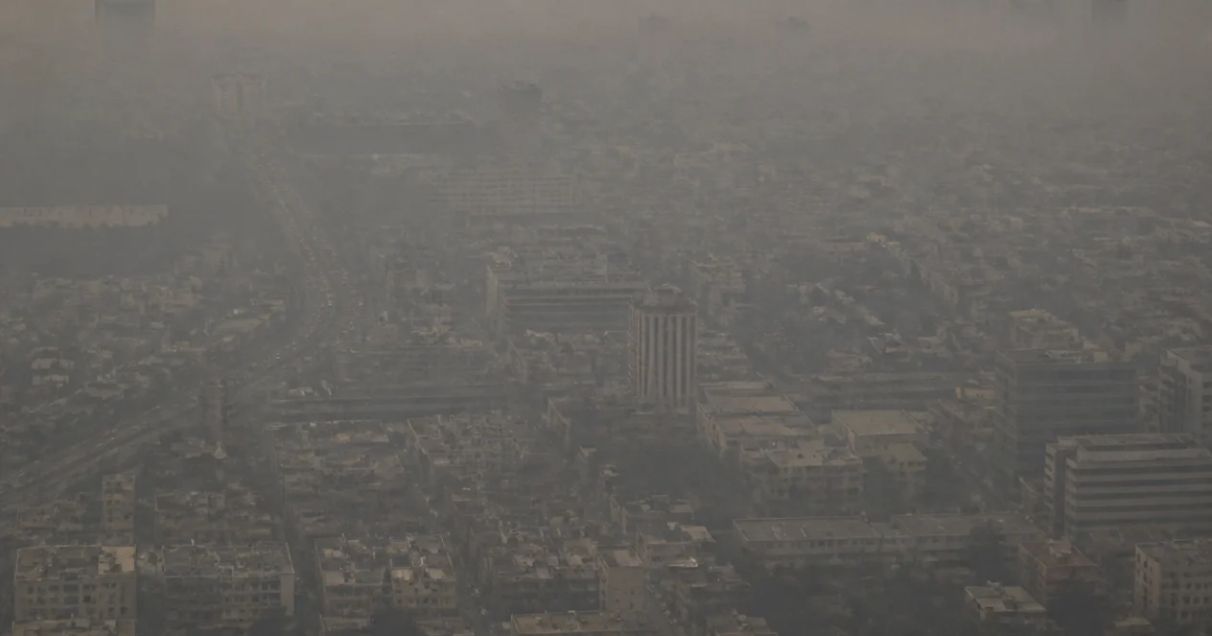
Delhi and the National Capital Region could experience prolonged spells of hazardous air pollution lasting up to five days when weather conditions prevent pollutants from dispersing, a study published in the journal Environmental Pollution has found. Researchers say temperature plays the most significant role among the meteorological factors influencing Delhi’s air quality, highlighting the need to cut emissions rather than rely on weather changes to clear the air.
The study, titled Impact of meteorological drivers on air quality index: A case study from Delhi, examined the relationship between weather patterns and pollution levels over eight years. Researchers from Jamia Millia Islamia, the Delhi Pollution Control Committee and the Central Pollution Control Board analysed daily Air Quality Index (AQI) readings alongside temperature, rainfall, relative humidity and wind speed from January 2017 to December 2024.
Delhi’s average AQI during the period stood at approximately 210, placing the city in the ‘poor’ category under the Central Pollution Control Board’s classification. While the average reading in 2024 was 8.14 per cent lower than in 2017, the researchers found that severe pollution episodes continued, particularly during winter.
Previous Pollution Levels Have a Lasting Impact
The analysis found that air quality is strongly influenced by pollution already present in the atmosphere. Previous AQI readings accounted for around 93.3 per cent of variations in air quality during the first five days examined. Their contribution fell to approximately 81.1 per cent by the 16th day.
The findings suggest that once pollutants accumulate, their effects can persist for days, especially when atmospheric conditions restrict their movement and dispersal.
Temperature was the leading meteorological factor in the analysis, accounting for 13.235 per cent of AQI variation over the 16-day period. Wind speed contributed 3.271 per cent during the second analysis period, while rainfall accounted for 2.127 per cent. Relative humidity had a consistently smaller contribution, remaining below 2 per cent.
Researchers explained that winter conditions can worsen pollution as low temperatures, a shallow atmospheric boundary layer and temperature inversions prevent pollutants from rising and dispersing. Stronger winds can help carry polluted air away, while rainfall removes pollutants from the atmosphere and limits the resuspension of dust from roads.
The study underlines that favourable weather can temporarily improve air quality, but sustained reductions in pollution depend on controlling emissions at their source.
November Records Highest Share of Severe Pollution Days
The monthly breakdown identified November as the worst month for air quality, with 53.8 per cent of days falling in the ‘very poor’ category and another 24.6 per cent classified as ‘severe’.
The proportion of days with ‘very poor’ or ‘severe’ air quality generally increased between October and February, coinciding with the period when Delhi typically faces its most persistent pollution episodes.
Monsoon months showed a markedly different pattern. Air quality was classified as ‘satisfactory’ on 62.7 per cent of days in July and 60.5 per cent in August, when rainfall helps remove airborne pollutants.
However, the researchers cautioned that their analysis covered only four weather-related variables. It did not directly assess the individual contributions of traffic emissions, industrial activity or crop residue burning, all of which are relevant to the wider pollution problem.
Researchers Call for Long-Term Emission Cuts
The researchers called for a broader strategy to tackle Delhi’s recurring air pollution, arguing that weather-related fluctuations cannot substitute for sustained emission reductions.
Their recommendations include strengthening public transport, expanding the use of electric buses and taxis, and improving coordination between states to address crop residue burning.
The continued occurrence of severe pollution episodes, despite a modest improvement in Delhi’s average AQI between 2017 and 2024, reinforces the need for measures that address both the sources of emissions and the atmospheric conditions that allow pollutants to build up.
The study’s central finding is that weather can influence how long pollution remains in the air, but preventing prolonged episodes of toxic air ultimately requires reducing the pollutants entering the atmosphere.