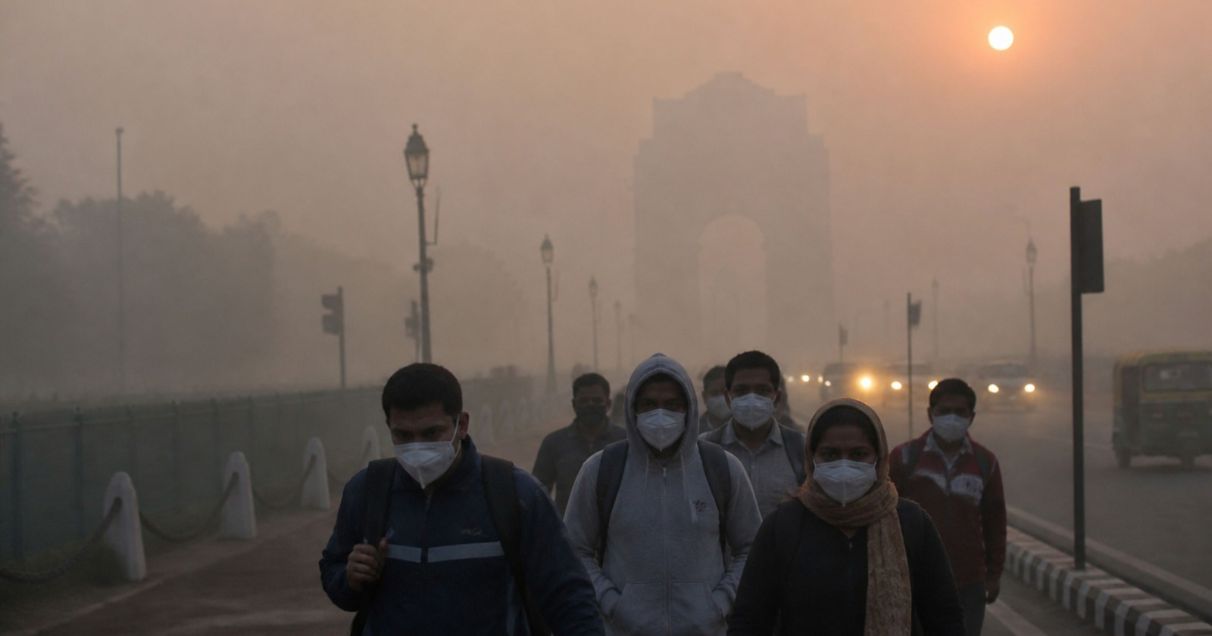
Delhi’s air quality remained hazardous for the third consecutive day on Friday, with the Air Quality Index (AQI) recorded at 409, as per the Central Pollution Control Board (CPCB). The severe pollution levels in the capital are largely attributed to stubble burning, which contributed 31% of the pollution in the region.
Stubble burning has been a significant factor in Delhi's air quality deterioration, with the Indian Institute of Tropical Meteorology (IITM) in Pune reporting that, on November 1, crop residue burning accounted for over 35% of the city’s air pollution. Although the contribution reduced in the following days, stabilising between 18% and 20% from November 2 to November 12, it surged once again to 31% on November 13, a sharp rise from the previous day.
Meteorological factors also played a role in worsening the situation, as Delhi experienced heavy smog on November 13 and 14 due to unfavourable weather conditions. Most of the stubble burning occurs in Punjab and neighbouring Pakistan, with westerly winds carrying the pollutants toward Delhi. The recent shift in wind patterns has been attributed to a western disturbance over the Himalayan region.
In the midst of the growing pollution, the Indian Agricultural Research Institute (IARI), which monitors stubble burning incidents across states, has stopped updating its public bulletins. This decision has raised concerns, given the importance of the data in managing air quality.
While the available data previously indicated a decline in stubble burning cases in Punjab, it showed an increase in states like Madhya Pradesh and Rajasthan. However, recent sources suggest that the Ministry has instructed IARI to restrict the release of this information, limiting it to internal use only.
Environmental experts have expressed concern that withholding this crucial data could hinder efforts to identify and address the regions most responsible for farm fires. Without timely and transparent data, it becomes more challenging to effectively target and mitigate the impact of stubble burning on Delhi’s chronic air pollution.