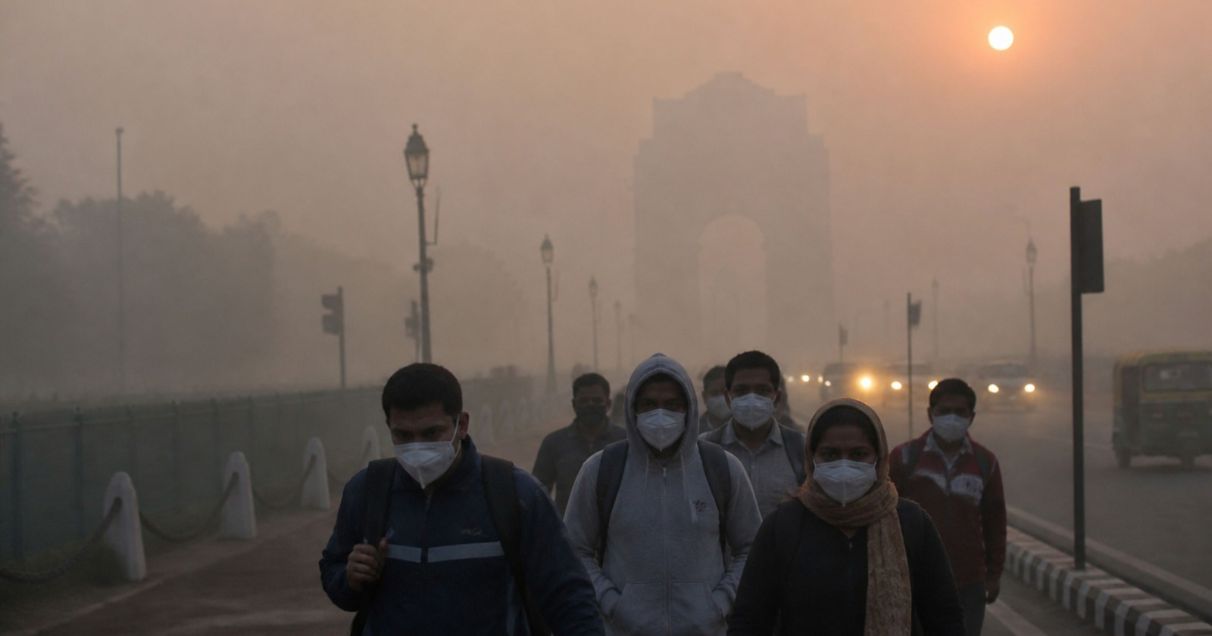
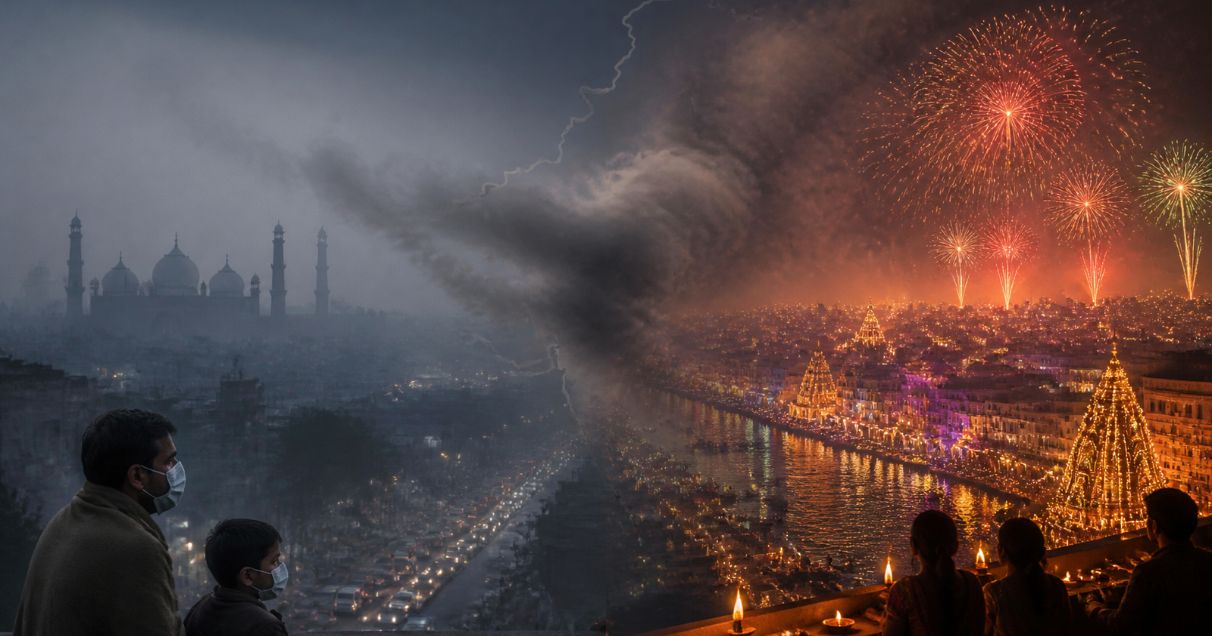
Delhi's post-Diwali pollution crisis has once again raised concerns over the capital's ability to tackle its worsening air quality. In several parts of the city, pollution levels surged to extraordinary heights, with monitoring stations recording PM2.5 concentrations exceeding 2,000 micrograms per cubic metre.
The situation was particularly alarming in Mundka, where PM2.5 levels reportedly touched 3,744 micrograms per cubic metre. Some locations also recorded four-digit Air Quality Index (AQI) readings, reflecting the severity of the pollution episode.
Describing the conditions in stark terms, Dr Vijay Hadda, a lung specialist at AIIMS Delhi, expressed shock at the extent of the deterioration and questioned whether the air was safe for people to breathe.
He warned that the pollution had reached levels that could pose an immediate threat to human health, adding that even healthy individuals were experiencing symptoms such as throat irritation.
Green crackers offer limited relief, doctor warns
The debate over firecracker emissions has returned to the forefront following the latest pollution spike.
Dr Hadda pointed out that switching to so-called green crackers does not eliminate the pollution associated with fireworks. According to his assessment, around 70 per cent of emissions remain unchanged, limiting the environmental benefits of these alternatives.
The warning challenges the perception that green crackers are a pollution-free option. While they are designed to reduce certain emissions, their use can still contribute to deteriorating air quality.
Health experts have repeatedly cautioned that exposure to high concentrations of fine particulate matter can affect the respiratory system, including among people without existing health conditions. Prolonged exposure can also increase the risk of serious respiratory and cardiovascular complications.
Delhi records its worst Diwali pollution in five years
The latest pollution episode has reportedly been the capital's most severe Diwali-related air quality crisis in five years.
The sharp deterioration has renewed questions about the effectiveness of restrictions on firecracker use and the enforcement of pollution-control measures.
However, fireworks are only one contributor to Delhi's seasonal air pollution. Smoke from agricultural residue burning in neighbouring states, vehicle exhaust, construction dust and industrial emissions continue to add to the city's pollution burden.
Unfavourable winter weather conditions further aggravate the situation by limiting the dispersion of pollutants and allowing toxic particles to accumulate near the ground.
Residents and experts demand stronger action
The latest readings have intensified calls for more effective pollution-control measures, with residents and environmental experts pointing to gaps in enforcement and the need for action beyond seasonal restrictions.
Controlling firecracker emissions alone may not be sufficient to address the capital's recurring air quality emergency. Tackling farm fires, reducing vehicular emissions, controlling construction dust and ensuring compliance with pollution regulations will also be critical.
With PM2.5 concentrations reaching alarming levels in multiple neighbourhoods, Delhi's post-Diwali pollution episode has once again highlighted the scale of the public health challenge facing the National Capital Region.