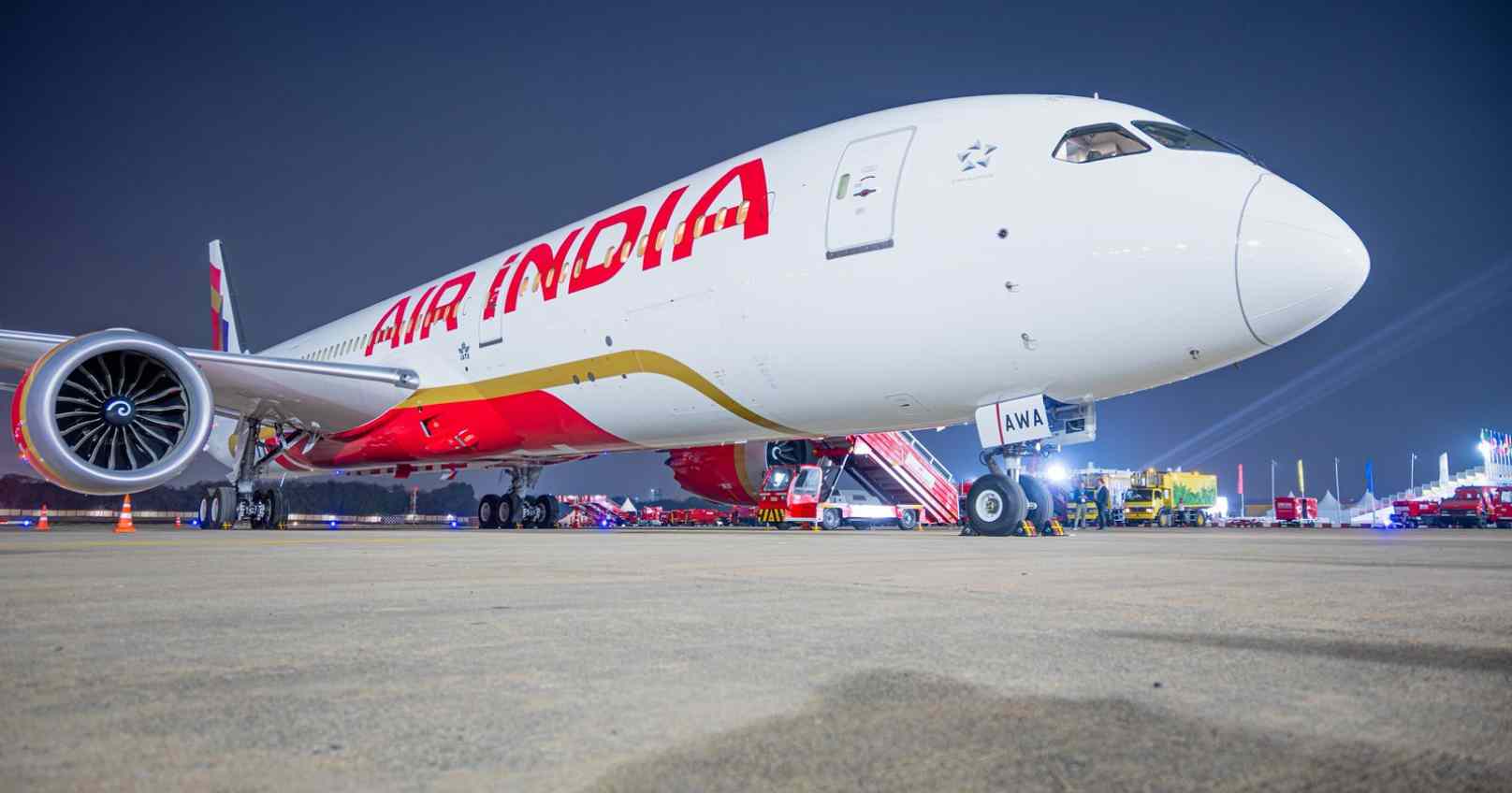
India’s civil aviation regulator has dismissed concerns of a technical failure in the fuel control switches of an Air India Boeing 787-8 Dreamliner that was grounded following a reported irregularity on a London-to-Bengaluru flight.
In a statement released on Tuesday, the Directorate General of Civil Aviation (DGCA) noted that inspections conducted by Air India’s engineering team found both engine fuel switches to be fully operational. Although the regulator did not specify the exact reason for the aircraft’s temporary grounding, it indicated that incorrect application of force could have caused the switch to move from the “run” setting toward “cutoff.”
The incident occurred on February 1, ahead of the scheduled departure of flight AI-132 from Heathrow Airport. According to widely circulated claims from the Safety Matters Foundation, the flight crew noticed unusual movement in the left engine’s fuel control switch during pre-departure checks. The switch reportedly failed to remain firmly in its intended position on multiple attempts, raising safety concerns.
Fuel control switches regulate the supply of fuel to aircraft engines, and any malfunction could theoretically result in engine shutdown during flight. The aircraft was subsequently grounded after it landed in Bengaluru for further assessment.
The case has drawn attention due to heightened scrutiny over Boeing 787 fuel switch systems following last year’s Air India crash in Ahmedabad that resulted in 269 fatalities.
Following its probe, the DGCA reported that no irregular engine readings were detected during startup or in-flight operations. Engineers verified that the switches’ locking mechanisms were intact and capable of securely maintaining the “run” position when handled correctly.
However, investigators found that if pressure was applied at an incorrect angle, the switch could slip more easily due to the design of its angled base. Based on these findings, flight crew were advised to avoid unnecessary physical contact with the switches.
The regulator also confirmed that Boeing’s prescribed test for measuring the “pull-to-unlock” resistance — a safety feature requiring the switch to be lifted before changing position — showed results within acceptable limits. DGCA officials supervised all inspections.
The pull-to-unlock design serves as a safeguard to prevent accidental engine shutdowns, reinforcing that the system itself remains secure when operated properly.