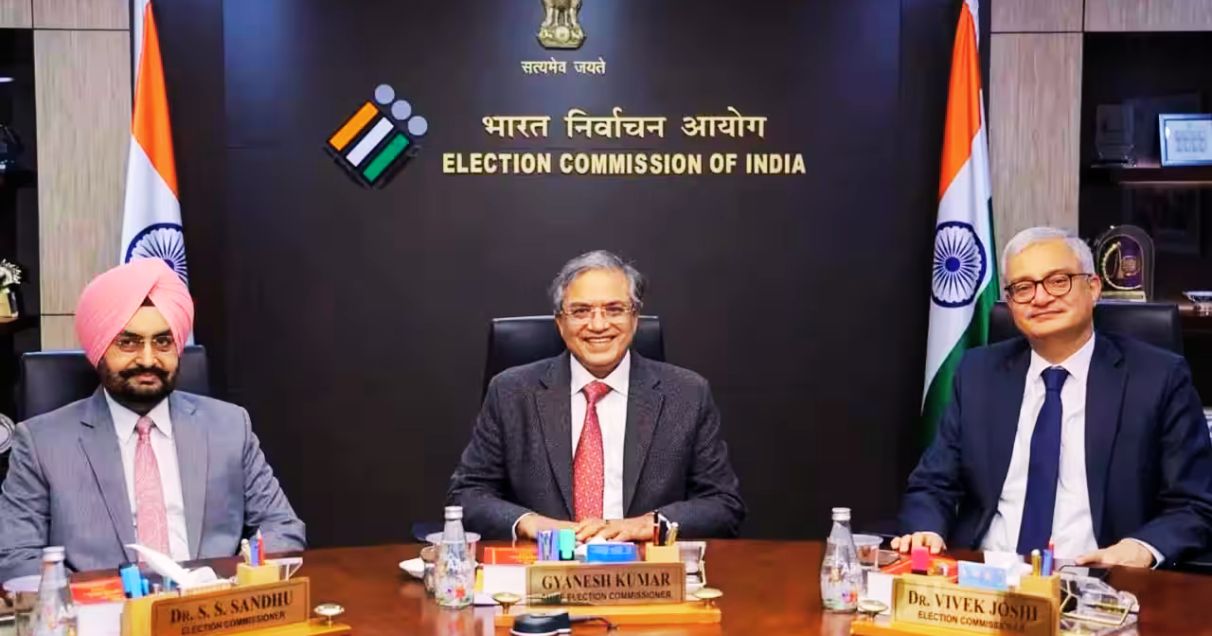
The Election Commission of India has rejected suggestions of a split within the poll panel, saying that all decisions taken by the full Commission over the past year were unanimous.
The statement came after a report raised questions over internal disagreements within the poll body, claiming that Election Commissioners Sukhbir Singh Sandhu and Vivek Joshi had formally recorded objections to several decisions over a 10-month period.
The three-member Election Commission is headed by Chief Election Commissioner Gyanesh Kumar, with Sandhu and Joshi as the two Election Commissioners.
ECI: DIFFERENCES ARE PART OF DELIBERATION
In its first detailed response to the report, the ECI said differences of opinion during internal deliberations are normal and form part of the decision-making process.
The Commission said its members, as well as other officials, are entitled to offer suggestions aimed at improving the electoral system.
The poll body also objected to what it described as a selective focus on individual internal notes.
According to the ECI, examining specific observations while leaving out the wider set of approvals, decisions, instructions and reforms undertaken by the Commission could present an incomplete picture of its functioning.
The Commission said it had taken several major decisions in recent months, introduced around 40 new initiatives and carried out electoral reforms, including electoral-roll revision and the Special Intensive Revision (SIR) exercise.
It maintained that these decisions were approved unanimously by the full Commission during the past year.
REPORT CLAIMS 14 FORMAL OBJECTIONS
The controversy follows a report that claimed Sandhu and Joshi had raised formal objections on at least 14 occasions over a period of 10 months.
The reported disagreements allegedly covered issues including changes to Form 6, used for voter registration, and the centralisation of electoral-roll data.
The report has intensified questions over the functioning of the poll panel at a time when the ECI's voter-list revision exercise is already facing strong political scrutiny.
Opposition parties have demanded a detailed, point-by-point response to the issues raised in the report.
SIR BECOMES THE LATEST FLASHPOINT
The dispute has also added to the long-running political confrontation over the Special Intensive Revision of electoral rolls.
Opposition parties have alleged that the exercise could result in legitimate voters being removed from electoral rolls and have questioned the manner in which the revision is being carried out.
The BJP and the Election Commission have rejected allegations that the electoral process is being manipulated for political advantage.
RAHUL GANDHI ATTACKS ECI
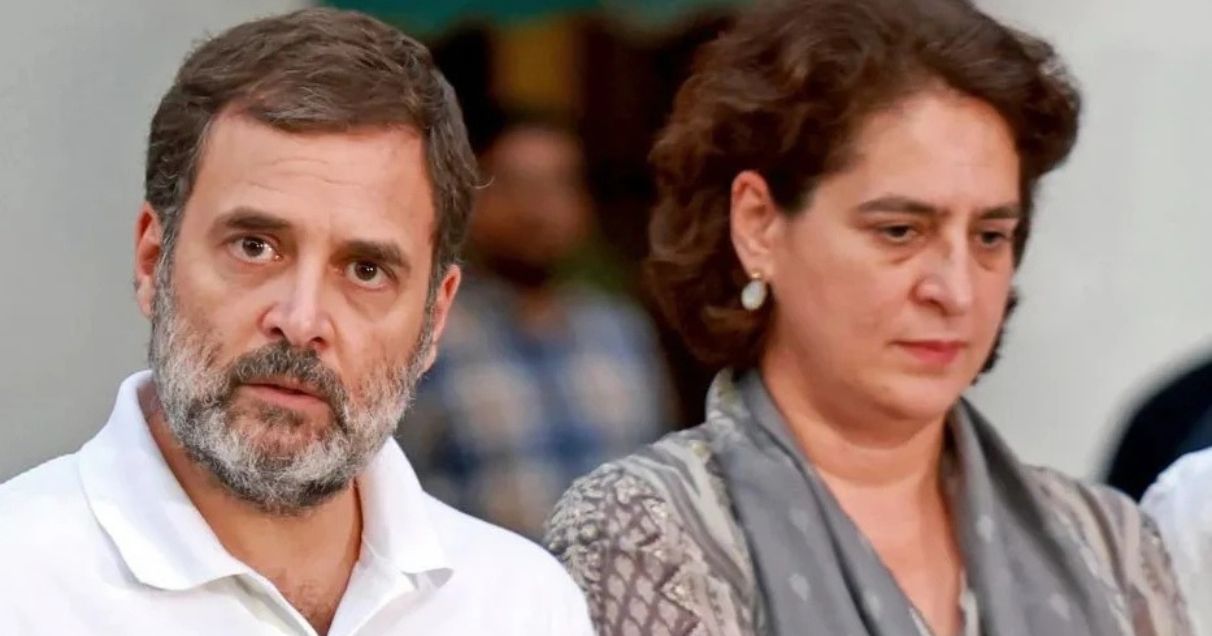
Congress leader Rahul Gandhi escalated the attack on the poll panel, alleging that the Election Commission was no longer functioning as an independent institution.
In a post on X, Gandhi accused the BJP, RSS and the Election Commission of involvement in what he termed “vote chori” and said those responsible would face consequences.
He also shared a short video in which he directly addressed the Election Commission and its officials, accusing them of wrongdoing.
The Congress has repeatedly raised questions over the electoral-roll revision process and demanded greater transparency from the poll body.
FORMER CEC QURAISHI WELCOMES REPORTED DISSENT
Former Chief Election Commissioner S Y Quraishi also weighed in on the controversy.
Speaking to news agency PTI, Quraishi said he had previously questioned why Election Commissioners had remained publicly silent over issues surrounding the SIR exercise.
He said the reported internal notes changed his assessment, arguing that the two commissioners had apparently raised their concerns within the Commission rather than making them public.
Quraishi also pointed out that the commissioners have equal voting rights and that decisions can be reached either unanimously or through a majority.
The latest controversy now puts the internal functioning of the Election Commission, its decision-making process and the transparency of electoral-roll revisions under renewed political and public scrutiny.